


As my father aged, I told myself that one day he would not be here. I would have to be ready. I had lost my mother when I was twenty, but it was a slow death; from 10th grade on, she, despite her fighting spirit in the face of cancer, was dying.
With cancer, does grief bleed off with time? By the time they pass, has most of the grief drained off? Perhaps my memory of the grief for my mother is fractured by the prism of time, or the distortions of aspirational memory. Still, I assumed my father's death would hit me as my mother's had, but it did not.
It moved in ways sorrow is not said to move.
No tempest, no tearing of veils—only a slow submergence. It did not strike; it settled, like ash upon still water. It crept in behind the silence, where no keening1 could reach, and made its dwelling in small abandonments: the cup unwashed, the trip not taken, the phone that never rang, the spine of a book untouched by breath, the chair that leaned forever toward his ghost.
When Mum died in 1986, my father’s friend in Minnesota came to my dormitory to notify me. My friends and I had been drinking beer, not allowed at a Lutheran College, but the knock at the door put an end to that.
“Your mum died at 4:15.” His words hung in the air. I turned to my friends, their eyes wide, and no one could breathe.
My friends were sympathetic, but I was soon standing in the bitterly cold courtyard of Concordia College. It was empty, and I wept alone.
My mother and I had agreed that I would say goodbye and not lose my semester. Perhaps, as the Bible says, because God has put eternity on the hearts of men, part of me hoped there would be some glorious last-minute reprieve. There was not.
My dad did not say much; he was a quiet mathematician, a skilled but infrequent painter, and a man who could fix anything. He was never happier than when on his back, repairing our old Massey Harris tractor at the farm, a piece of cardboard protecting him from the driveway gravel bed.
In fifth grade, he helped me with my science project, and that year I went to the provincials and took gold. It was my presentation, given every few hours to a new panel of judges, but my father’s convictions and teachings gave me the strength.
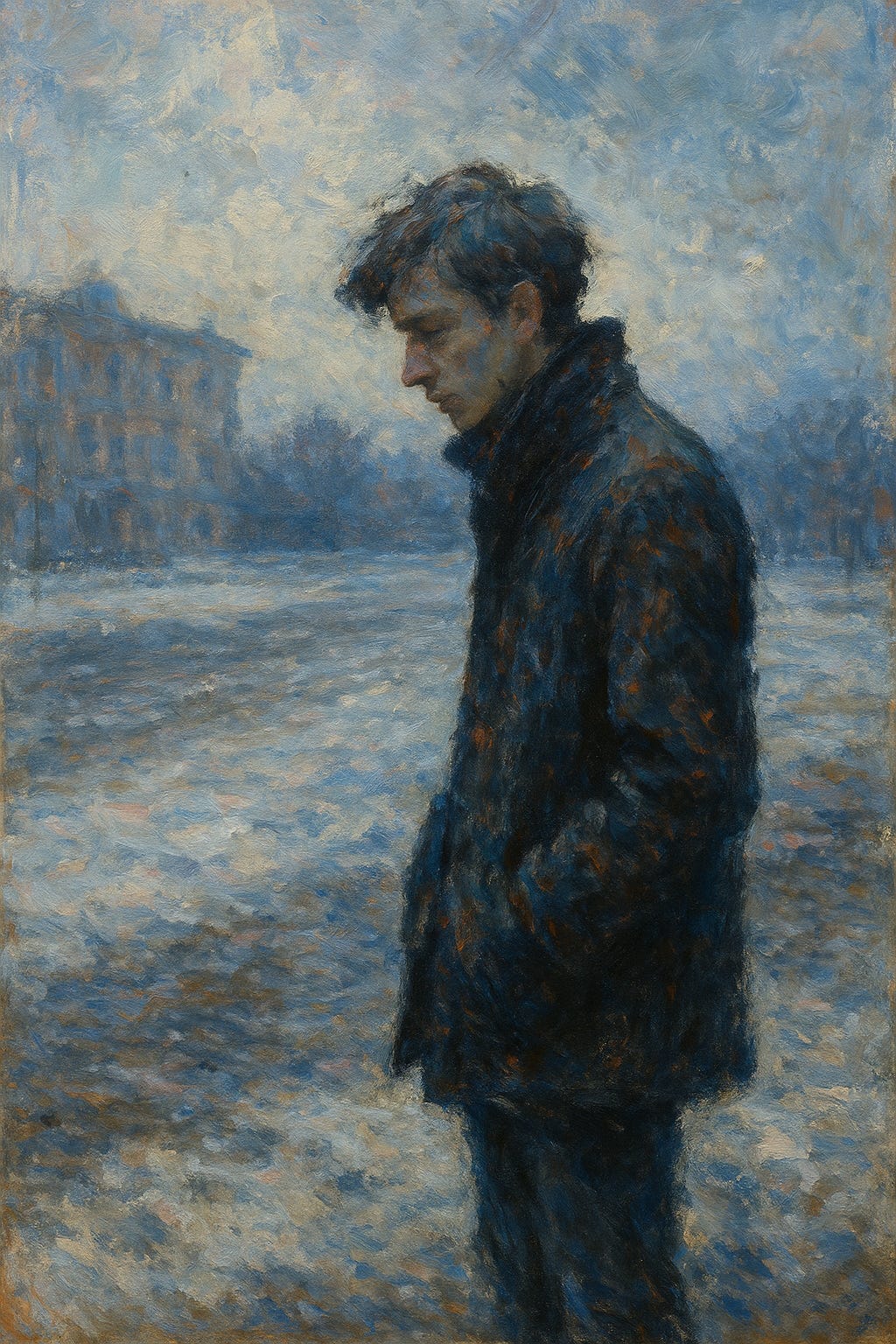
Dad did not say much when I arrived home for Mum’s funeral; I don't remember how I walked into our old Winnipeg house. I remember seeing her handwriting in the phone directory, the handwritten recipes; they made me wince.
Still, the funeral passed, and we called what was left behind ‘a family.’ We were stuck with each other, and we had to do family things.
I believe you grieve for what never was as much as you grieve for what was lost. For my mother, I grieved the former, for my dad the latter.
In the years that followed, I would fly into Winnipeg, sometimes with my entire family, sometimes with just my daughter, Sophia, sometimes alone. The Winnipeg house was still tainted by grief and loss, but, as I said before, it was the former, not the latter.
When I came home to visit Dad, we would drive from Winnipeg to my sister’s farm in Emerson, MB.
In later years, Dad always had me drive. He delighted in his four nephews, with a hug at the door for Grandpa, and an awkward nod to the uncle.
It strengthened me to see how the nephews loved their grandfather; in later years, as each grandson progressed through the University of Manitoba, they would live with him at our home on Sandra Bay. When I was away in Toronto, it comforted me knowing that someone was there for him.
My dad was like me, not quite a perfect fit, a handle that would stick. To much of the world, something with us was always a bit askew; it wasn't like he didn't belong - we all belong - but some are a bit off, many believe this off space is where the creative soul is stored. But Dad and I sometimes would fit perfectly; we just needed to find our space.
Dad was a professor at the University of Manitoba and taught until 2000. I remember his office fondly; it was his space, as well as the faculty lounge across the hallway. But after he retired, his space was the living room at our family home in Winnipeg.
As he sat on his 1970’s floral couch, consumed in another book, the quilt my mother had knitted so many years ago would be wrapped around his feet, resting on a small burgundy footrest with dark wood legs.
When I was back in Winnipeg, I would sit nearby in the plush blue chair, reading magazines my dad had been gifted. I, like him, was one of those bad joints, not perfectly snug, but when I was with Dad, the joint was tight. I belonged like a mortise and tenon joint cut from the same grain—solid, balanced, no glue required.
At night, if I woke up too early, I would stop by my dad’s door to hear his breath. My dad had sawed off the top of the pale blue homemade bunk bed in my old room, which he had made into his own. After his wife died, he could not return to his marriage bed.
In the summers, I would fly to Winnipeg, and then dad and I would drive across the prairies, past the alkaline stretches in Saskatchewan, past Indian Head, and on to our farm near Vulcan, Alberta.
When we were almost there, the familar markers appeared. We would pass the Corner Store, where we had gassed up when I was a boy there during the summers, and soon turn south, past the Atkins house, and all their silver bins, and three miles up, turning east at the Ferguson house. Their home site was lined with eight-foot-tall caraganas; you couldn’t see into the yard, and could only see the tailgates of their pickup trucks.
Depending on the wind, the gravel dust left by our Crown Vic would hang above the road as we drove away. Our farmhouse was less than a mile up the road, lined by dying poplars; you could see the three silver grain bins tucked in by the farmhouse.
As a child, I remember the joy of each summer arriving. It would be at the end of a long family drive, and the three kids would burst out of our Dodge Coronet 440 wagon and run up the pathway, open the porch door and fly into the arms of our grandparents.
But on travels there as an adult, my grandfather’s yellow house. - reputedly, the union of two old grain bins was long gone; only a few boards from the walkway remained.
My twin brother and I had nailed each walkway board onto a track of two-by-fours one hot Alberta summer many years ago. But my Dad and my uncle had to burn that house down; it was crumbling and a magnet for vandals. I knew that hurt Dad; it was like cutting a cord to his prairie childhood.
Our white farmhouse, Dad had built it himself in the fifties; the house sat on sturdy cinder blocks, and the outhouse was about twenty feet straight out the front door, next to abandoned red flecked summer fallow gear from the 40s.
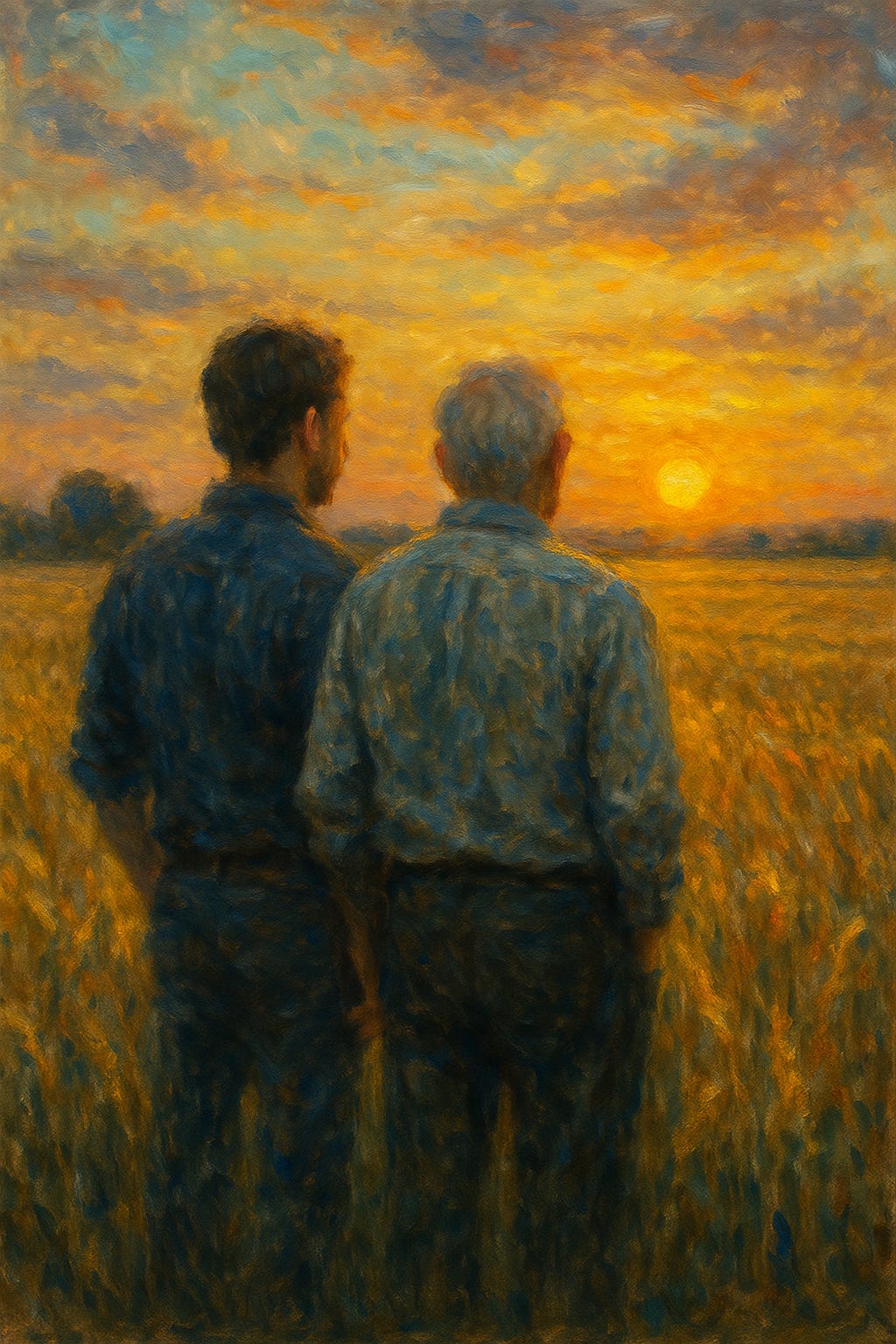
The last summer, we watched Casablanca together. Dad moved more slowly, but was still his old self. His great hands, the ones that before could break an apple in two, were the same. We still spoke as much; he seemed tired, but not broken by age.
At Christmas, Sophia and I were back in Winnipeg.
Sometimes I think, 'If I'd known it was the last Christmas - but what if I'd known?' Would a great countdown clock in the sky help me or drive me mad?
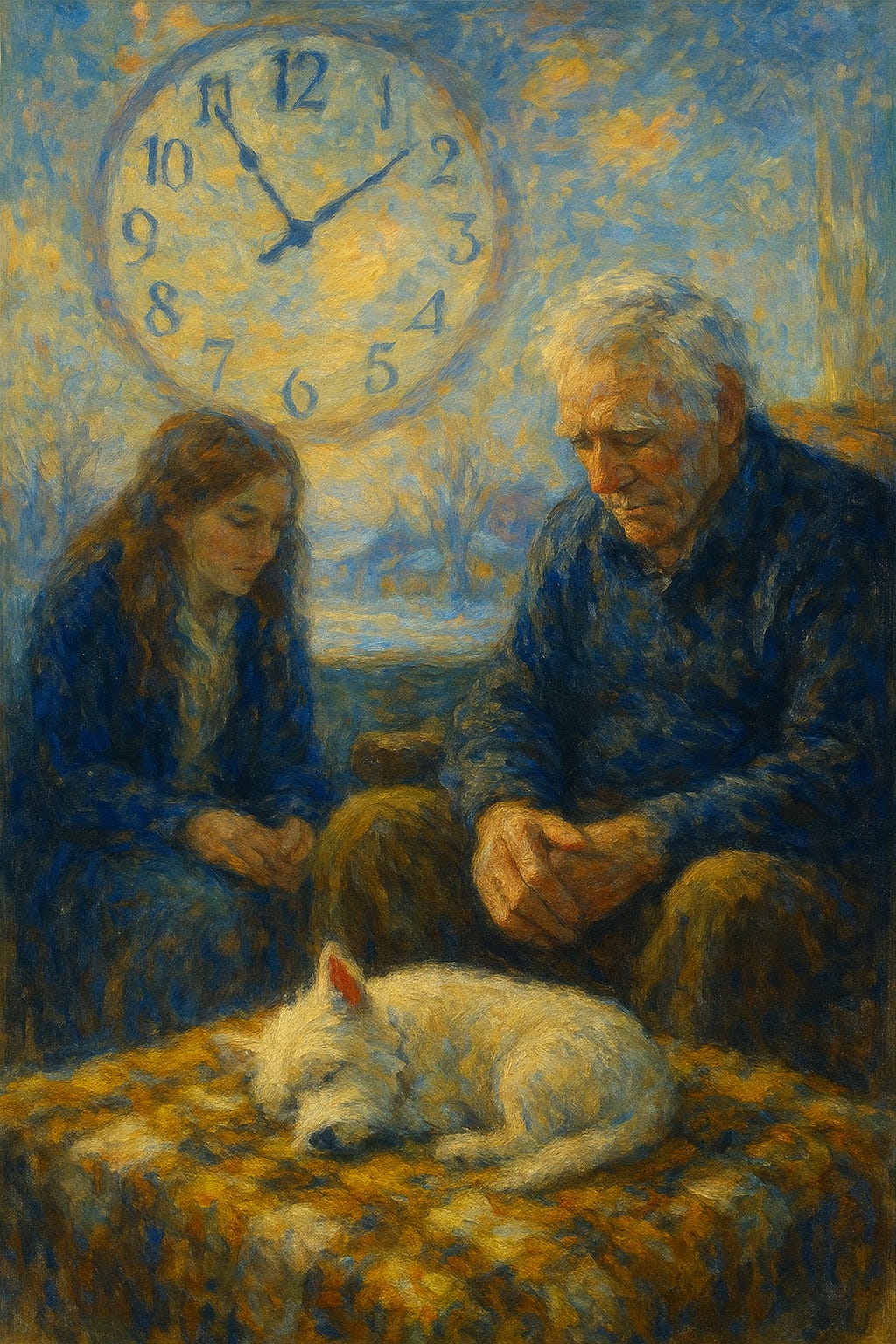
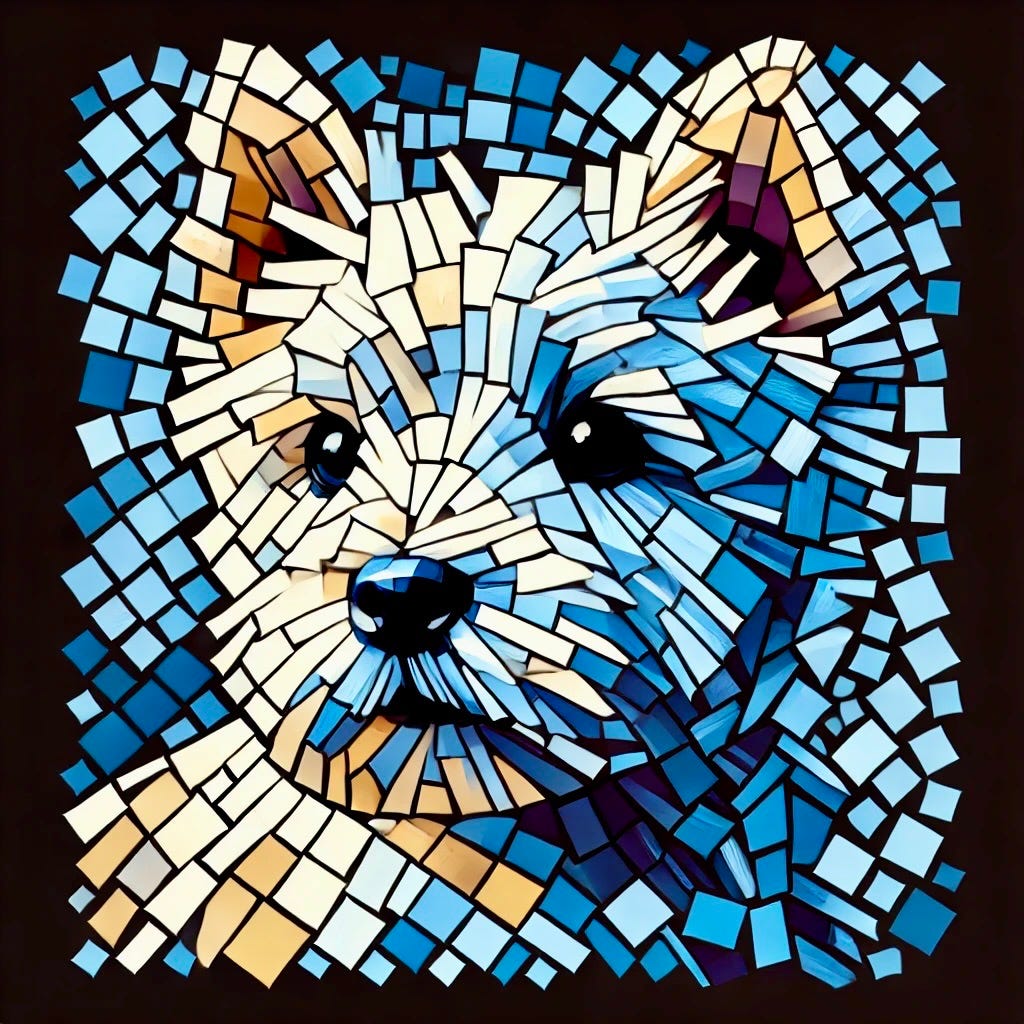
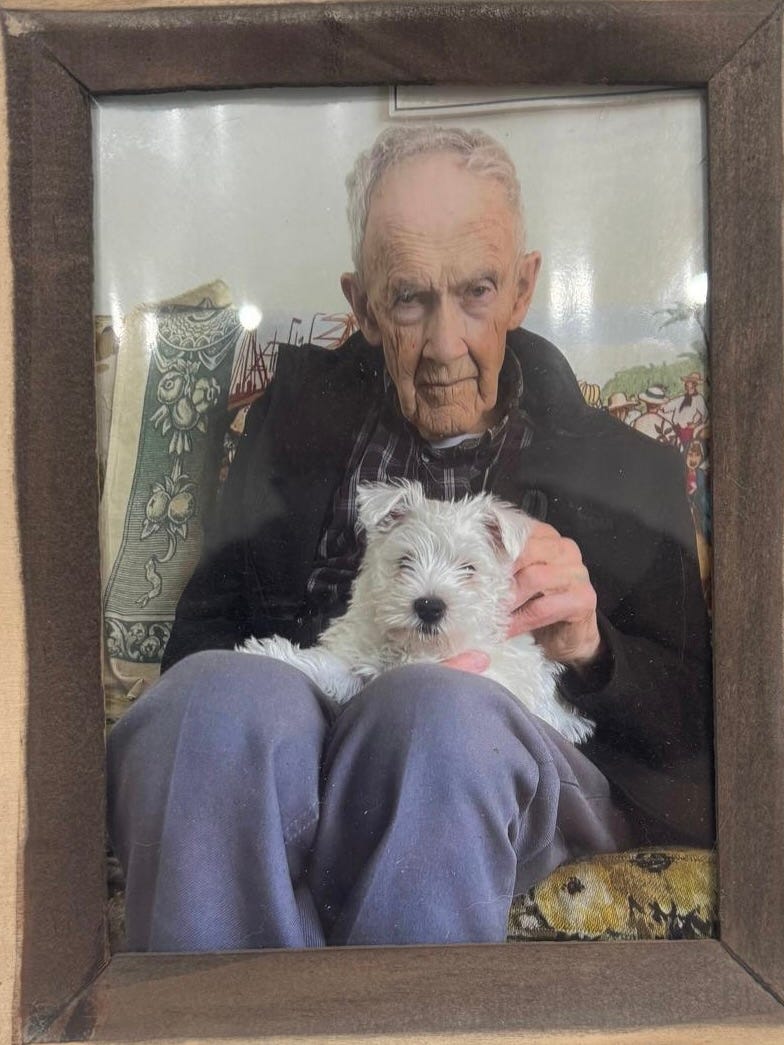
My daughter, Sophia and I left, but returned in the cold of January; again, just the two of us. We had arranged through a local breeder to get a Westie puppy. I could have gotten one in Ontario, but I wanted to see my dad. Dad went to the breeder with us, and the new puppy, Malibu, slept on the living room floor with him, wrapped up in the gold, brown and white quilt my mother had knit so many years ago.
We soon returned to Toronto, and I said I love you to Dad at the airport.
It was the last time I would see my dad, at least where death’s last furious charge did not steal his voice.
My sister soon called to say Dad had been hospitalized. Before I flew back to Winnipeg, my brother put Dad on the line, and I said to Dad, “I love you; I am coming to you. Wait for me.”
I made it to his hospital bedside, but he died the next morning. He waited.
I am not new to this grief thing, but it still feels raw.
I keep the funeral program in my work knapsack. Small momentos from Dad are on top of the fireplace: the little salt shaker with the dog peeing, ViewMaster reels from my grandparents’ trip to Ireland, a note from my dad, his poor scrawl on the box of flea soap in which he attached a small yellow note to the box “For emergency use, only if you have fleas!” It had sat untouched in our farm bathroom for years.
Even now, Sophia and my son Vanya call Malibu Grandpa's dog, and the fact that Malibu knew my dad is a weak but comforting cord, yet unbroken.
But should the grief have left and disappeared into the pixelation of memory? Perhaps the problem is not me; it is a culture impatient with grief. I will mourn. I will not leave his grave untended.
My professor's life has descended in recent years, caught up in the madness of academic anti-Semitism. When I called Hamas Nazis, a few, sadly, consumed with hate, filed a human rights complaint. The cowards never had the courage or integrity to speak to me, firing me from behind their keyboards.
But I regret nothing. I stood my ground, and if my father had not died before this nightmare began, he would have stood by me.
I know my dad would have supported me; it's a shame that such people are in short supply. Still, when I defiantly say Solzhenitsyn’s quote about let the lie come into the world, let it triumph, but let it not go through me, I think of my dad's quiet, poorly fitting cupboard joint introversion, one that I share. Whenever I say ‘but not through me’, my eyes fill with tears without fail; I don't know why, but it brings me back to my father.
Perhaps some can say they had many in their life who were in their corner, who understood them, who loved them without conditions, but I had my father, and as I have discovered, few others.
Strangely, this loneliness—this madness of strangers hating me because I said I stood with the besieged Jew—has stirred something deeper, older. It has revived an ancient grief.
A grown man losing his father is expected to nod, carry on, and resume his duties. My duties have not been forsaken, but the rest? That is not what has happened to me. The absence did not explode; it seeped. It crept into everything.
And in that silence, I have felt something else—something I hesitate to name. A kind of presence. Not comfort. Not resolution. But witness.
If grief is a season, should I fight the autumn rain, should I howl at God for the snows in January, or the fierce heat of July?
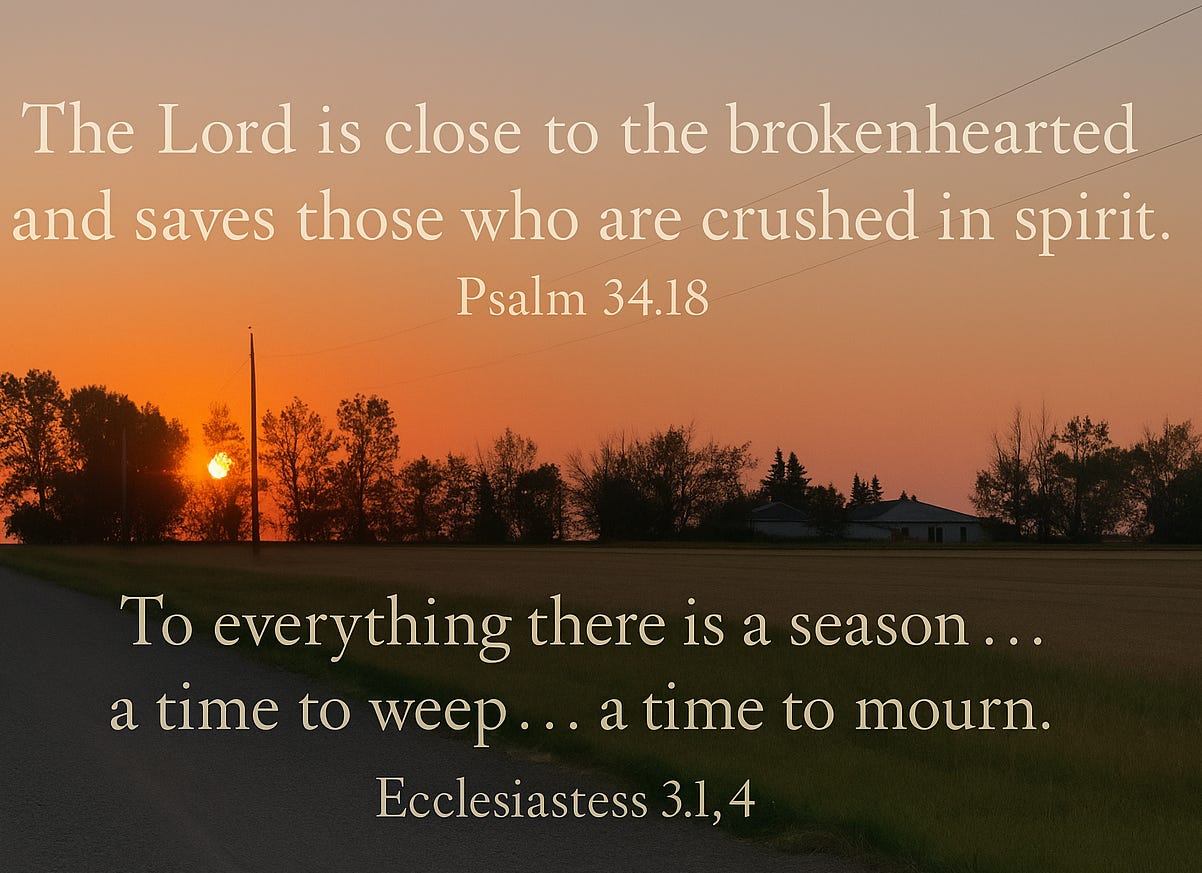
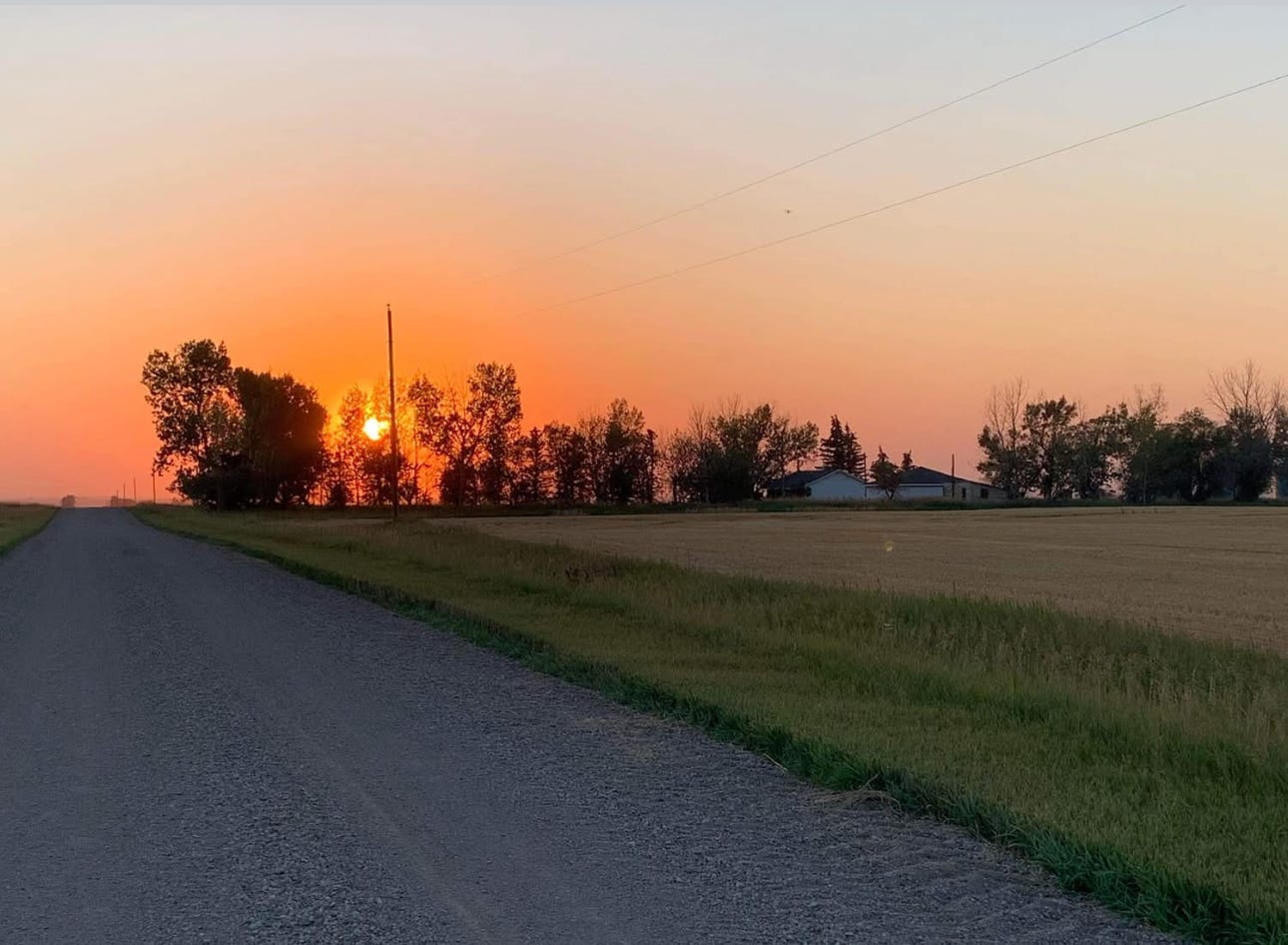
I remember standing on the green porch in the setting sun, on our farm near Vulcan, Alberta. A glorious wheat crop was still catching the light. Dad and I didn’t need to talk; we were two joints that held together.
Now the joint creaks, alone.
But I am still here, and I will not be shamed for the mourning. This perhaps is my time to weep. My time to mourn. And no tribunal of the therapeutic state, no cleric of progress, and no grinning bureaucrat has the authority to annul that.
And today, why do I write about a grief that should have left, about tears that keep coming back? That some days, as the Psalmist said, are like my food night and day.
Is the grief like dandelions that we can't get rid of, or are they the most glorious blue feral alfalfa that grows by the edges of the Alberta gravel roads near my farm?
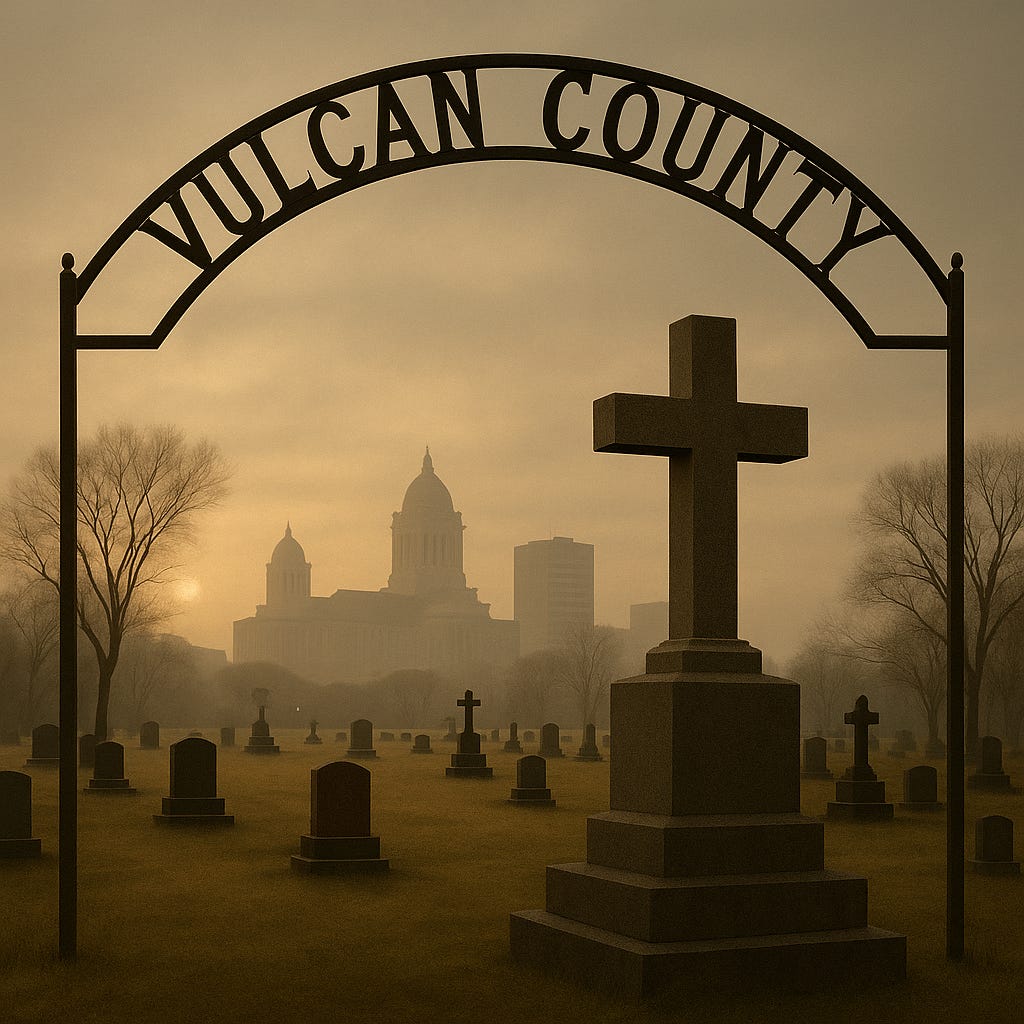
My farm? It's my dad's farm; it will never be mine. I cannot go inside that farmhouse again; every stick of furniture, every bit of kitsch on the mantle, cries out in his memory.
God, I miss my father. The pain offers no sweetness, but I do not resent it. His absence is, to paraphrase CS Lewis, like the sky, spread over everything. It is a longing that scours the earth looking for union.
I wish my tears could be made into the sweetest balm, and I wish it could be taken in the arms of the angels, delivered to him in heaven. He would know that he is still with me, buried so deeply in my heart, a love that rages against the dying of his light, and one I did not expect would, three years later, still leave me with such grief.
The rabbis have an old saying that I have always found deeply humane:
“A man is not dead while his name is still spoken.”
I will still speak his name.
I remember standing outside our farmhouse, the barley swaying, its beards rustling in the wind.
Dad and I - perhaps our bad joints were imperfect pieces, but together, we fit seamlessly, and we were not alone.

If you found value in this article and wish to support my ongoing work, tip away. If not, thanks for reading.
“Keening” in English suggests a high-pitched, inarticulate moaning, but the Irish word caoineadh, from which it derives, signifies, among other things, a highly articulate tradition of women's oral poetry. The lamenting woman led the community in a public display of grief.
Your father was a great man and this piece is a really wonderful tribute to him. I was very touched.
Lament is so important. Vital even, to find a way to get one foot in front of the other, after all that was - longing included - has gone. Your current grief and loss of voice and what you contributed to the education of young adults must surely trigger all that intertwined with memories of the one who loved you so deeply.