


This is not an essay. It bears none of the varnish or pretensions of one. It is a speech — a rough, hurried exhalation written in under an hour and read in a single, imperfect take. It is unpolished, unedited, and entirely unarmoured. But it is real.
And I hope — God, how I hope — that its reality still counts for something in a world increasingly allergic to it.
Before I send it anywhere else, I will send it to my children. It may one day serve as a message from the past, a flare fired across time, saying: Your father tried to tell the truth. Your father tried to stand his ground.
Two years ago to the day, almost to the hour, I was suspended. Not for any act, but for a climate — a climate of cowardice, hysteria, and the fashionable indulgence of slander. And so I wrote this speech not to commemorate the event, nor to bury it, but to plant my heels in the soil and say, with whatever remains of my voice: I remember. I refuse to consent to the amnesia that institutions rely upon.
This is not about me. It is a plea — a summons, even — to Jew and Gentile alike. A call back to the oldest and most uncomfortable command ever uttered in our moral tradition: that we are, in fact, our brother’s keeper.
Cain’s insolent retort — “Am I my brother’s keeper?” — is the anthem of our age, sung in a million bureaucratic corridors and by every comfortable soul who prefers silence to courage.
We must stop singing it.
We must be our brother’s keeper — because most of us are not, and the world is rotting in the space left by our abdication.
If these words make even the faintest difference — to strangers, to friends, to those I may never meet, and chiefly to my children — then the effort was worth it.
_____________________________________________________________
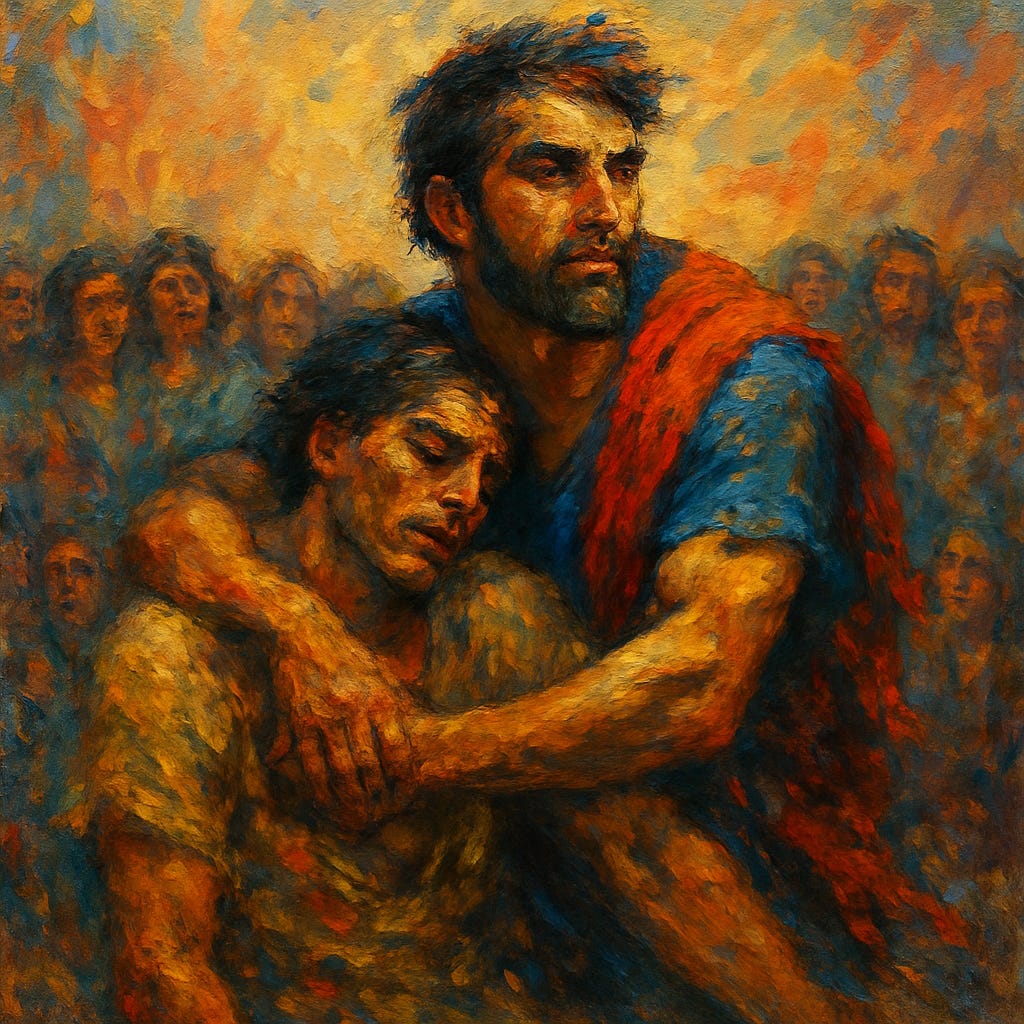
It was two years ago to the day that I was suspended from the University of Guelph-Humber—hauled into a side room like contraband, handed a sheet of paper rammed in my face, and marched off campus as if I were a fugitive. I had no idea why. They would not tell me. I was left in the kind of bureaucratic darkness that has swallowed better men in worse eras. I would not learn the fabricated accusation for nearly a month.

Within hours of arriving home, my phone began lighting up with messages from alarmed students — students I loved, students I had taught and mentored, students who trusted me — asking why staff and faculty were going around calling me a criminal, disgusting sexual allegations and worse.
And yet in that moment, I did not know the most painful truth of all: that I had just seen my beloved students for the last time. Their faces, their questions, their laughter — the small human details that make a classroom a world — had already slipped from present tense to memory without my even knowing it.
I never imagined termination.
I never imagined that being escorted off campus was not a temporary precaution but a permanent exile.
I never imagined that my office would be ransacked and emptied like the room of a disgraced felon — as though filing cabinets, books, and lecture notes were accomplices in my supposed “crime.”
And all for what? For the moral clarity of saying I stand with Israel. For the simple truth that if you stand with Hamas, you stand with Nazis.
In the months that followed, when the dust and lies finally settled into their bureaucratic pattern, I wrote a line that captured the hollowness they left behind:
“I stand in the silence where my laughter used to be.”
It was not merely a lyric; it was the echo of an emptied office, of classrooms I would never enter again, of the severed bond between a teacher and the young souls he cared for. It was the sound of a life vandalised by cowardice masquerading as justice.
Cowardice, if we go back to the Greeks, was never merely the absence of courage. Deilia — the word they used — wasn’t about fear alone but about a kind of moral shrinking, a failure of soul.
Aristotle placed cowardice opposite not just bravery but aretê, virtue itself. To be a coward was to fall below the standard of a functioning moral being, to become, in his phrasing, “less than what one is.”
The Greeks understood what our bureaucrats do not: fear is natural, but cowardice is chosen. You could quake in your sandals at Thermopylae, but if you ran when your brother stood, that was deilia — a rot of character, not an instinct of the nerves.
Cowardice, for them, was a vice of the spirit. A man who refused the call of duty didn’t merely fail in one moment; he revealed what he truly was. And that is why the Greek poets and tragedians reserved their deepest contempt not for the tyrant or the traitor, but for the coward — the one who knows what is right, sees what is required, and collapses into himself like a punctured wineskin.
It is a moral, not a psychological, category. Cowardice is the decision to let fear govern where principle should. It’s the quiet treason of looking away, the ethical amputation performed without anaesthetic.
That’s why our bureaucratic cowards are so loathsome: they do not merely avoid danger; they avoid responsibility, truth, justice, and even the evidence of their own eyes.
The Greeks detested cowardice because it was the mother of every other vice.
And they were right.
So on this ignoble second anniversary, I will not mark the date with cake, whisky, or candles.
I will mark it with words — the only things they could not seize, shred, or silence.
Please listen.
Such is the moral sophistication of our academy: arrest the professor who condemns fascists; applaud the student unfurling the flag of a group sworn to genocide.
The photograph showed a graduating student unveiling a large Palestinian flag on stage. It was an act of political theatre instantly embraced by faculty members who leaned in to help straighten it as though adjusting a crown on coronation day. Their faces glowed with borrowed virtue; Jewish parents in the audience stared in stunned hurt.
And behind them, half-shadowed, stood someone who troubles me far more than the flag: a Jewish professor, seventy years old, once a soldier in the IDF, a fundamentally decent man. Yet he said nothing. He did nothing. He watched the scene unfold without protest. He had watched me be professionally executed for standing with Israel, and he had never whispered a word. His answer to the ancient question “Where is your brother?” was the modern academic one: “Not my concern.”
This is not about him. This is about what he represents: an age in which silence masquerades as sophistication, in which cowardice is marketed as caution, in which neutrality is sold as virtue.
I write to you not as a Jew but as a Gentile—a Gentile raised to love Jews. My parents took me to the Anne Frank House. They took me to concentration camps. And even before those pilgrimages, my imagination was shaped by Jewish courage: as a teenager, I devoured Leon Uris, Exodus especially, a novel that burned itself into my conscience. If Auschwitz showed me what the world did to the Jews, Exodus showed me who the Jews were. My love for them was planted early and has never loosened its grip.
At nineteen, while my peers drifted through Amsterdam behind a fog of smoke, I went to Dachau and Auschwitz. I stared at the iron sign Arbeit macht frei. At Dachau, I once pointed to a carved groove in the stone and asked the guide what it was. He replied, matter-of-factly: “That’s where the blood drained.”
I have no Jewish relatives. No Jewish ancestry. No Jewish schooling. My support for the Jews is moral, not tribal. And my personal ambition is modest: if my children grow up to be ordinary people—neither rich nor powerful—but refuse to hate the Jews, then I have succeeded as a father.
Let us go back to the first murder. Cain kills Abel. God asks him, “Where is your brother?” Cain answers with the shrug that echoes through history: “Am I my brother’s keeper?” It is a lie that has survived every century, in every language, under every excuse.
Today, it is our anthem.
I am a Christian. Jesus was a Jew. His disciples were Jews. My entire religious inheritance depends on Jewish survival. And yet I am afraid—afraid of the apathy among many Jews, and even more afraid of the apathy among Gentiles.
We wander through life congratulating ourselves for our own banalities. We say “God bless you” as if pious politeness were righteousness. But God is not fooled by our pleasantries. He looks at the heart. And the heart, as Jeremiah tells us, is “deceitful above all things.”
We are experts—myself included—at convincing ourselves of our own virtue. But virtue is not what we claim; virtue is what we do. And most people today, confronted with cruelty or hatred, whisper the same quiet evasion: “Not my problem.”
People watch Schindler’s List and solemnly declare, “I would have been right there with Schindler.” They visit the Anne Frank House and say, “I would have hidden the Jews.” No, they would not. If they cannot confront a hateful colleague today, they would never have confronted the Gestapo. If they cannot risk a frown in the faculty lounge, they would never have risked a prison camp. The small tests of today expose the delusions of yesterday.
My own two-year ordeal revealed, with painful clarity, just how shallow most people’s courage truly is—two years of investigations—each one more absurd than the last. Two years of slander passed around like office gossip. Two years of being labelled a criminal, a danger, a pariah. Two years of deliberate isolation, humiliation, and bureaucratic cruelty. And all of it for what? For a single political statement—true, moral, necessary—that I would repeat today without hesitation.
I had done absolutely nothing wrong, and yet I was treated as though I had committed some unspeakable sin. But instead of breaking me, those two years acted as a furnace. They did not burn away my convictions; they forged them. They did not silence my support for Israel; they intensified it. They did not erode my affection for the Jewish people; they deepened it into something unshakable and fierce.
If the goal was to tame me, they miscalculated. Those two years clarified everything—who stands firm, who collapses, who remembers, who forgets. And in that clarity, my devotion to the Jewish people did not waver; it hardened into something far stronger than before.
I am not wealthy. I am not powerful. I am not glamorous or brilliant. I am simply someone who tried, when the moment arrived, to do the right thing.
I was my brother’s keeper.
But look up from my story and observe the world. Anti-Semitism is rising again—not with jackboots and torches at first, but with slogans, flags, academic resolutions, silent faculty, and smirking administrators. As in Europe a century ago, it begins in universities. Hatred returns politely, bureaucratically, academically—until suddenly it becomes violent.
And now something personal. On my wall hangs a small plaque given to me by a Jewish friend: gold Hebrew letters mounted on stone. He translated them for me:
“If I forget you, O Jerusalem,” from Psalm 137, written by an unknown, exiled Jew.
A vow recited for thousands of years. A refusal to abandon identity, dignity, or memory. And when he gave it to me, he said, “You lived this verse—not as a Jew, but as someone who did not forget us.”
That is when I recalled a story told from Eastern Europe. A Jewish family trapped in their home as a mob outside hurled rocks at their window, shouting, “Come out, Jew!” The mother pulled her daughter away from the glass, saying, “Don’t go near the window—they’re strangers.”
And the little girl answered:
“But Mama… they’re not strangers.
They’re our neighbours.”
That is how it begins.
Not with monsters, but with neighbours.
Not with strangers, but with silence.
Not with violence, but with evasions.
Not with storms, but with shrugs.
And so I say this plainly, without rhetoric or apology:
If the world forgets Jerusalem,
if the world forgets the Jews,
I will not.
I am, and will remain, my brother’s keeper.
Good night
But let me close with the Psalmist who wrote Psalm 137, an unnamed exiled Jew.
—————————
1
By the rivers of Babylon, there we sat down, yea, we wept, when we remembered Zion.
2
We hung our harps upon the willows in the midst thereof.
3
For there they that carried us away captive required of us a song; and they that wasted us required of us mirth, saying, Sing us one of the songs of Zion.
4
How shall we sing the Lord’s song in a strange land?
5
If I forget thee, O Jerusalem, let my right hand forget her cunning.
6
If I do not remember thee, let my tongue cleave to the roof of my mouth; if I prefer not Jerusalem above my chief joy.
7
Remember, O Lord, the children of Edom in the day of Jerusalem; who said, Rase it, rase it, even to the foundation thereof.
8
O daughter of Babylon, who art to be destroyed; happy shall he be, that rewardeth thee as thou hast served us.
9
Happy shall he be, that taketh and dasheth thy little ones against the stones.
We end on the For me, it means that when hatred rose, you remembered; when others stood back, you stood forward; and when the world forgot Jerusalem, you did not.
And so we end where the psalmist ended—on that terrible, scorching line from Psalm 137, where grief becomes anger and anger becomes the language of the dispossessed. It is not a call to violence; it is the raw howl of a people who have watched their world burned and their children murdered.
The Jews remember Babylon not because they seek vengeance, but because they know exactly what happens when the world forgets Jerusalem. Jewish trauma is real, ancient, and unhealed. The wounds of persecution echo across centuries; the memories of expulsion, pogrom, and fire require no encouragement to awaken. And today’s rising anti-Semitism—the slogans, the flags, the bureaucratic cowardice, the polite indifference—stirs embers that were never fully extinguished. Silence in the face of such hatred is complicity.
It is the oldest betrayal in human history. And if there is one lesson the psalmist, in his rage and agony, demands we hear, it is this: we must never again ask the question “Am I my brother’s keeper?” We must answer it. With our voices, with our courage, with our actions.
Always, and without hesitation, we must say: Yes. I am.
If you found value in this article and wish to support my ongoing work, please consider leaving a tip. Your support helps me continue producing uncensored content on critical issues.
PSALM 137 — Hebrew
אַ֥ל־נַ֨הֲר֪וֹת בָּבֶ֡ל שָׁ֣ם יָ֭שַׁבְנוּ גַּם־בָּכִ֑ינוּ בְּ֝זָכְרֵ֗נוּ אֶת־צִיּֽוֹן׃
עַֽל־עֲרָבִ֥ים בְּת֗וֹכָהּ תָּלִ֥ינוּ כִּנֹּרוֹתֵֽינוּ׃
כִּ֤י שָׁ֨ם ׀ שׁוֹבֵ֣ינוּ שָׁ֭אֲלוּנוּ דִּבְרֵי־שִׁ֑יר וְתוֹלָלֵ֨ינוּ֙ שִׂמְחָ֔ה שִׁ֥ירוּ לָ֗נוּ מִשִּׁ֥יר צִיּֽוֹן׃
אֵ֚יךְ נָשִׁ֨יר ׀ אֶת־שִׁ֥יר יְהֹוָ֗ה עַ֣ל אַדְמַֽת־נֵכָֽר׃
אִם־אֶשְׁכָּחֵ֥ךְ יְֽרוּשָׁלַ֗יִם תִּשְׁכַּ֥ח יְמִינִֽי׃
תִּדְבַּ֨ק לְשׁוֹנִ֪י לְחִכִּ֡י אִם־לֹ֣א אֶזְכְּרֵ֑כִי אִֽם־לֹ֥א אַעֲלֶ֗ה אֶת־יְ֭רוּשָׁלִַם עַל־רֹ֥אשׁ שִׂמְחָתִֽי׃
זְכֹר־יְהֹוָ֣ה לִבְנֵ֣י אֱד֔וֹם אֵ֖ת י֣וֹם יְרוּשָׁלִָ֑ם הָֽאֹמְרִ֗ים עָ֭רוּ עָ֥רוּ עַֽד־הַיְסֽוֹד־בָּֽהּ׃
בַּת־בָּבֶ֗ל הַשְּׁדוּדָ֑ה אַשְׁרֵ֥י שֶׁיְשַׁלֶּם־לָ֗ךְ אֶת־גְּמוּלֵ֥ךְ שֶׁגָּֽמַלְתְּ־לָֽנוּ׃
אַשְׁרֵ֗י שֶׁיֹּאחֵ֥ז וְנִפֵּ֗ץ אֶת־עֹלָלַ֥יִךְ אֶל־הַסָּֽלַע׃
Wow, Paul. Never let it be said that words do not matter. You, who write them so powerfully, matter. You are deserving of praise as “The Righteous Among the Nations.” I hold you in my heart, and I hold immense gratitude for the non-Jews who stand with us through this terrible chapter in our history. I loved reading that Leon Uris was one of the influences that shaped your respect and empathy. He had the same influence on me, and some 15 years later, I became a Jew myself. I became a parent to two Jews and the grandparent of six more. All of it has been a huge blessing. You are a huge blessing. Go from strength to strength.
Reading this post gave me the chills.
I can't remember which Hassidic Rebbe said it, but when asked about righteous gentiles, he answered that they are the reincarnated souls of Jews who died as martyrs.