


It is a strange spectacle indeed to see men and women of standing marshal their indignation against those who challenge the rulers of Tehran, while that regime — which has imprisoned its own citizens, armed proxies across continents, and turned repression into statecraft — is granted the courtesy of moral hesitation.
Fifty years of terror at home, and the decisive moral line, we are told, lies not in prison cells or gallows, but in the polite geometry of international borders.
Yet for those who have lived beneath that regime, the border was never the point. The point was the knock at the door. The point was the daughter taken for showing her hair. The point was the student expelled, the journalist silenced, the Baha’i family quietly erased from public life.
I have taught young women who speak of their home in Iran and begin to weep — not because a foreign jet crossed a line on a map, but because a theocracy crossed every line of dignity inside their own homes.
Poverty imposed by kleptocracy is no less cruel because it does not leave a crater. Fear that settles into the bones of a people is no less real because it does not trend on social media. A regime need not kill you today to have already stolen your life.
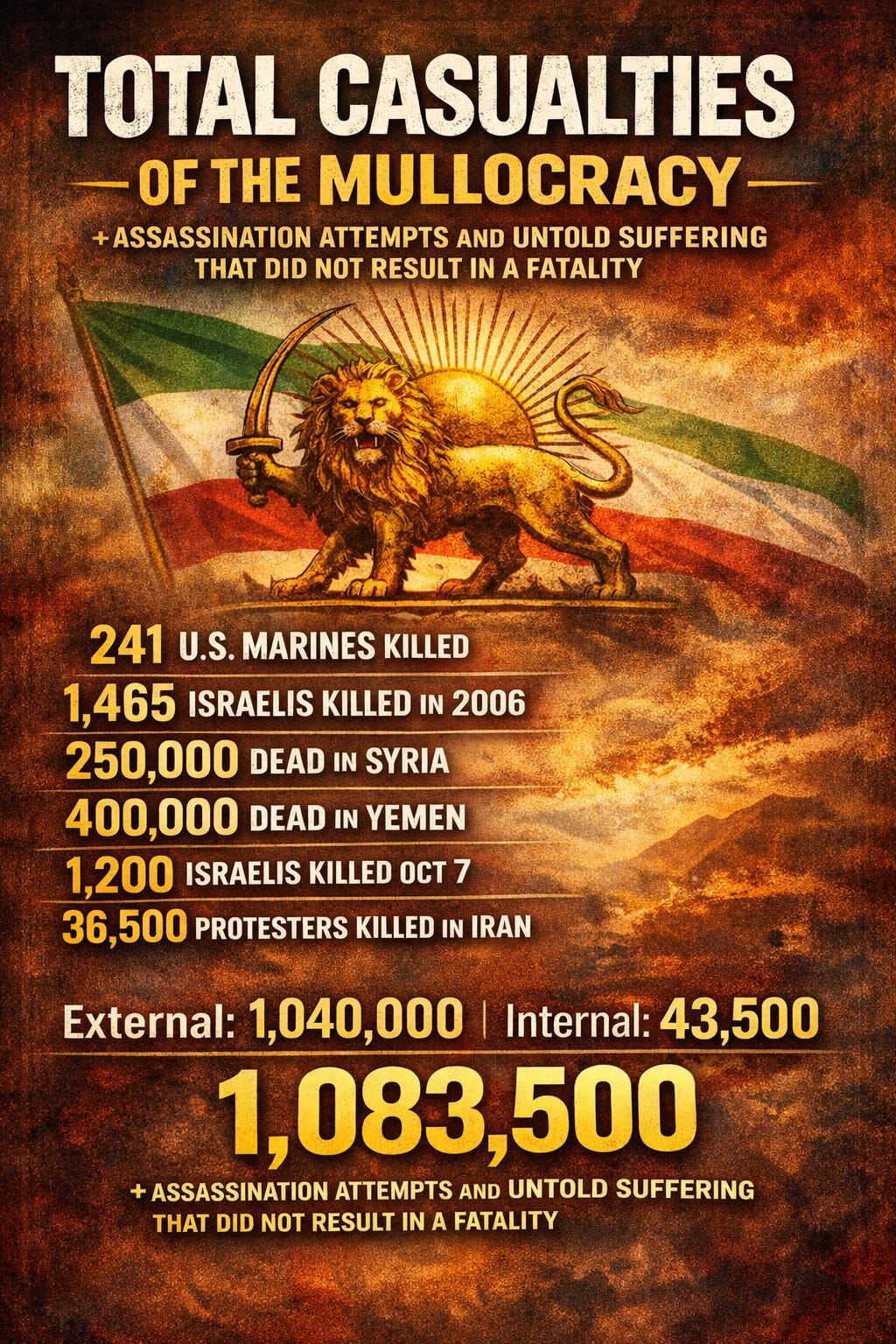
In January 2026 alone, the Iranian opposition outlet Iran International reported that more than 36,500 protesters were killed by security forces in just two days of violent crackdown, according to internal sources and hospital data — a massacre that stands as one of the deadliest instances of state violence against its own citizens in modern history. That is not a sideshow. That is not an electoral-versus-military technicality. That is mass repression. 
And yet, because Trump opposes Tehran, a remarkable breed of contrarianism arises: the view that if this regime criticises that politician, then somehow the regime must be virtuous.
Thus, the ancient and unimpressive heuristic, “the enemy of my enemy is my friend,” rears its head again. This is not political insight. It is reflexive tribalism, and it has no place in serious discussion about violence, rights, or justice.
Let us begin by being clear: I admire Iranians. Persian civilisation is one of the great threads in the tapestry of human history. Iranian immigrants enrich every society they enter with their intellect, creativity, and resilience. And the bravest — the women who stood defiantly in the face of batons, the students who chanted demands for freedom under threat of bullets — are among the most admirable figures of our time.
The Iranian people are not my target. The regime that rules them is.
Since 1979, the mullocracy has exported confrontation abroad while inflicting repression at home with a consistency that would be comical if the human cost were not so terrible.
It claims to speak in the language of religion, but its actions reveal a far more familiar pattern: a closed, kleptocratic power structure that uses theological rhetoric as camouflage.
The Islamic Revolutionary Guard Corps is not a monastery; it is a political-economy operating as both army and oligarchy. Legal and economic power are fused. Religious pronouncements are sometimes poetic, but they are often just window dressing for patronage networks, insider markets, and the suppression of dissent.
The regime insists it has not “invaded” the United States. True — not in the narrow sense of armour crossing a border. But Canada did not wait to be invaded before entering the Second World War. We were not bombed at Pearl Harbor. We were not occupied. We joined because a regime built on conquest and terror had to be opposed before it spread further.
The test of danger is not whether a dictator has yet reached your doorstep, but whether he has declared — in word and in deed — that he intends to.
The 1983 Beirut barracks bombing that killed 241 U.S. Marines.
The 2006 war between Israel and Hezbollah.
Militia attacks against U.S. forces in Iraq;
The Syrian civil war, in which Iran-backed forces were essential defenders of Assad
Yemen’s catastrophic, proxy-fueled conflict;
The October 7 massacre, in which around 1,200 Israelis were murdered;
The Gaza war that followed claimed tens of thousands of Palestinian lives.
It is easy to speak of Iran’s sponsorship of terror in terms of the large, infamous attacks that briefly dominate headlines. But the federal court record tells a far more granular and deeply human story.
In just one case - Cabrera v. Islamic Republic of Iran, filed in the U.S. District Court for the District of Columbia, dozens of American servicemembers, contractors, and surviving family members sued under the Foreign Sovereign Immunities Act for a long series of individual attacks in Afghanistan — roadside bombs, ambushes, suicide assaults — many of which never received sustained public attention. The court, after Iran declined to appear, entered a default judgment and found that Tehran had provided material support to the responsible militant networks.
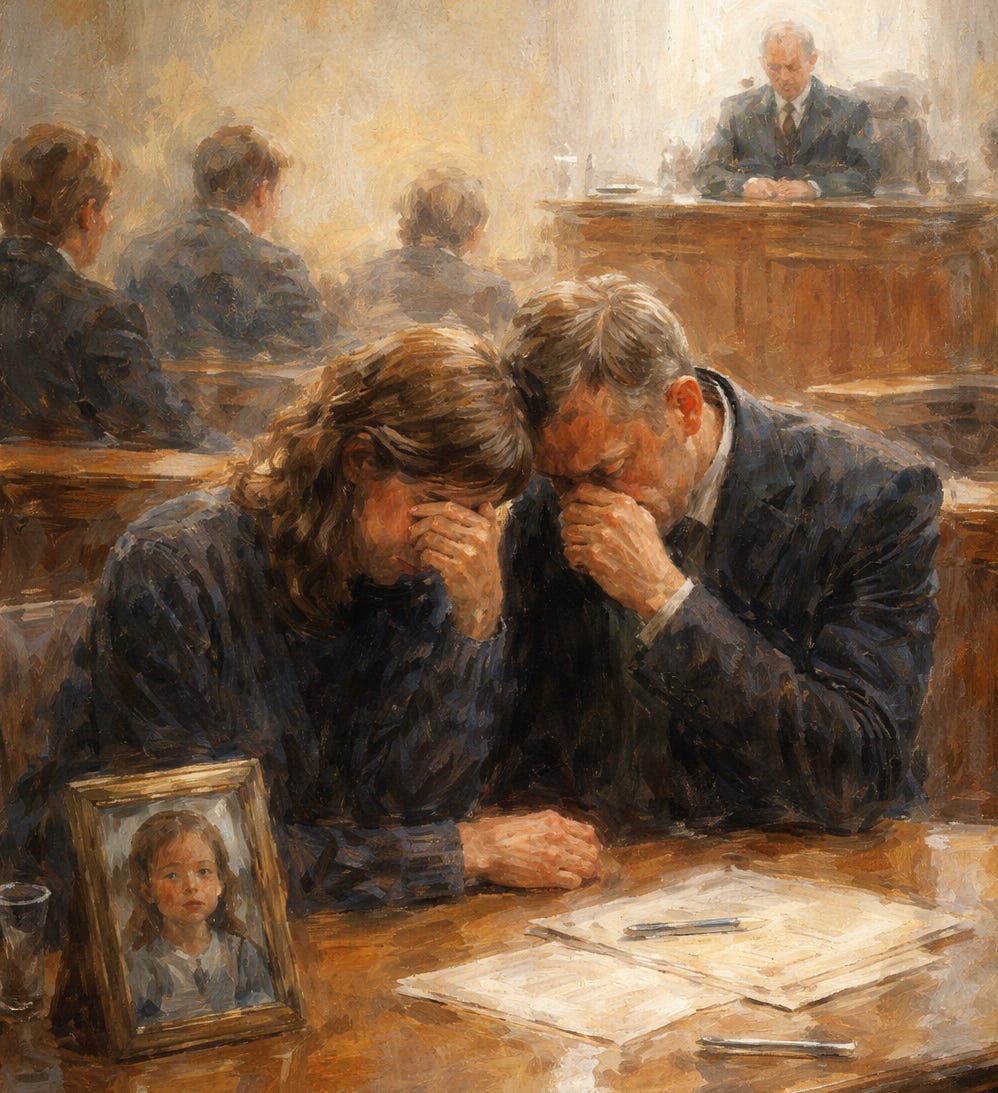
What fills the pages of the case is not geopolitical abstraction but personal loss: affidavits from spouses, testimony about catastrophic injuries, parents describing children who would never come home. Multiply that case by the hundreds of similar actions visible in federal dockets — more than 700 on a single government archive alone — and the scale becomes undeniable. This is not merely history’s headline violence; it is a ledger of individual deaths and shattered families, forced to relive their loss in court, often in pursuit of judgments they may never collect.
One may discuss responsibility by degree. Wars are not simple algorithms of cause and effect. But to deny that Iran’s regime bears substantive responsibility for these phenomena is to retreat into willful ignorance.
Then come the ritual invocations of “international law,” thrown about as if it were a talisman to ward off any inconvenient reality.
I have read international law. It is not a sauce to be poured over rotten meat to make it taste palatable.
Article 51 of the U.N. Charter recognises the right of self-defence. There is a venerable debate about anticipatory self-defence, deterrence, and alliance obligations that predates all of the recent social media commentary.
You are welcome to disagree about where the threshold lies, but you may not insist that a state must await the landing of ordnance on its own capital before it acts to defend its allies or deter further aggression.
If that were the standard, the United States should never have entered the First World War, the Second World War, or defended South Korea in 1950. Nations act not simply in response to invasion but to prevent it and to honour security commitments. One can judge those decisions as tragic or flawed — and indeed many are — but to claim they are invalid rests on historical ignorance, not moral principle.
Even outside the calculus of war and death, the regime’s record at home is damning. When constitutional politics failed to liberate the populace, the people took to the streets.
And in response, the state did not open its doors to dialogue.
In 1988, thousands of political prisoners were executed. In 2019, high-end estimates place protest deaths in the thousands. In 2022, hundreds were killed under the banner of “Woman, Life, Freedom.” Following the expansion of protests in late 2025, successive waves of demonstrations were met with escalating violence.
The Iranian people have not been allowed a civil or political life unmarred by fear or brutality. Human rights groups have documented, over decades, the systematic targeting of religious minorities — most notably the Baha’i community, who have been subjected to discrimination, arbitrary arrest, educational and employment exclusion, property confiscation, and other systematic abuses that some observers have described as crimes against humanity. 
So when commentators gush about “poor innocent Iran,” I find it not merely naïve but insulting — not because I assume ill of the Iranian soul but because such comments erase the suffering of Iranians who have literally marched for their freedom and paid with their lives, their livelihoods, and their dignity; who have been consigned to fear not only of bullets but of arbitrary arrest and discrimination; who have watched their neighbors disappear because of who they are or what they believe.
Threats to one’s physical safety are not the only measure of human suffering. Poverty inflicted by kleptocracy, repression enforced through law, exclusion based on belief — these are real harms, even if they do not always appear on casualty lists.
Yet some argue as though a regime earns absolution simply because it has not driven tanks across Western soil. As if terrorism subcontracted to proxies counts less than an invasion conducted in uniform. As if bombing a synagogue in Buenos Aires, arming militias that raze cities, or dispatching assassins abroad were merely clerical errors in the ledger of tyranny.
This is not moral reasoning. It is moral cowardice dressed up as nuance.
The Islamic Republic has exported violence for decades — through Hezbollah, Hamas, the Houthis, and a latticework of militias and operatives that have left blood on multiple continents. Its wars are waged by indirection, its hands kept technically “clean” by the useful fiction of plausible deniability. But a murder committed by proxy is still murder. A war waged through intermediaries is still war.
What we are witnessing is a familiar tribal reflex: if a regime opposes the West, it must therefore be misunderstood, provoked, or secretly virtuous. The standard is inverted. Aggression becomes “resistance.” Expansion becomes “self-defence.” Tyranny becomes “context.”
Human rights, however, are not a fashion accessory to be worn when politically flattering. If they mean anything, they apply to dissidents in Tehran as much as to critics in Washington — and to victims of proxy rockets as much as to victims of airstrikes. Anything less is not a principle. It is a preference masquerading as virtue.
The Iranian people deserve better than absolute hostility from the world. They deserve better than a state that uses religious rhetoric as a shield for corruption and repression, invoking God while looting the treasury and imprisoning the young. They deserve the simple human dignities that their rulers have systematically denied them: to speak without fear, to prosper without bribery, to think without surveillance, to live without the knock at midnight.
And they deserve something else as well — the removal of the blade their rulers hold not only to their own throats, but to the throat of the wider civilised world.
A regime that chants for annihilation while inching toward nuclear capability is not engaging in abstract theology; it is playing nuclear roulette with humanity. One does not negotiate indefinitely with a man who insists on polishing a bomb while preaching martyrdom. The decent world is under no obligation to indulge that fantasy.
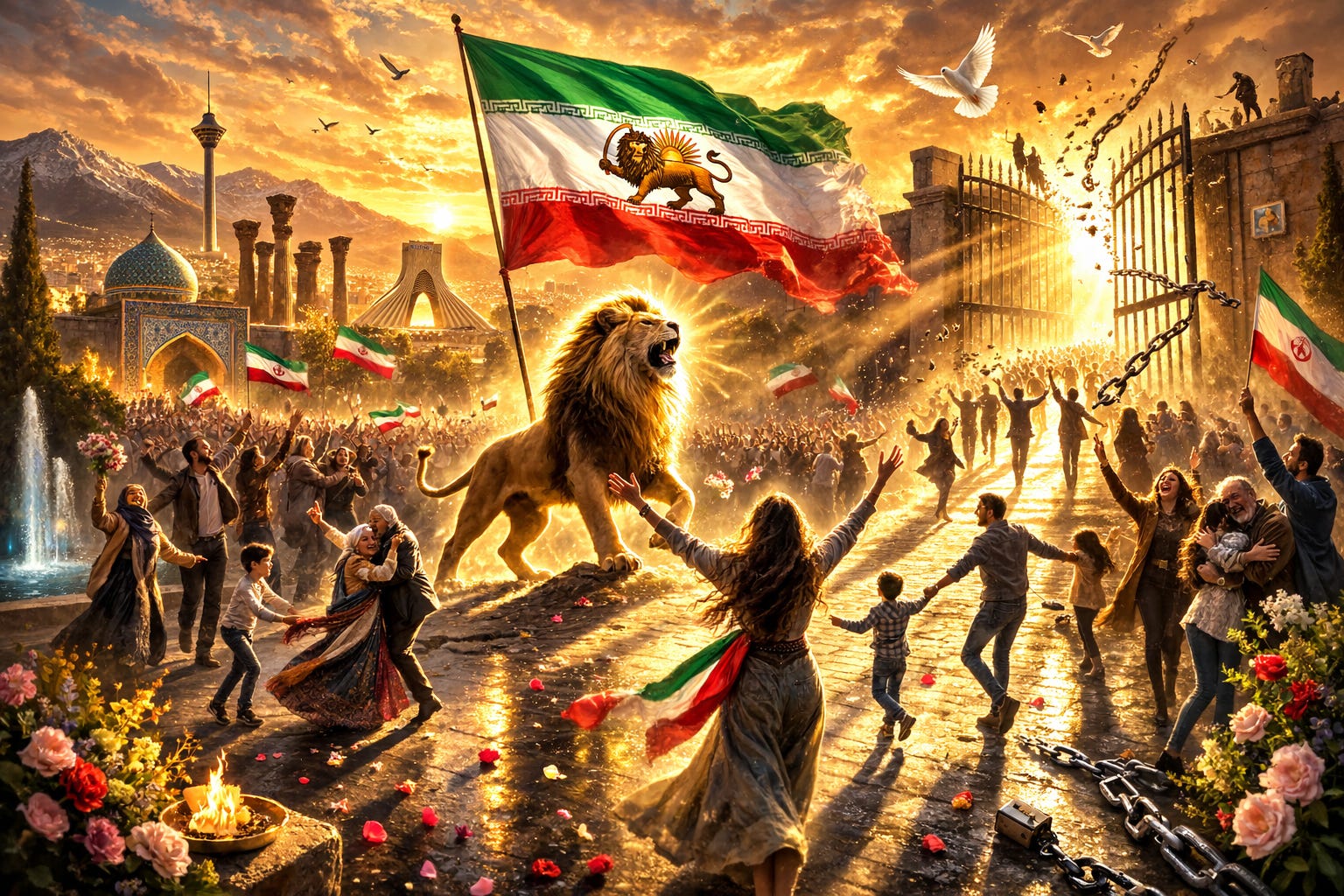
If one day more images circulate of Iranians dancing in the streets — not in orchestrated hatred of some foreign adversary, but in palpable relief from autocracy — I will not see chaos. I will see a nation exhaling after decades of suffocation. I will see deliverance: not merely from clerical misrule, but from the grotesque spectacle of a government that mistook apocalypse for policy and called it piety.
Coda: I hope that historians do not end up writing this story as little more than Bibi and Donald going to Tehran and breaking stuff. I’m sure boots on the ground will be needed. There needs to be regime change; the people of Iran must decide. The Mullocracy has killed so much leadership talent.
Good essay. For more examples of Iranian attacks on Americans since 1979, google legal case research on the Foreign Sovereign Immunities Act. These civil actions are filed in federal court in the District of Columbia. These dozens of FSIA lawsuits filed successfully over the years document hundreds if not thousands of American deaths and maimings caused by Iran or its terror proxies since 1979.
So glad you wrote this piece. I find it incredulous to hear self-righteous leftists including Canadian and European political leaders try to paint the Iranian leadership as victims of Trump-Israeli aggression! Are they blind?