If you believe in free speech—not the slogan, but the dangerous, untamed variety—then subscribe to support uncensored, heretical writing. Every paid subscription buys more time to write without asking permission from the sort of people who think “problematic” is an argument.
Please subscribe to receive at least 2 pieces/essays per week with open comments. It’s $7 per month, less than USD 5.
Everyone says, “Hey, it’s just a cup of coffee,” but please choose my coffee when you come to the Substack counter. Cheers.
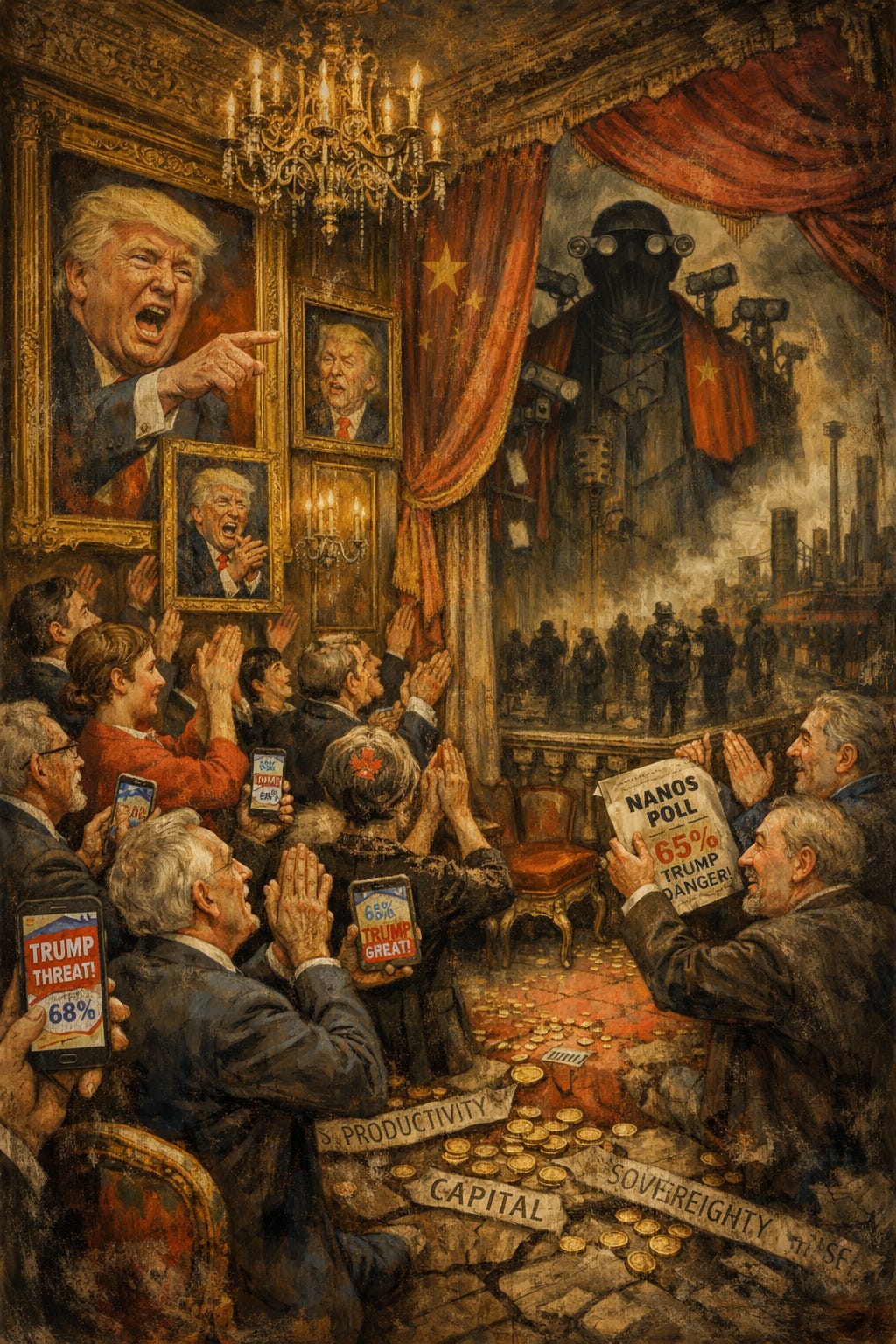
A recent Nanos poll reports that Canadians consider Donald Trump a greater threat than China. Let that sentence sit for a moment—not as provocation, but as diagnosis.
China—an openly authoritarian state that has explicitly stated its intention to absorb Taiwan by force; that operates a comprehensive surveillance society; that runs internment camps for Uyghur Muslims; that crushed dissent at Tiananmen Square; and that presided over the largest man-made famines in human history under Mao—is apparently less threatening to the Canadian imagination than an American politician operating inside the most resilient constitutional democracy ever constructed.
This is not a Trump problem. It is an education problem.
My daughter is a good student at university. Curious, capable, thoughtful. Yet when I ask what she is studying about China—its history, its political system, its ambitions, its record—there is silence. Not because she is lazy or indifferent, but because the curriculum never gets there.
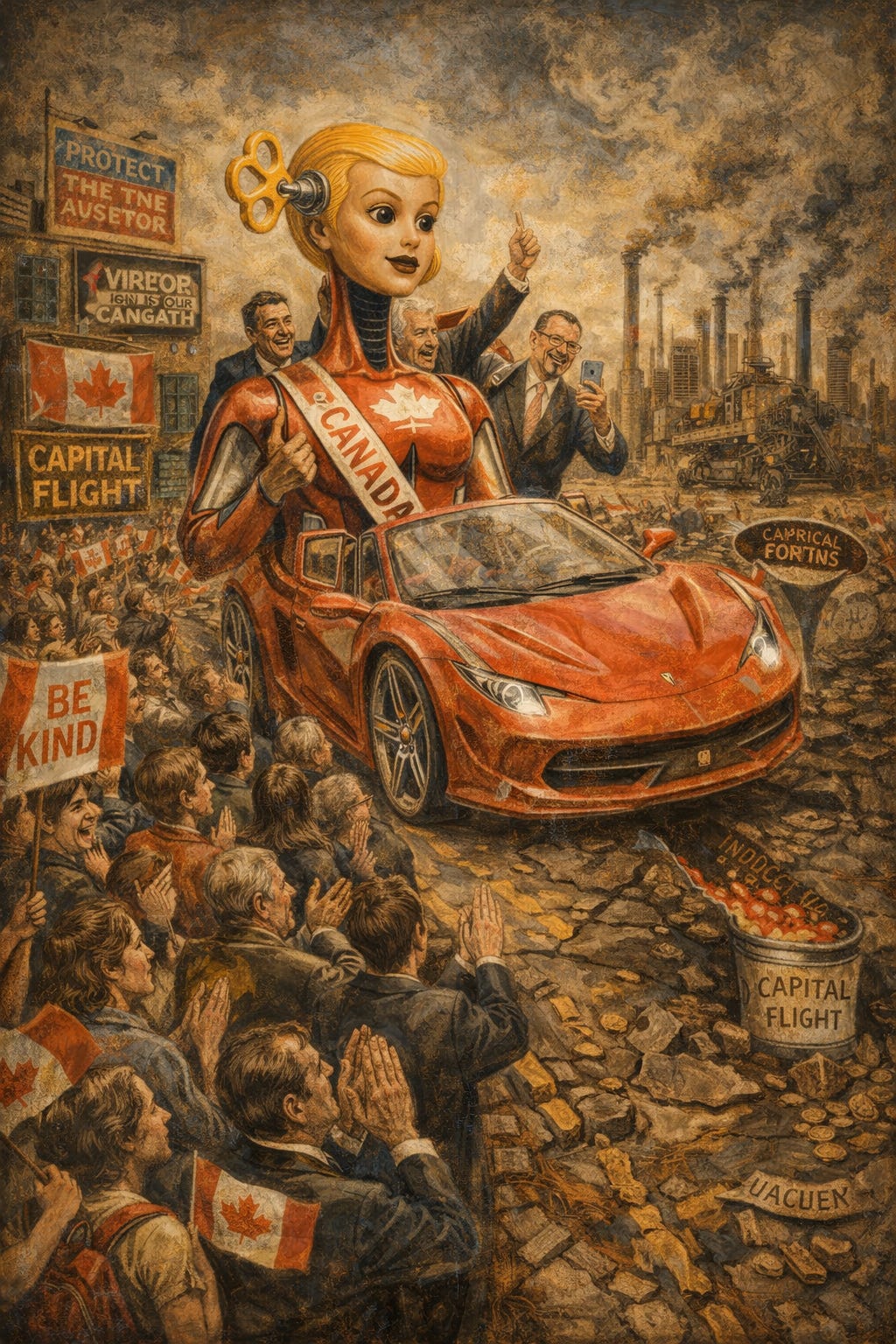
Instead, she is asked to draw “privilege flowers.” Nineteen-year-olds colouring petals of abstract guilt. Exercises designed not to educate but to induce moral self-loathing, where white students leave the classroom feeling as though they have personally ruined civilization, and everyone leaves knowing less than when they entered.
This is not education. It is a catechism.
Universities were once expected to teach students how to think about power, history, and competing systems of governance. Today, too many have outsourced that responsibility to a shallow moral theatre that substitutes emotional ritual for intellectual content.
While China builds warships, locks down cities, erases dissent, and openly rejects post-Enlightenment values, our students are being trained to look inward, not outward—to obsess over symbolic sins rather than actual threats.
The result is a population that genuinely believes a noisy American democracy is more dangerous than a disciplined one-party surveillance state. That belief is not malicious. It is not even ideological. It is the natural by-product of an education system that no longer teaches scale, power, or history.
You cannot fear what you have never been taught to understand. And you cannot defend a civilisation you have been trained to feel ashamed of.
Until universities stop mistaking moral performance for education—and start teaching students about the world as it actually is—we will continue to produce graduates fluent in grievance and illiterate in reality.
China—an openly authoritarian state that has promised to absorb Taiwan by force, runs a total surveillance society, operates internment camps for Uyghur Muslims, crushed dissent at Tiananmen Square, and presided over the largest man-made famines in history under Mao—is apparently less frightening to the Canadian imagination than an American politician operating inside the most robust constitutional democracy on Earth.
This tells us nothing new about Donald Trump. It tells us everything about Canada.
China has been explicit about its ambitions. It rejects Western post-Enlightenment values outright: freedom of speech, free inquiry, individual conscience, and the rule of law as something higher than the state. Its leadership has said—clearly, repeatedly, and without embarrassment—that liberal democracy is a decadent Western error to be replaced with a Chinese model of governance. That model includes censorship, repression, ethnic persecution, and a permanent security apparatus.
None of this is hidden. None of it is contested. And none of it troubles the Canadian voter nearly as much as the orange man south of the border.
Why?
Because Canada has become a country that confuses branding for thinking, vibes for values, and moral posturing for knowledge. We are not politically afraid; we are civically illiterate.
Trump can—and should—be criticised. That is what democracies do. But democracies also rest on institutions that constrain power: courts, legislatures, elections, and a free press. China has none of these in any meaningful sense. To equate the two—or worse, to rank Trump as the greater threat—is not political disagreement. It is civilizational ignorance.
Canadians increasingly take Western institutions for granted because they have never been taught what it took to build them—or how easily they can be lost. They have no sense of history, no grasp of civics, and no understanding of comparative political systems.
Ask them about Mao’s death toll—tens of millions—and you’ll get a blank stare. Ask them about the Uyghurs, and they’ll change the subject. Ask them about Taiwan, and they’ll mutter something about “complexity.”
But mention Trump, and suddenly they feel morally alive.
This is not sophistication. It is narcissism.
It is the same illiteracy that led Canadian parliamentarians to applaud a man who fought the Russians in the Second World War without noticing—without pausing to think—that he might have been fighting with the Nazis.
It is the same illiteracy that allowed Carney, the Prime Minister of Canada, a man allegedly fluent in global affairs, to confuse the War of 1812 with the Plains of Abraham—an error so elementary that it should have ended the sentence, let alone the speech. Nobody noticed. Nobody cared.
Because branding had already done the work.
Canada is a brand-driven country. We elect leaders not because of what they know or what they’ve done, but because of how they make us feel. Trudeau governed “from the heart.” Carney governs from the brochure. One posed with socks and teddy bears; the other with résumés and accents. Neither required competence. Both required credulity.
Mark Carney has mastered the art of appearing consequential without ever being accountable. He floats through institutions, leaves behind little more than press releases, and exits before consequences arrive. Canadians see “worked in England” and mistake proximity to seriousness for seriousness itself.
This is not leadership failure alone. We vote these people in because they reflect us.
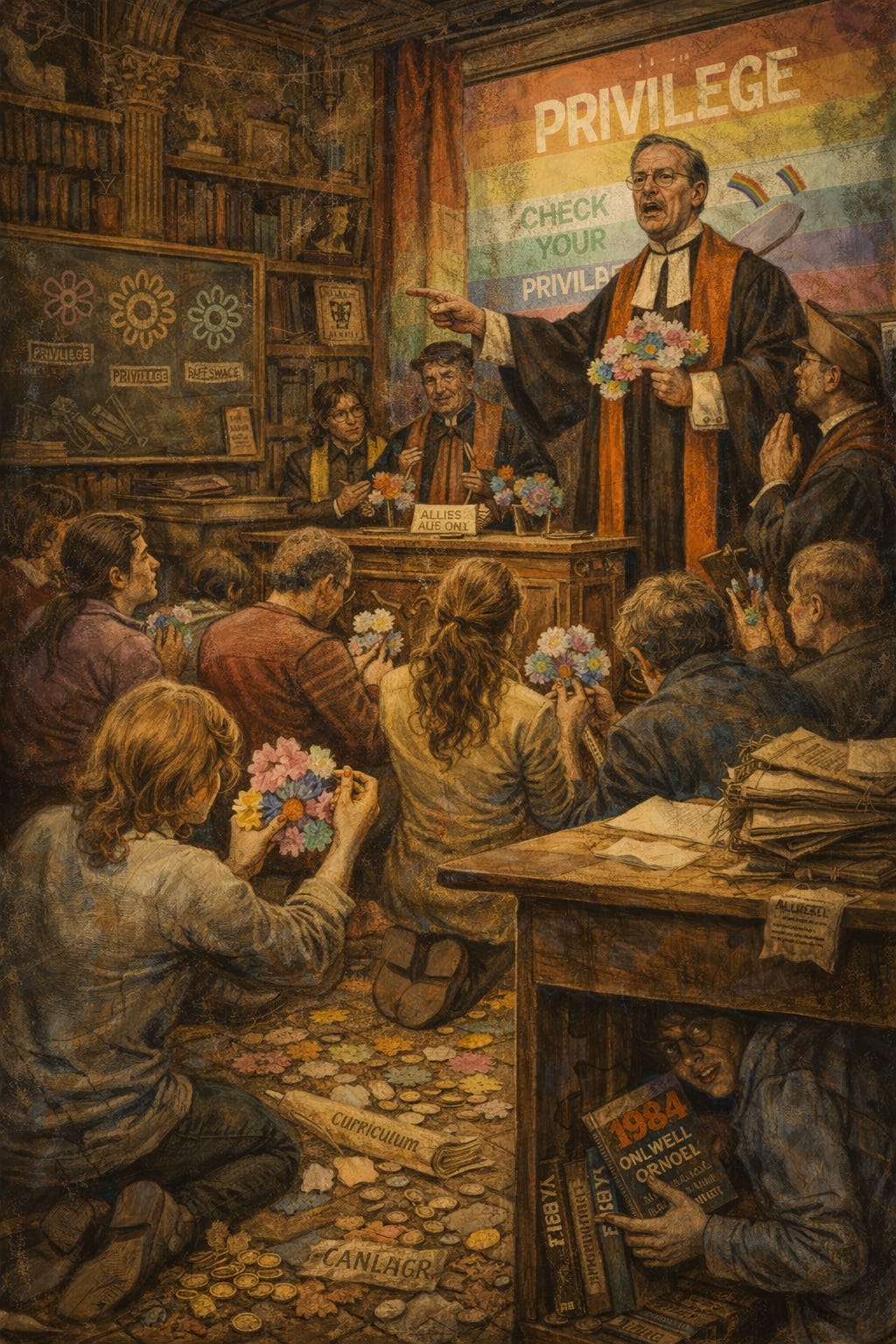
Canada is a country with a Ferrari body and Mattel brains.
We sit atop immense wealth—oil and gas, minerals, agriculture, timber—yet manage it with the imagination of a risk-averse committee. We should be richer than Norway. Instead, we are poorer, slower, and increasingly dependent.
The data is merciless. Over the last two decades, Canadian productivity has lagged. Since roughly 2015, business investment per worker has flatlined while the United States has surged ahead. Capital flows south. Machinery ages here. Our per-capita GDP gap widens not cyclically, but structurally. This is not ideology. It is arithmetic.
And yet Canadians remain convinced of their moral superiority.