


If you believe in the importance of free speech, subscribe to support uncensored, fearless writing—the more people who pay, the more time I can devote to this.
Please subscribe to receive at least three pieces /essays per week with open comments. It’s $6 per month, less than USD 4. And now take 50% off.
Everyone says, "Hey, it’s just a cup of coffee," but please choose my coffee when you come to the Substack counter. Cheers.
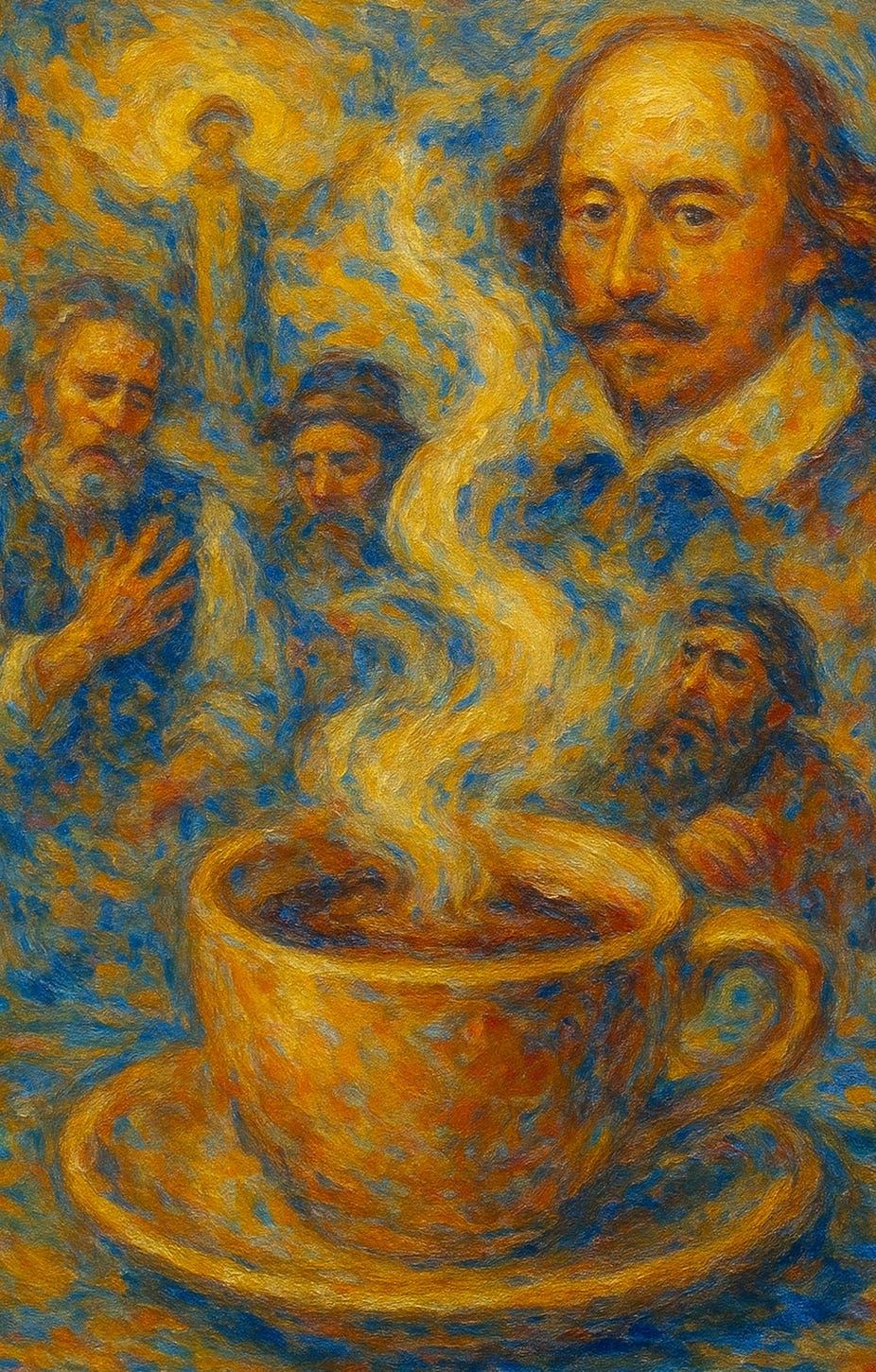
Let’s begin by torching the quaint modern fantasy that William Shakespeare was some sort of Renaissance Robin DiAngelo, quietly deconstructing bigotry between quill strokes.
The Bard was not scribbling blank verse from a position of enlightened inclusivity. He was, in fact, a man of his time—and what a time it was. A time when Jews weren’t just marginalised; they were gone. Banished. Booted. Legally evicted under the Edict of Expulsion of 1290 by King Edward I, because—why not?—nothing says national renewal like expelling a few thousand of your most economically useful scapegoats.
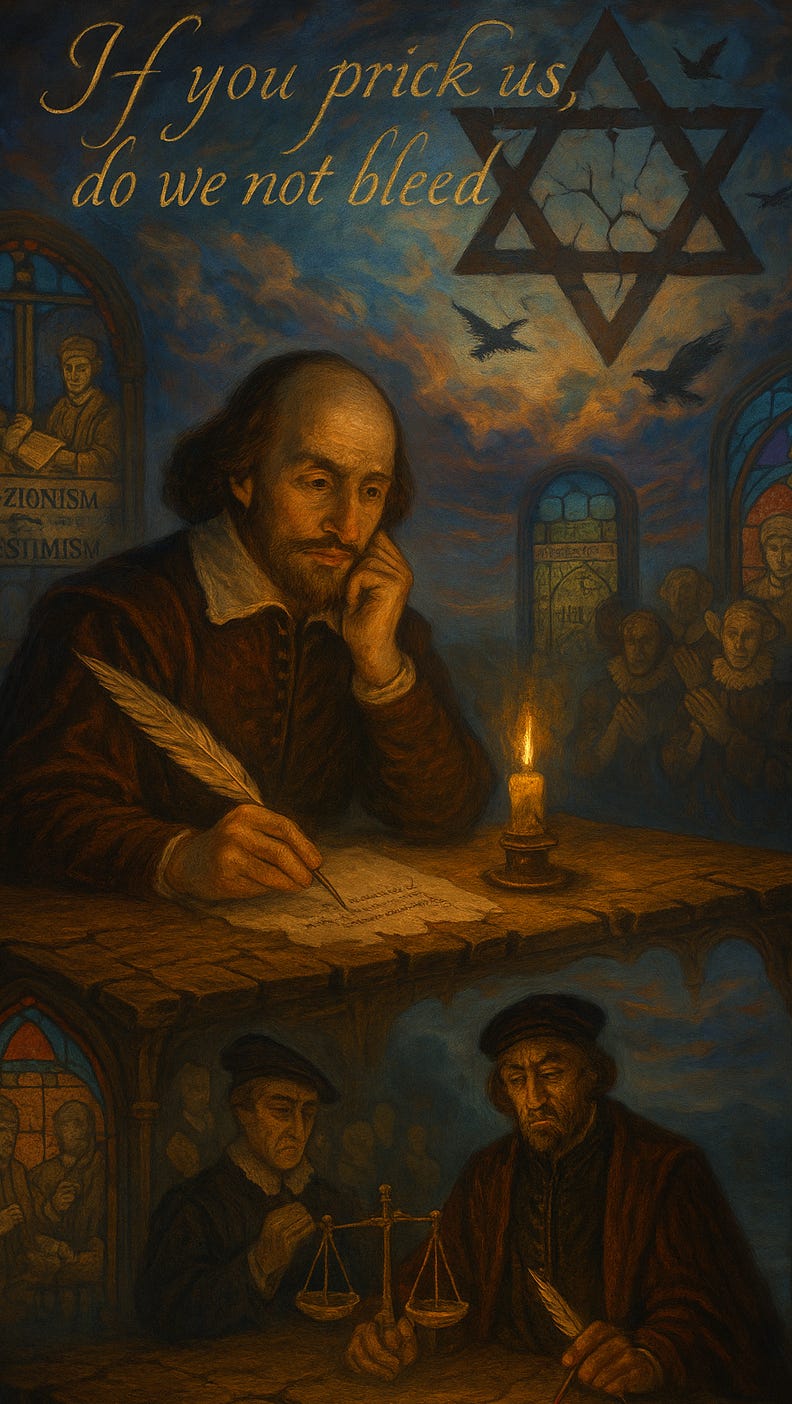
So by the time Shakespeare started staging his plays in the late 16th century, England hadn’t had an officially recognised Jewish population in over 300 years.
You could go looking for a bagel in London and find the rack before you’d find a rabbi. The only Jews around were crypto-Jews pretending to be Catholic, or the occasional court physician like Rodrigo Lopez, who served Queen Elizabeth I until he was convicted—on highly dubious evidence—of plotting to poison her in 1594.
His trial, a masterclass in theatrical paranoia, likely inspired Shakespeare’s Jewish villain Shylock, not out of solidarity, but out of sheer dramatic convenience.
Enter The Merchant of Venice, written sometime between 1596 and 1599, at a time when English theatre was not exactly the bastion of interfaith understanding. Shylock, the Jewish moneylender, is the archetypal Elizabethan bogeyman: avaricious, vengeful, and, crucially, handy with a legal contract involving a pound of human flesh. He is the villain you cheer against until—just for a moment—Shakespeare does something dangerous. He lets the villain speak.
In Act 3, Scene 1, Shylock famously declares:
“If you prick us, do we not bleed?”
And modern readers swoon. Ah, here it is! Shakespeare’s moment of radical empathy! The Bard was the 17th-century ACLU. But hold the applause. The speech continues:
“And if you wrong us, shall we not revenge?”
You see, it’s not an appeal for tolerance. It’s a manifesto for vendetta. And yet, because it is delivered with such burning humanity, we get a glimpse of something Elizabethan audiences weren’t accustomed to: a Jew who isn’t just a villain, but a person.
That’s the subversive genius of Shakespeare. He gives you the stereotype, but then he twists the blade.
Still, let’s not pretend the play is a ringing endorsement of pluralism. The final fate of Shylock isn’t just theatrical defeat; it’s theological obliteration.
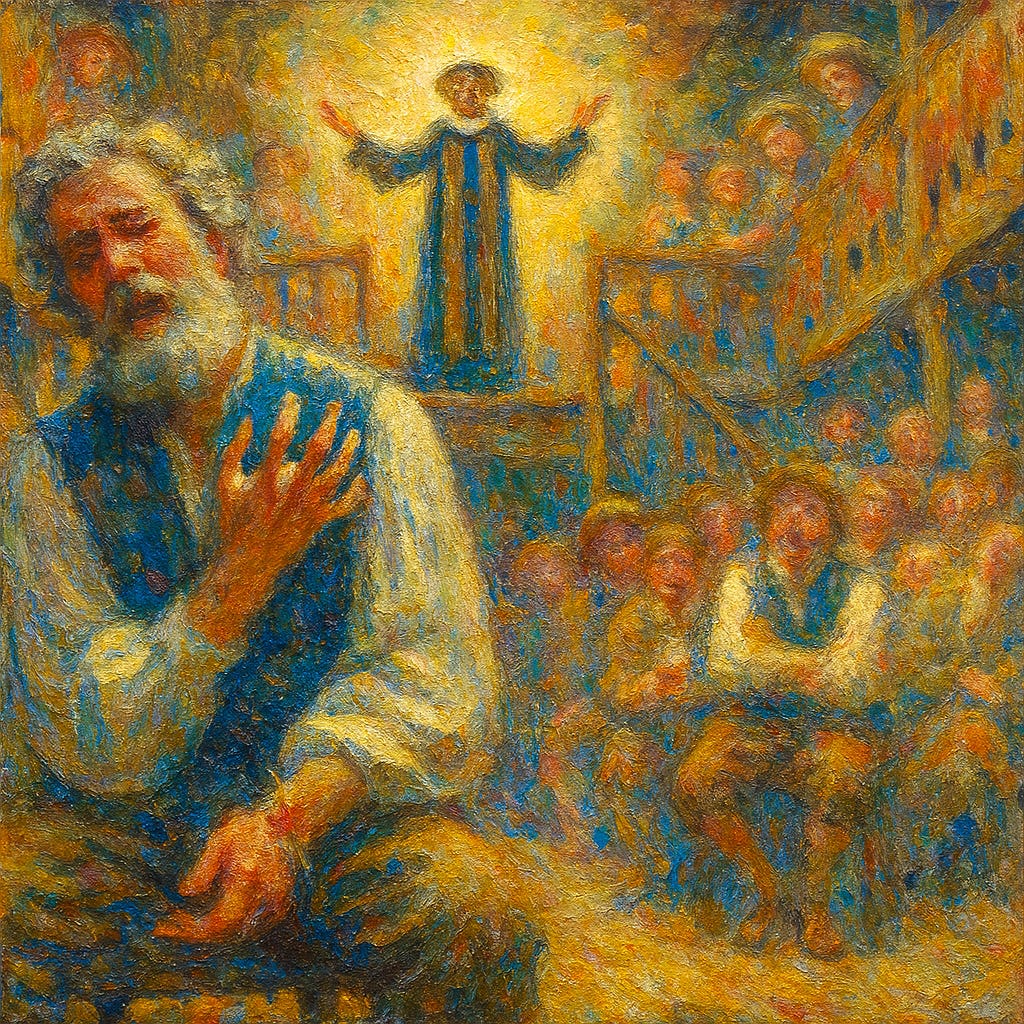
In Act 4, Scene 1, after being outwitted in court, Shylock is forced to convert to Christianity. Not as a gesture of mutual understanding, but as a state-sponsored humiliation. Imagine watching your entire identity get ritually stripped away—then imagine the audience clapping.
This, we’re told, was “mercy.” As Portia lectures in the same scene:
“The quality of mercy is not strained. It droppeth as the gentle rain from heaven.”
Unless you’re Jewish, of course, then it droppeth as forced baptism from a hostile regime.
In fairness, Shakespeare does more than many of his contemporaries ever dared. He doesn’t reduce Shylock to a moustache-twirling cartoon. He gives him pain, voice, and motive. But he does so within the iron framework of a society steeped in Christian triumphalism and medieval antisemitism.
The entire structure of The Merchant of Venice relies on the comfortable assumption that the Jew will lose. That his defeat—financial, legal, and spiritual—is both just and necessary.
Let’s not forget: antisemitism in England wasn’t some back-bench opinion. It was national policy. Jews were barred from land ownership, guilds, universities, Parliament—you name it.
They were boxed into usury because the Church forbade Christians from lending at interest. Then they were hated for doing the very job they were forced into. And when they prospered in that role, they were accused of greed and targeted for exile or worse. It’s the medieval version of “Go back to Europe” and “You’re not European” in the same breath.
And when Jewish communities fled persecution in the Middle East and Europe, they were chased from pillar to post—until, after 2,000 years, they returned to their ancestral home in Israel, only to be told that now they’re colonialists.
History has no expiry date for scapegoats.
So was Shakespeare an antisemite? That depends on whether we judge him by the standards of his time or ours. In his time, he was probably seen as a moderate—he gave his Jewish villain nuance, for heaven’s sake! Today, he might be hauled before a human rights tribunal for religious vilification and sentenced to diversity training.
But if he worked for a university, he’d be free and clear, as long as he never hurt any Muslim’s feelings, Jews and Jewish supporters are always fair game. We can’t forget that.
It should be inscribed above the doorway on the way into the faculty lounge.
But perhaps the real tragedy is not that The Merchant of Venice contains antisemitic tropes. The tragedy is that, four centuries later, we still find this sort of discourse eerily relevant. Because in some elite circles—academic, cultural, political—we’ve simply traded old religious hatreds for new secular dogmas. Antisemitism, like Shakespeare’s plays, never really goes out of style. It just changes costumes.
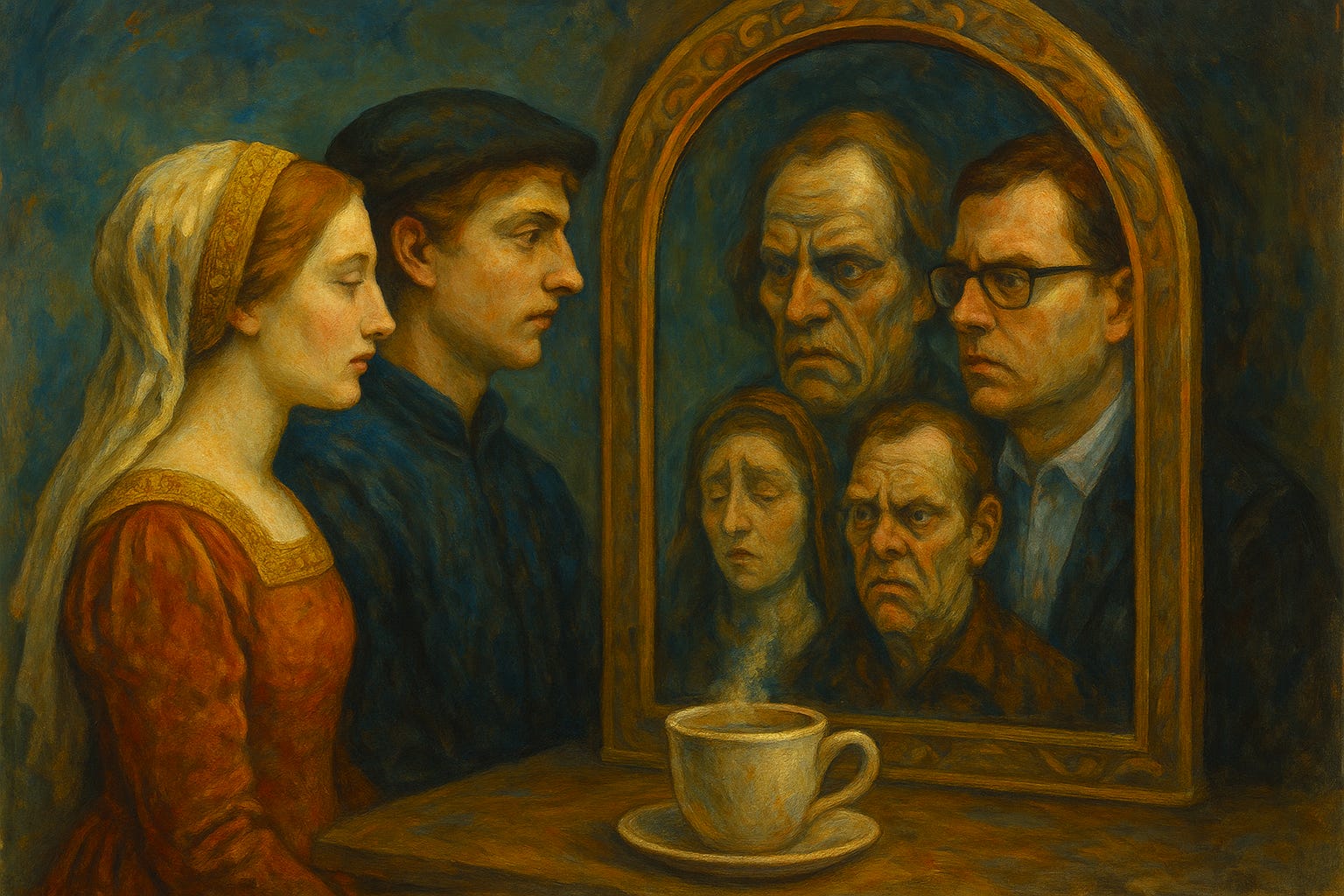
As always, the theatre reflects its audience.
And sometimes, the mirror isn’t flattering.
If you found value in this article and wish to support my ongoing work, please consider leaving a tip. Your support helps me continue producing uncensored content on critical issues.
The flowers below have nothing to do with anything above. I got them for my wife, and even as they brown around the edges and draw closer to the bin, they are still beautiful.

Good analysis of the play with a tip of the hat to Shakespeare who despite the anti-semitism of his age managed to create a villain who was Jewish and had some redeeming qualities.