


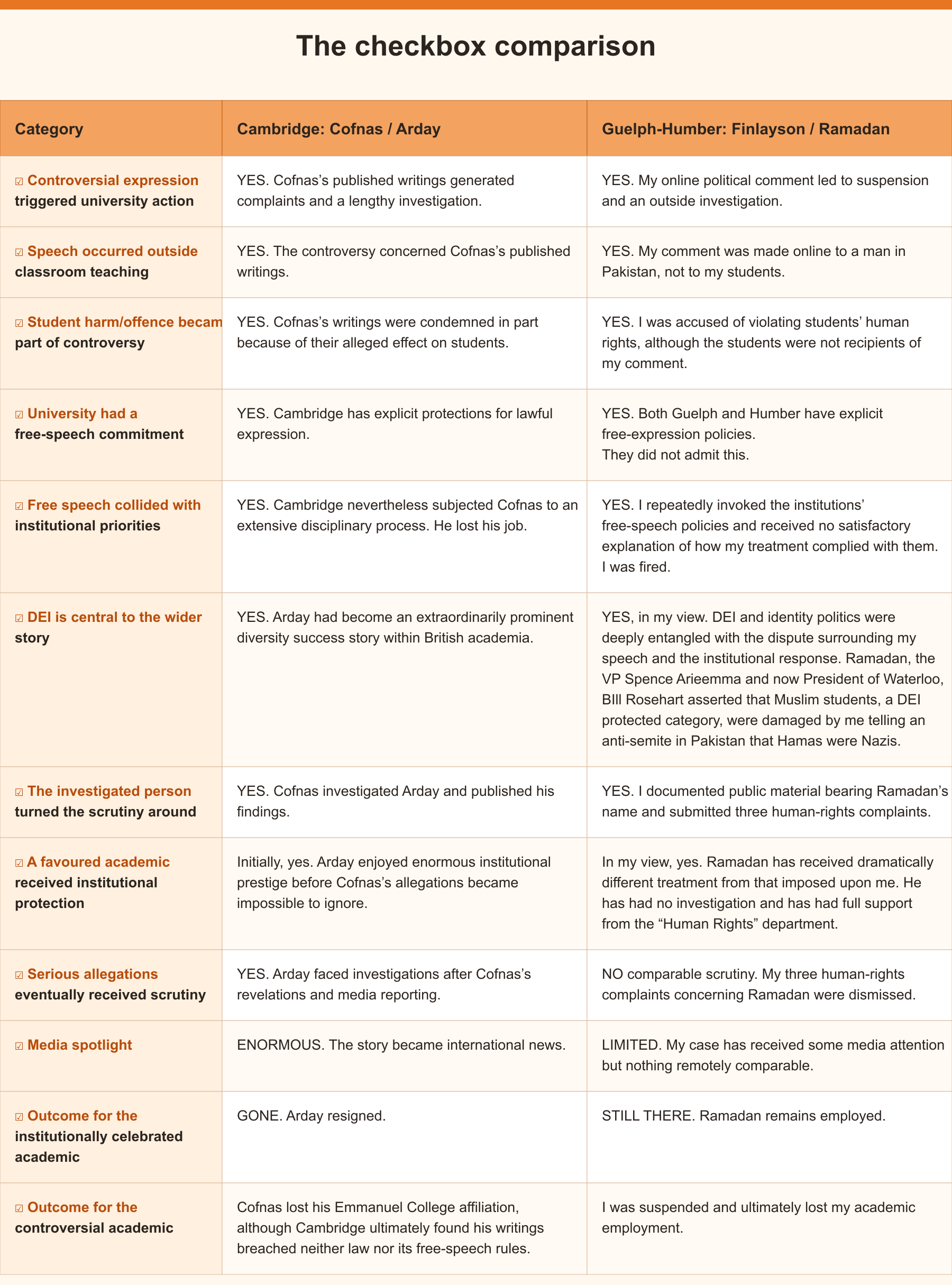
The comparison is imperfect. The institutional reflex is strikingly familiar.
Nathan Cofnas is the Cambridge philosopher whose investigation brought the Jason Arday controversy into public view.
That sequence matters, because before Cofnas began scrutinizing a professor Cambridge had celebrated, Cambridge had scrutinized Cofnas.
Cofnas wrote a Substack essay with empirical claims about measurable admissions criteria for black students at Harvard; there was no racial insult.
Complaints followed. Cambridge subjected Cofnas to a lengthy disciplinary investigation, and Cambridge college Emmanuel College. Cambridge’s investigation eventually reached an awkward conclusion: his published views had violated neither the law nor the university’s free-speech regulations. But he was fired anyway.
Cofnas then began examining Professor Jason Arday, one of Britain’s most celebrated academic success stories. He published evidence alleging extensive plagiarism in Arday’s doctoral dissertation and raised other questions about his academic record. Major newspapers entered the story. Cambridge fought back and only opened further investigations under intense media scrutiny. Arday ultimately resigned without admitting any wrongdoing.
Watching this unfold, I was struck by an imperfect Canadian parallel: my own.
What the comparison is—and is not
The most important qualification should come first.
Jason Arday did not cause Nathan Cofnas to be investigated or removed from Emmanuel College. In my case, Professor Wael Ramadan helped initiate and advance the process that eventually cost me my academic employment.
That is a major difference. I do not want to conceal it.
Nor am I comparing the allegations against the two men. I am not accusing Ramadan of plagiarism, fabrication or academic incompetence. The conduct at issue is entirely different.
Cambridge and the University of Guelph are also not remotely comparable institutions. Cambridge sits at the summit of world academia. Guelph-Humber, where I taught as a sessional lecturer, occupies a much more modest place - and in the last two years it has slipped considerably, abandoning committment to teaching quality while focusing on revenue maximization and keeping students happy with soft grading.
Arday became an international story. Mine remains a relatively obscure Canadian academic dispute.
The parallel is not personal, institutional or academic equivalence. It is a parallel in institutional machinery.
In both stories, controversial expressions triggered an energetic university response. In both, the institution had formal commitments to lawful expression. In both, complaints framed the expression partly through its alleged effect on protected groups. And in both, the institution appeared far more willing to scrutinize the controversial speaker than to examine whether its own procedures, priorities and favoured narratives were being applied consistently.
The question connecting the cases is therefore not whether Ramadan “is” Arday or whether I “am” Cofnas.
It is this:
What happens to a university’s commitment to free speech when that commitment collides with DEI priorities, reputational self-protection and institutional ideology? Free speech becomes decorative.
My case began with a private social-media exchange.
I responded to a man in Pakistan and said, in substance, that if he stood with Hamas, he stood with Nazis. I based that comparison on Hamas’s origins in the Muslim Brotherhood and on the documented history of collaboration, shared antisemitism and ideological affinity linking important Brotherhood figures and allies to Nazi Germany.
The recipient was not my student. The comment was not delivered to a class. It was not university teaching, and no student received it from me.
Yet the exchange was transformed into an allegation that I had violated students’ human rights.
I also maintain that the university never possessed an authentic copy of the complete original exchange. The post to which I responded disappeared, and what circulated was an altered or incomplete screenshot of my comment.
Nevertheless, the institutional machinery came roaring to life.
I was suspended. Like Cofnas, an outside lawyer ‘investigator’ was retained. The process stretched across close to two years. During that time, I was interviewed once. The lawyer, Gita Anand of the gunslinging law firm Sherrard Kuzz, was hostile, rude, and hysterical. She made ludicrious accusations of me somehow - before I knew of the man’s existence - posting anti semitic images on his LinkedIN.
It was like being interviewed by a lunatic.
I was ultimately dismissed from my academic employment without a meaningful hearing or appeal. The university encouraged an ugly and cruel defamation campaign against me.
Throughout the process, I kept raising one inconvenient subject: free speech.
Both the University of Guelph and Humber College publish commitments to freedom of expression. I cited those commitments and repeatedly asked how my treatment could be reconciled with them. I received no reply. I am not sure that anyone in administration is aware that they have a free speech policy; perhaps it sits lonely in an unclicked corner of their website.
And then there was Wael Ramadan
This is where the institutional parallel becomes uncomfortable.
After Cambridge scrutinized Cofnas, Cofnas turned his attention to an academic whom Cambridge had celebrated. After the University of Guelph scrutinized me, I began documenting public material bearing the name of a professor whom I believed the institution had treated very differently.
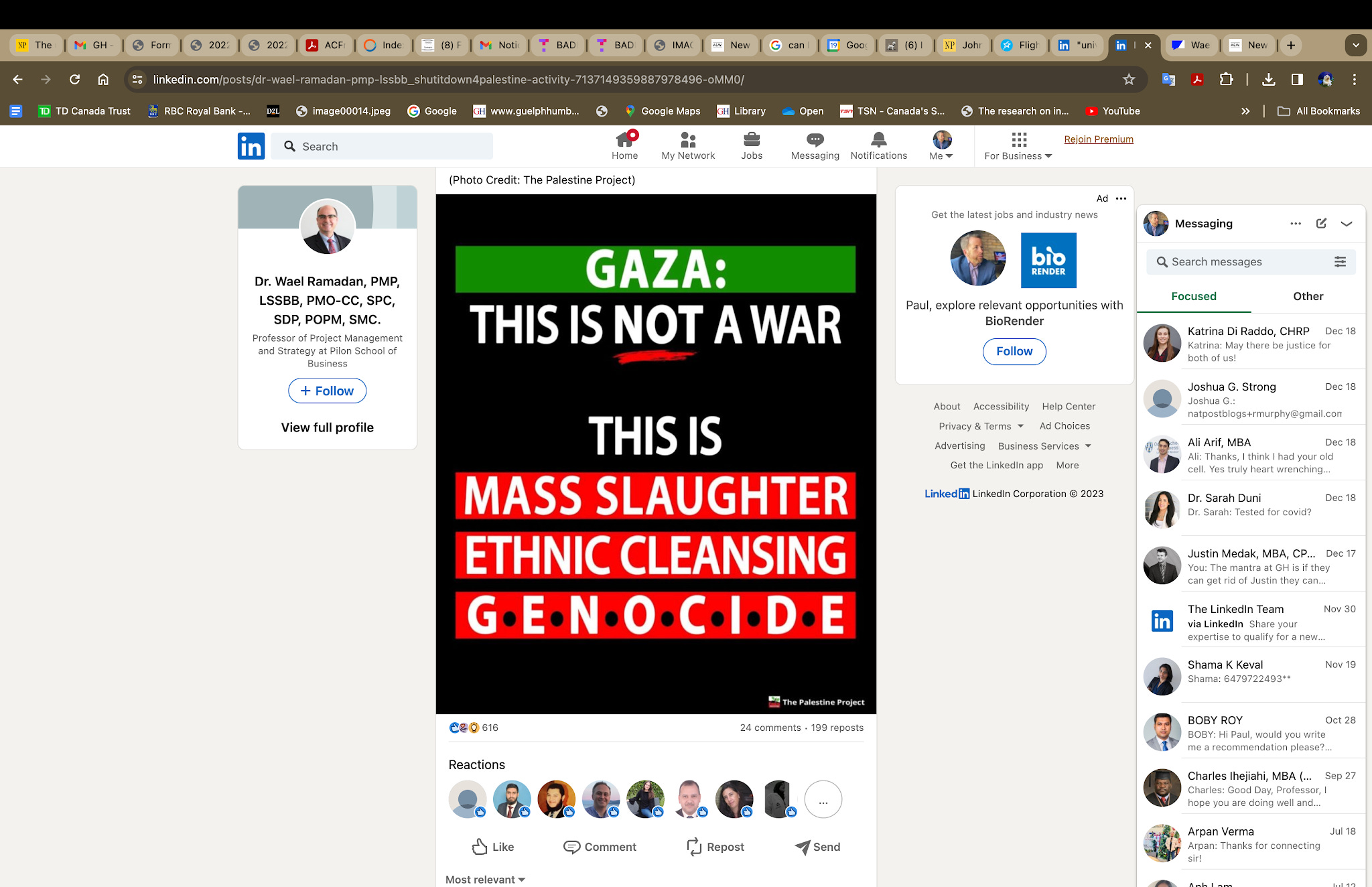
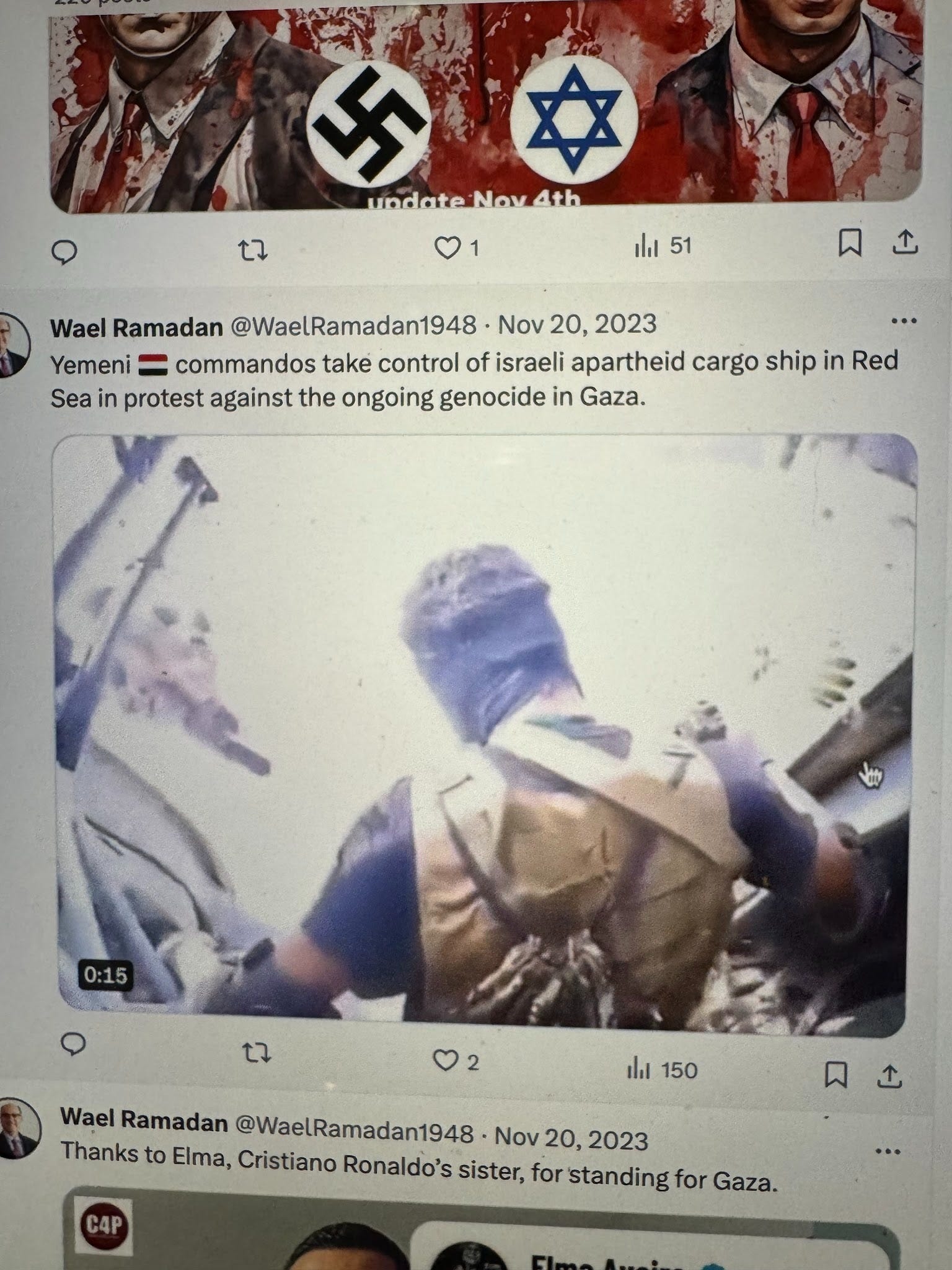
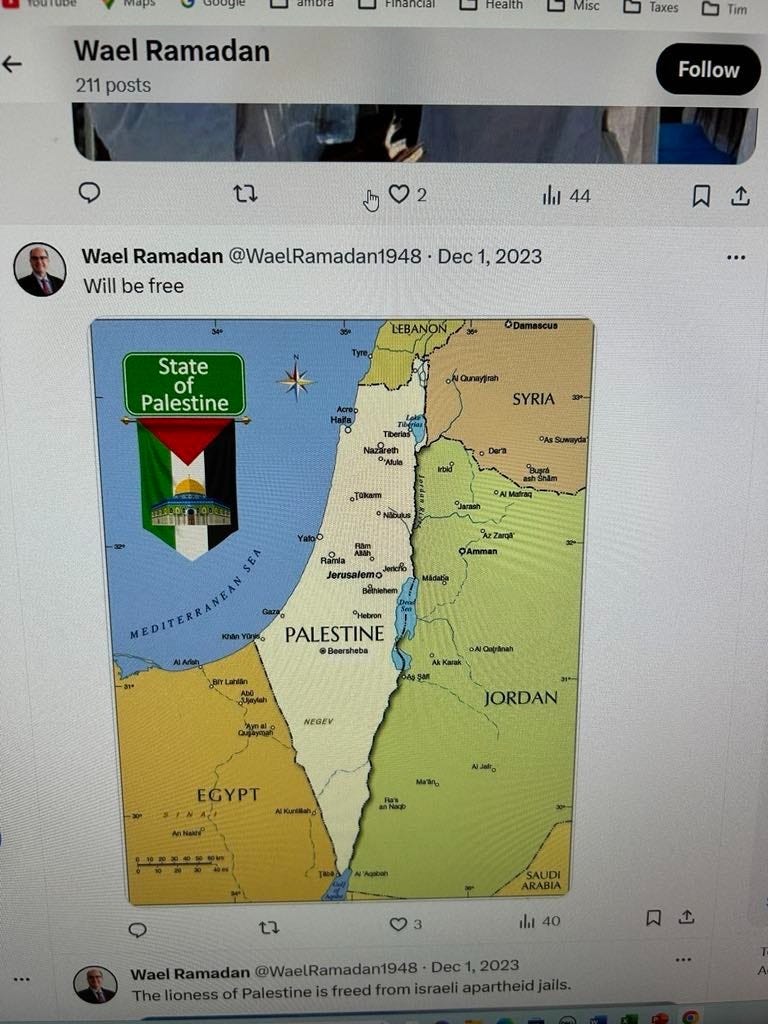
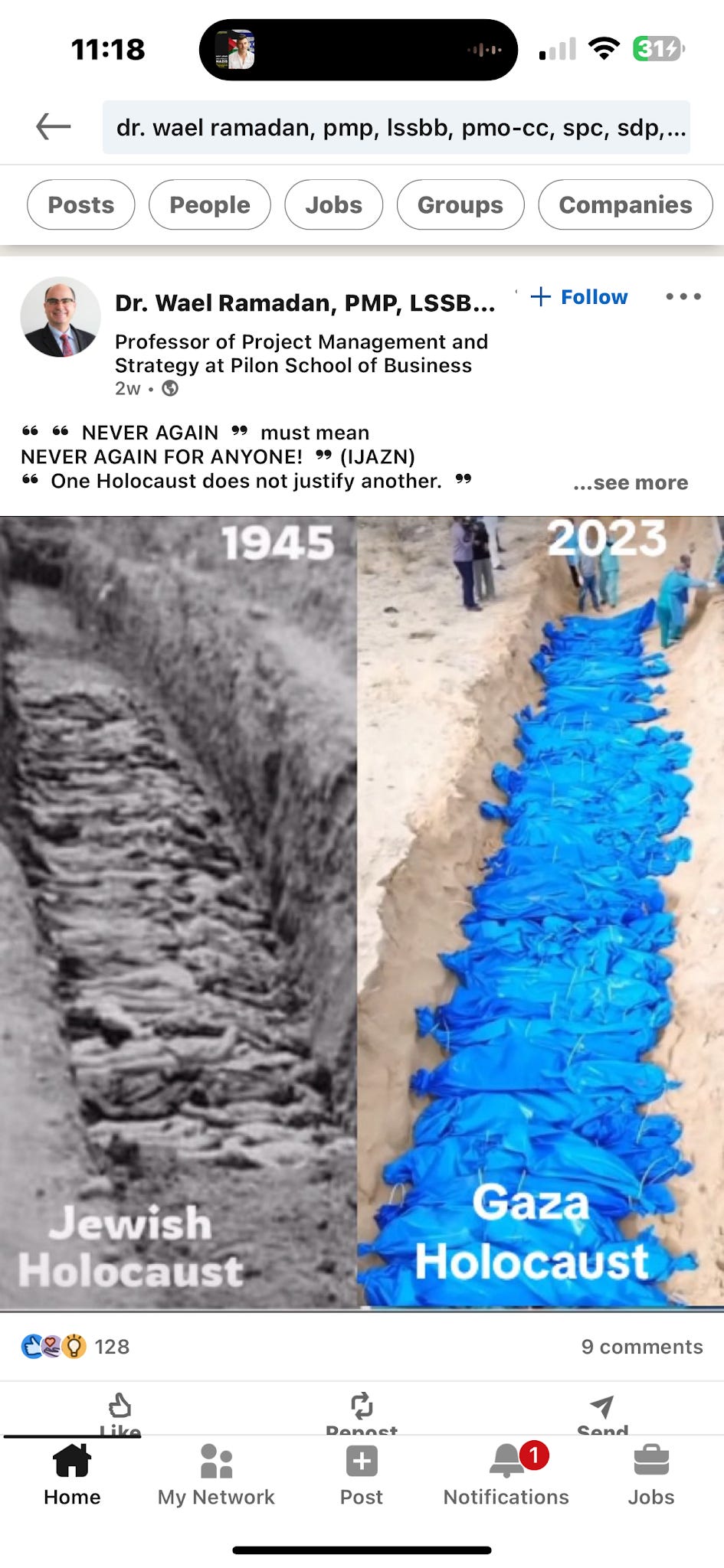
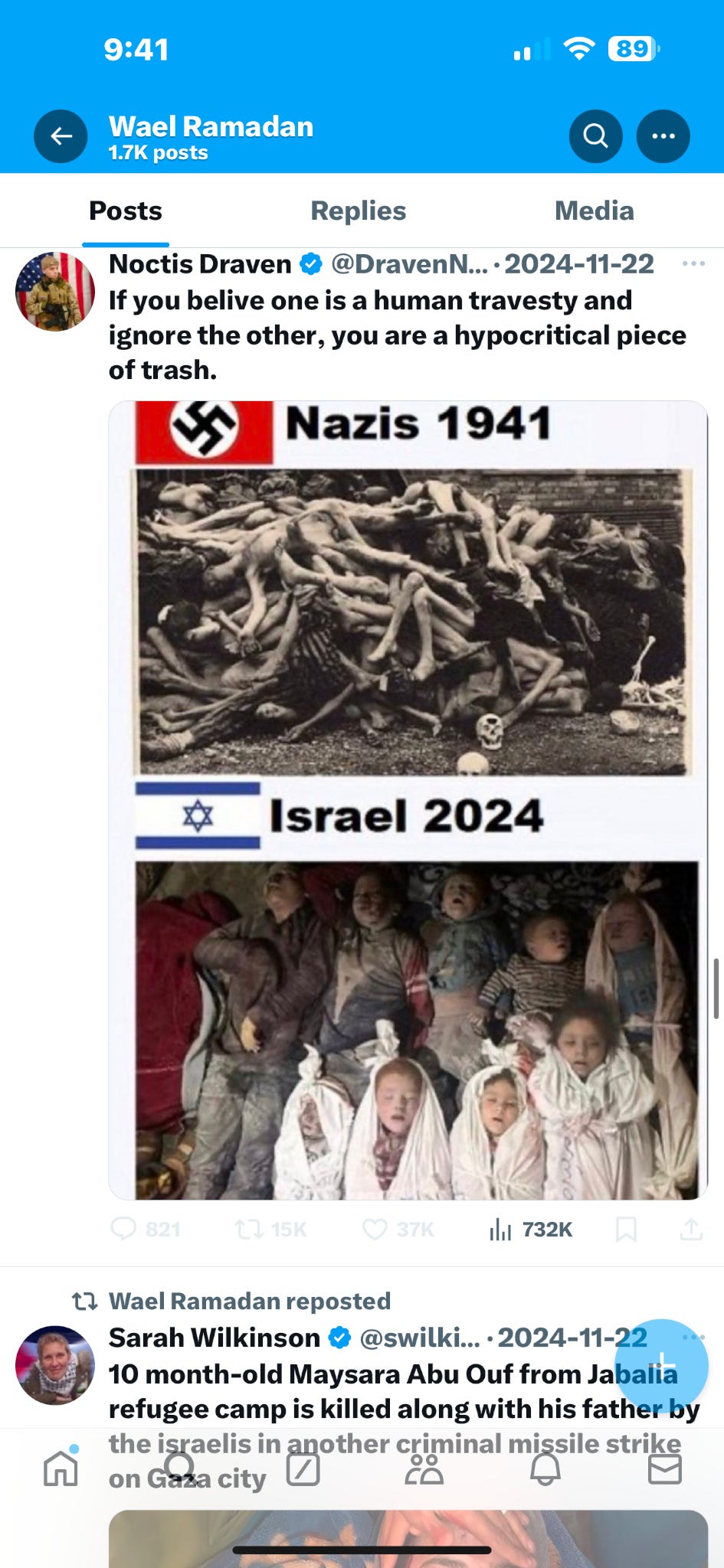
The material I collected under Ramadan’s name includes depictions of Jews with Hitler moustaches; descriptions of Jews as subhuman or devil worshippers; claims assigning collective Jewish responsibility for the Holocaust; and posts or reposts that I interpret as supporting or praising Hamas, Hezbollah and the Houthis.
Readers need not accept my characterization. The underlying posts should be examined directly.
Journalist John Ivison also reported that a concerned member of the Sheridan College community contacted him about Ramadan’s online statements concerning Israel. Other published reporting has described allegations from students concerning remarks about Jews and Israel in the classroom. Ramadan has a long track record; he is an exemplar for the antisemitic professor.
Jewish students and I submitted three human-rights complaints concerning Ramadan. They were dismissed without any apparent review. Ramadan remains employed.
My private political comment to a person in Pakistan allegedly violated the human rights of students who never received it. That justified suspension, organized institutional defamation, a rubber stamp of an external investigator and a process lasting nearly two years that ended in my termination.
Yet the complaints that Jewish students and I submitted concerning a colleague’s public material were dismissed without anything approaching the process imposed upon me.
The role of DEI
Both Ramadan and Arday were DEI love children of the University of Guelph and Cambridge, respectively. Both institutions put DEI biases before academic integrity, the human rights code, and their own purported commitment to free speech.
Both cases expose what happens when political fashion and diversity bureaucracy are permitted to outrank neutral rules. The scandal is not merely that Cofnas and I encountered severe standards. It is that the standards appeared only when required—and disappeared when they became inconvenient.
Cambridge eventually concluded that Cofnas’s published views violated neither the law nor its own free-speech regulations. This vindication arrived with exquisite academic timing: after his Emmanuel College affiliation was already gone. The verdict pronounced him innocent; the machinery had already administered the sentence.
My experience was cruder. I repeatedly cited the institutions’ published commitments to freedom of expression. The University of Guelph, Humber College and Guelph-Humber responded with the eloquence of a locked filing cabinet. Not one official offered a substantive explanation of how those protections applied to me. They did not rebut my argument. They shunned the person making it.
The institutions proceeded as though their own policies were decorative Latin mottos and their human-rights obligations optional reading. Process was not followed so much as driven over.
The complaint advanced by Vice-Provost Melanie Spence-Ariemma—the senior administrator who helped initiate the proceedings against me—was, in my view, an incoherent catalogue of assertions, emotion and conclusions unsupported by evidence. Yet it was treated not as an allegation requiring proof but as a verdict awaiting paperwork.
The Muslim Students’ Association was offended. Wael Ramadan was offended. The DEI machinery had acquired its victim, and from that moment innocence became a procedural inconvenience.
Bill Rosehart, then the University of Guelph’s provost, terminated my employment without ever speaking to me. My hearing was cancelled. My appeals, I maintain, were not meaningfully considered. He has since become president of the University of Waterloo—a promotion that invites an awkward question about how rigorously universities investigate the judgment of those they appoint to investigate everyone else.
The continued employment of Spence-Ariemma raises an equally serious question. My allegation is not merely that she pursued the dismissal of someone who had condemned a terrorist organization, nor merely that she ignored evidence concerning Ramadan’s public statements about Jews and Israel. It is that the process she helped set in motion was accompanied by what I believe became a cruel and professionally devastating campaign of falsehoods.
Within hours of my suspension, a grotesque alternative explanation was reportedly moving from staff and faculty to students: that I had been arrested and that some hidden offence explained my removal. I possess contemporaneous evidence that this story was circulating. No administrator warned me, sought my account or publicly corrected it. In one of the few times they responded, they outright refused to deal with outright lies.
Falsehood had achieved what due process could not: a conviction without the tedious expense of a charge.
Meanwhile, academics who embodied a diversity narrative valuable to the institution appeared to receive patience, indulgence and protection unavailable to their critics.
That is the parallel.
Not that Jason Arday arranged Nathan Cofnas’s removal. He did not.
Not that the allegations concerning Arday and Ramadan are identical. They are not.
The parallel is the institutional culture: free speech treated as conditional, complaint procedures converted into political instruments, and nominally neutral standards applied according to the identity of the accused and the ideological usefulness of the accuser.
The policies remained equal. Only the people ceased to be.
The enormous difference
The Canadian story diverges from Cambridge because Cofnas succeeded in forcing the Arday controversy into public view.
Once major media organizations began examining the allegations, Cambridge could no longer treat the matter as an obscure internal problem. The spotlight became enormous. Cambridge opened investigations. Arday resigned while disputing the campaign against him.
Nothing remotely comparable has happened in my case.
There is an obvious reason. This is not Cambridge. I am a bit of a nobody. Outside of the National Post, major Canadian media is decidedly prejudiced against Israel. The CBC waxes lyrical about the indignity of a paramedic being fired for the grotesque accusation of the IDF luring and shooting toddlers but will not touch a man fired for condeming a designated terrorist organisation.
But Arday’s prominence made him an international story in a way that Ramadan was never likely to become.
The different levels of scrutiny may help explain the different endings.
Cambridge eventually had to look.
Two different endings
Nathan Cofnas was investigated for controversial speech. He then investigated Jason Arday. The resulting evidence attracted international attention, and the institutionally celebrated professor eventually faced renewed scrutiny and resigned.
My story ends differently.
I was investigated. I was suspended. I lost my academic employment. My complaints concerning the professor on the other side of the controversy were dismissed.
I am gone. Wael Ramadan is still there.
The free-speech policies are still there too—undisturbed on institutional websites.
Perhaps that is the real lesson connecting these very different stories.
Universities love free speech in the abstract. They write magnificent policies defending it. They establish committees devoted to it. They celebrate intellectual diversity in speeches and strategic plans.
But none of that tells us whether an institution actually believes in free expression.
There is only one meaningful test:
What does a university do when someone says something it desperately does not want to hear?
Free speech that protects only approved opinions is not free speech. It is decoration.
Public scrutiny forced Cambridge to confront allegations it had previously failed to resolve. If not for the media they would still be calling Arday a world class academic and gushing over him at well catered photo ops.
I am asking readers to help create enough scrutiny that the University of Guelph and Humber College must publicly explain what happened in my case, why their free-expression commitments did not protect me, and why my complaints concerning Ramadan received such different treatment.
Right now I am in the unfortunate situation where my only legal representation is my union OPSEU 562, and because of their well-documented animus toward Jews and pro-Jewish voices, they have refused to represent me.
This is the Canadian system: ownership of your case can be retained by an authority that has officially aligned itself with their previous managerial adversary.
Like Cofnas, I do not expect my former position or reputation to be restored by the institutions that removed me. But accountability—not merely personal vindication—is still worth pursuing if universities wish to call themselves places of reason, fairness and free inquiry.
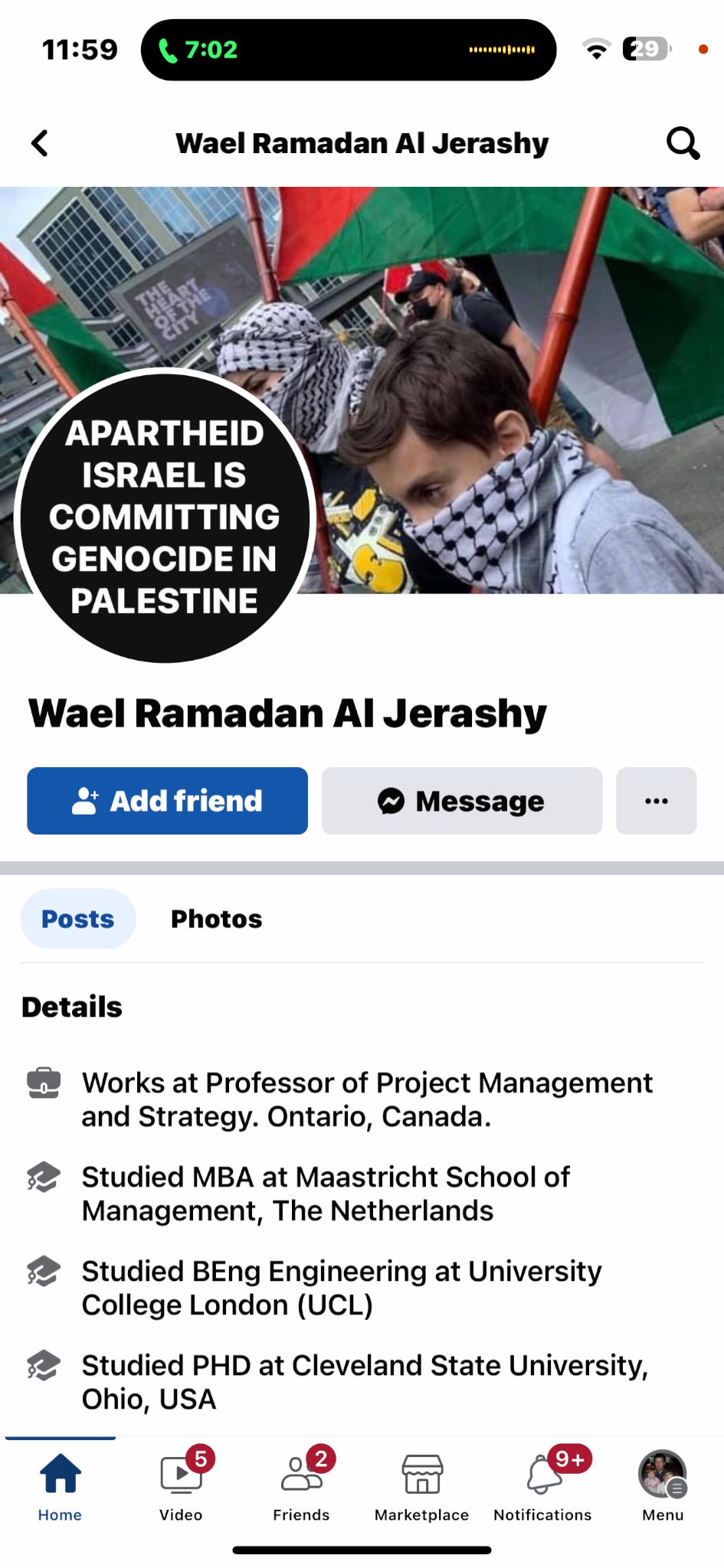
Below are a few of the verified posts that the University of Guelph and Humber College had no problem with.
The irony is that while all his posts are verified (there are hundreds more), the one post from me that condemned Hamas has been lost; there is only a student-altered version. So the man was fired with no evidence, while the guilty with abundant evidence was set free. The investigator lied about having a forensic copy of my post condemning Hamas; when pressed, she refused comment.
Paul, you were effectively fired for calling Hamas Nazis, which was factually correct. If you need any more evidence of this, are you aware of the Arabic bookshop in London (I think its name is the Aafaq Bookstore) which featured Hitler's Mein Kampf in its window? The cover has Hitler giving the Nazi salute. It turns out that the bookshop itself were the publishers of this translation. The Nazi-Brotherhood connection of course goes back to the 1920s, but this is a contemporary manifestation. Here's a link to one story about it: https://elderofziyon.blogspot.com/2026/08/the-detail-of-mein-kampf-london-story.html British author Howard Jacobson has also written a recent piece on this.
Ramadan lies about genocide; Arday lied about... pretty much everything as I understand it? The problem is that the first set of lies is fashionable lately, and the second set being revealed led to the man's suicide.
The love of my life committed suicide 9 years, 1 month and a few days ago. I don't have much good to say about it other than that Ramadan and his ilk are welcome to experiment.