


Walk into a toy store with a five-year-old. He sees the electric train set—sleek, fast, glowing under glass—and instantly: I want it. I want it. I want it. Price tag? Five hundred dollars. Doesn’t matter. He has no concept of budgets, trade-offs, or affordability. Desire is the argument.
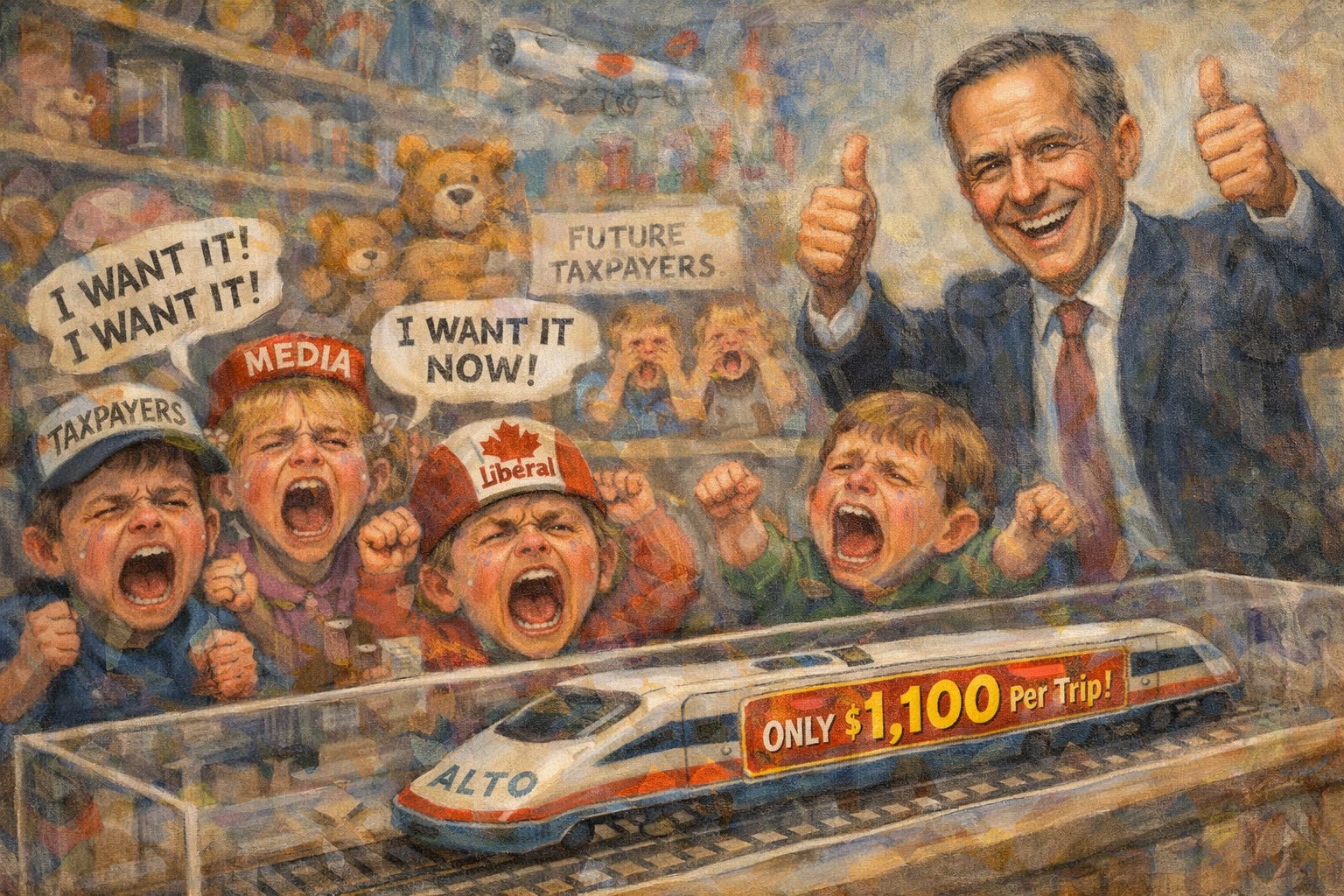
Now scale that up to a country.
The toy is Alto: high-speed rail from Windsor through Toronto to Québec City. Fast. Modern. Prestigious. The kind of thing that makes politicians beam and commentators nod solemnly about “nation-building.”
Cost? We’re told numbers that sound manageable. They won’t be. They never are.
The evidence is not ambiguous. Across continents, across decades, across political systems, large infrastructure projects almost never come in on budget. The academic baseline is a 45 percent overrun. Real-world examples—from Ontario to California—push that closer to a doubling. A $90 billion promise, in practice, is a $170 billion reality.
And yet, in a spirit of almost reckless optimism, let’s…
