If you believe in free speech—not the slogan, but the dangerous, untamed variety—then subscribe to support uncensored, heretical writing. Every paid subscription buys more time to write without asking permission from the sort of people who think “problematic” is an argument.
Please subscribe to receive at least two pieces/essays per week with open comments. It’s $6 per month, less than USD $4.
I am re-releasing all old essays. I will be putting two books of essays out shortly, and this is part of my editing process. When I say I release two essays a week, on Wednesdays and Sundays, I do not include these. I will remove the paywall for all of the reprints.

Intellectual Flashbangs – Sudden, disorienting words used to stun an opponent rather than engage in discourse; they silence rather than argue a point and make meaningful debate impossible by attaching a moral failing to one side.
The War on Words
Civilisation began the moment sound became sense. When language rose above mere noise, humanity stood upright — and every tyranny since has learned the same lesson: destroy words, and you destroy thought.
Today, that destruction arrives not in jackboots but in hashtags. Censorship no longer bans words; it bloats them until they burst.
We now inhabit a world where debate has been replaced by detonation.
Welcome to the age of the Intellectual Flashbang — those sudden, disorienting words hurled not to argue but to stun. They are silent, not persuasive.
“The tosser kicked over the chessboard, took his pieces, and went home.”
One side feels futility; the other bathes in delusion, convinced the flashbang has “won” the argument when all it’s done is burn the room down.
Indeed, George Orwell, in his essay “Politics and the English Language” (1946), warned about the dangers of manipulating language for political ends:
“Political language—and with variations this is true of all political parties, from Conservatives to Anarchists—is designed to make lies sound truthful and murder respectable, and to give an appearance of solidity to pure wind.”
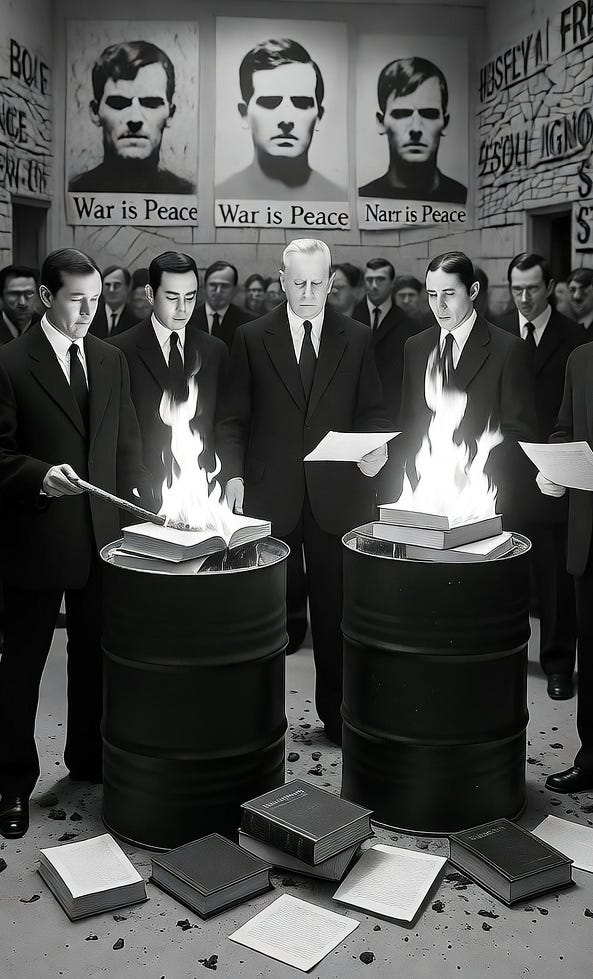
Orwell argued that such corruption of words erodes clear thinking and enables totalitarian control, directly foreshadowing the dystopian mechanisms in his novel 1984, where propaganda warps reality to suppress dissent and enforce conformity.
“Don’t you see that the whole aim of Newspeak is to narrow the range of thought? In the end, we shall make thoughtcrime literally impossible, because there will be no words in which to express it.”
The Ancients Knew Better
“Whoever would overthrow the liberty of a nation must begin by subduing the freeness of speech.”
— Benjamin Franklin
“People demand freedom of speech as a compensation for the freedom of thought which they seldom use.”
— Søren Kierkegaard
“When words lose their meaning, people lose their freedom.”
— Confucius
“Before mass leaders seize power to fit reality to their lies, their propaganda is marked by its extreme contempt for facts.”
— Hannah Arendt
“We know they are lying. They know we know they are lying… and still, they continue to lie.”
— Aleksandr Solzhenitsyn
Language is the bedrock of civilisation — the bridge between thought and truth. Yet the bridge is now being dismantled by the very people meant to protect it.
11. Communist
Once, a “Communist” was a revolutionary devoted to abolishing private property and class hierarchy.
Now, it means anyone slightly to the left of your uncle at Thanksgiving.
Universal healthcare? Communist. Environmental protection? Communist. Refusing to privatise garbage collection? Stalinist waste management.
“Not wanting Goldman Sachs to run your town’s plumbing is not sharing a toothbrush with Lenin.”
This linguistic vandalism doesn’t just cheapen debate — it trivialises the horrors of the twentieth century.
By this standard, the contemporary use of “populism” is anti-intellectual, designed not to analyse a phenomenon but to make it unacceptable. Suppose a politician connects with working-class anxieties, champions policies that threaten entrenched interests, or dares to speak in plain rather than technocratic language.
In that case, they are branded a “populist” and dismissed outright.
Consider the differing applications of the term. When figures on the left advocate for policies that challenge corporate dominance, such as Bernie Sanders or Jeremy Corbyn, they are called “progressives.” You might not prefer left-wing politics, but you must admit they are great at branding.
Who doesn’t want to be progressive? Nobody claims to champion the causes of the regressives; regressive means going back to a worse stage, like a kid throwing a temper tantrum or your Irish Uncle Sean once again starting to pour whiskey on his Lucky Charms.
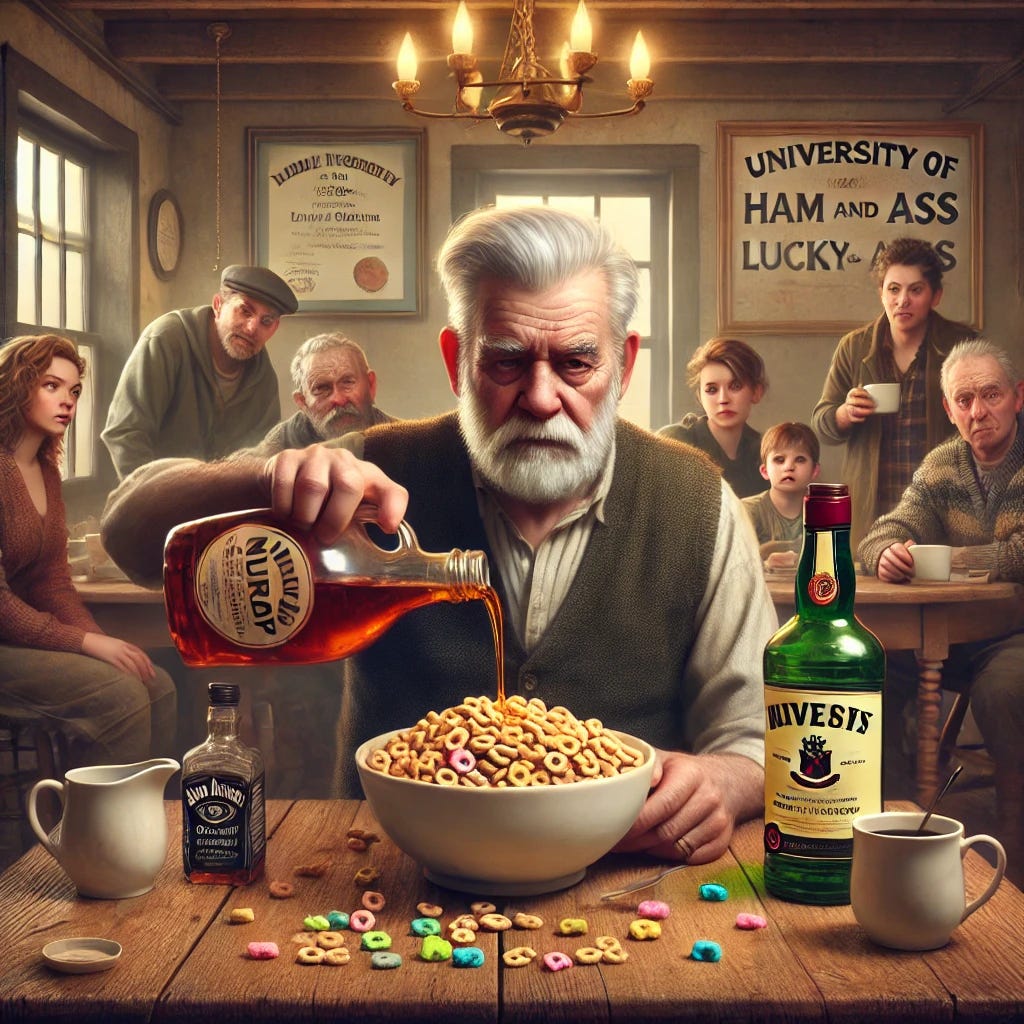
When right-wing figures, such as Donald Trump or Marine Le Pen
10. Freedom
Freedom means the right to think, act, and speak without coercion, which explains why it now terrifies so many.
To the modern bureaucrat, freedom is a hazard, not a virtue.
They sneer:
“Your so-called ‘freedom’ is just an excuse to avoid paying taxes and letting addicts suffer.”
But as John Stuart Mill wrote:
“The liberty of the individual must be thus far limited; he must not make himself a nuisance to other people.”
Those who prefix “so-called” to freedom have never read Mill — nor liberty, nor irony.
9. Populism: The Shape-Shifting Scapegoat
Populism once meant the will of the people checking the arrogance of elites. Now it means whoever won an election that journalists disapprove of.
Bernie Sanders is called a populist. So is Donald Trump. When a word can mean both, it means nothing.
“When elites use ‘populism,’ what they really mean is: the peasants are talking again.”
Hitchens once said, “The essence of the independent mind lies not in what it thinks, but in how it thinks.”
The modern use of the term 'populi f’ fails that test. It’s not an analysis — it’s an allergy.
8. Extreme Right
The “extreme right” once referred to brownshirts and blackshirts. Today, it includes anyone who doesn’t shop at Whole Foods.
The term is now a catch-all for dissent.
Question immigration? Extreme right.
Defend fiscal prudence? Extreme right.
Prefer facts to feelings? You’re halfway to Franco.
To call everyone “extreme” is to make nothing extreme — and nothing worth defending.
7. Bigot
A bigot once meant someone intolerant of difference. Today, it means someone who made me uncomfortable.
The overuse is comic. People now treat disagreement as a hate crime.
If you lose an argument and shout “bigot,” you haven’t triumphed — you’ve surrendered.
It’s the rhetorical version of flipping the board when you’re losing at Scrabble.
The tragedy is that real bigotry still exists — but the word’s power has been squandered by inflation.
6. Homophobe
“Homophobe” originally named genuine hatred or fear of LGBTQ+ people.
Now it’s a political bludgeon. Refuse to parrot someone’s pronouns? Homophobe. Don’t want Bun/Bunself on your HR form? Homophobe squared.
If you even hesitate when told to “share your gender journey,” you’re halfway to Westboro Baptist.
“When every opinion becomes a phobia, rational discussion becomes pathology.”
It trivialises the struggle of those who fought real persecution. And if everyone’s a phobe, no one is.
5. Islamophobia
Once a term for anti-Muslim prejudice, Islamophobia now doubles as theological armour plating.
Criticise Hamas? Islamophobe.
Quote the Quran? Islamophobe.
Point out honour killings? Islamophobe (and possibly racist).
When a man in Sweden was murdered after burning a Quran, progressives condemned him, not the killers. The book, apparently, had more civil rights than he did.
“Without the freedom to offend, freedom of expression ceases to exist.” — Salman Rushdie
4. Fascist
A fascist was once a loyalist of Mussolini or Hitler — now it’s anyone who says “no” too loudly.
Modern anti-fascists act more fascist than the fascists. They burn books, silence opposition, and wear their moral superiority like an armband.
“They’ve traded jackboots for HR badges.”
To call everything fascism is to make fascism invisible.
3. Racist
Once a precise term for belief in racial superiority, racist now means “someone who doesn’t agree with me on Tuesday.”
You can be called racist without mentioning race. You can be racist while quoting statistics.
Hitchens said the word had “become so elastic that it now polices opinion rather than prejudice.”
When everything is racist, nothing is. When disagreement becomes sin, thought becomes treason.
“This isn’t progress — it’s semantic euthanasia.”
2. Nazi
The deadliest term in the modern lexicon — lobbed now like a snowball at anyone you dislike.
A professor calls Hamas Nazis — he’s a Nazi. A politician invokes free speech — Nazi.
The irony is Olympic-level.
“In today’s moral calculus, calling Nazis Nazis makes you the Nazi.”
Most who wield the term couldn’t spot Goebbels in a photo lineup. Yet the Holocaust’s ghosts are dragged into every petty quarrel.
By trivialising the word, we blaspheme the dead.
1. Genocide
The word once named hell itself. Now it’s a hashtag.
Raphael Lemkin coined it to describe the Holocaust. It meant extermination — the deliberate annihilation of a people. Today, it’s used for everything from cultural grievances to government policy you dislike.
“If everything is genocide, nothing is.”
Israel defending itself is called genocide; real genocides are “complex cultural situations.”
The word’s moral gravity has been melted down for rhetorical jewellery.
This isn’t moral progress. It’s semantic inflation. And it bankrupts truth.
Epilogue: The Death of Meaning
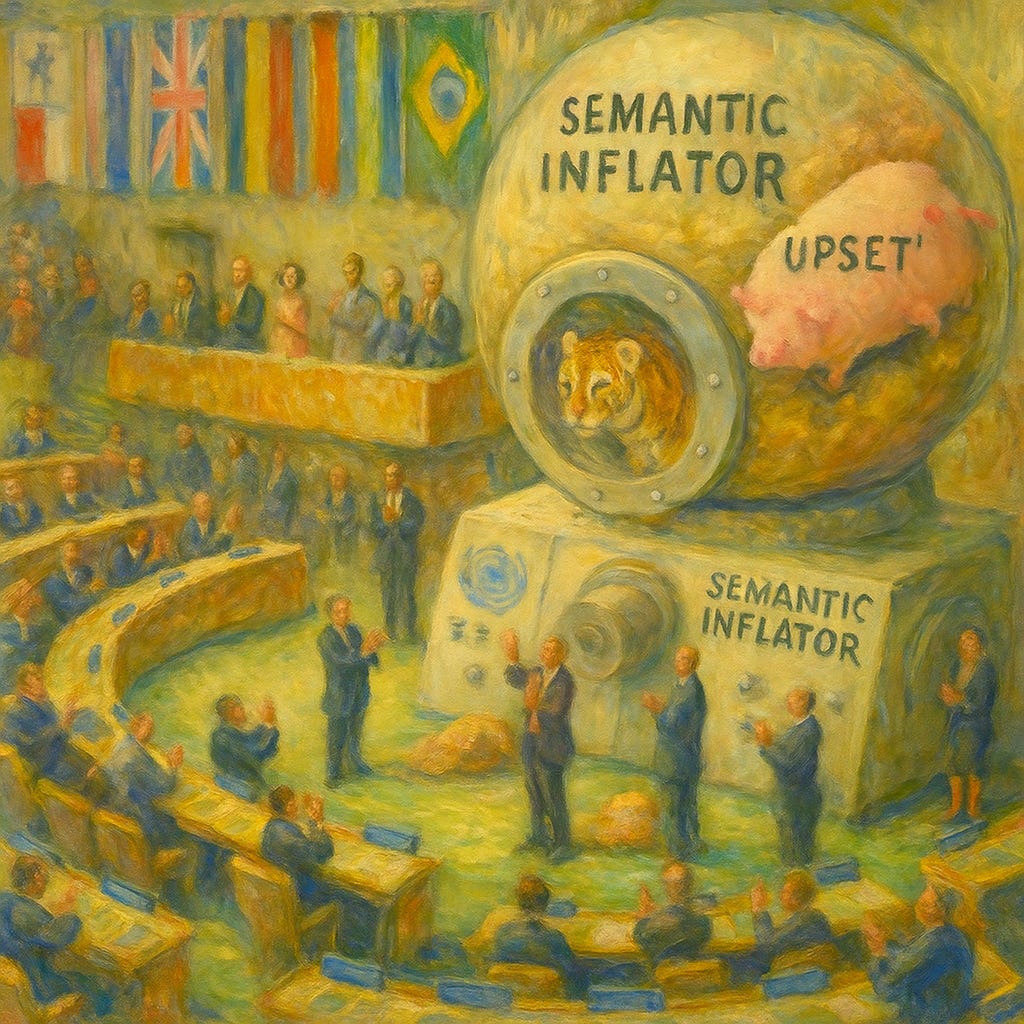
What happens when words lose meaning? Confucius answered it: “When words lose meaning, people lose freedom.”
We are living in that condition.
Our language — once the architecture of liberty — now resembles a ruin of slogans and acronyms.
“Destroy words,” Orwell warned, “and you destroy thought.”
Our moral vocabulary has been hijacked by those who fear debate more than lies.
Precision is not pedantry; it is civilisation’s immune system. Without it, every culture sickens into orthodoxy.
The new censors don’t burn books; they curate them into silence. They persecute politely. They destroy reputations with memos and call it equity.
To speak plainly is now subversive. To think clearly is rebellion.
And so, to those who still believe in clarity, courage, and truth —
Refuse to kneel. Speak anyway.
Boom.
If you found value in this article and wish to support my ongoing work, please consider leaving a tip. Your support helps me continue producing uncensored content on critical issues.