


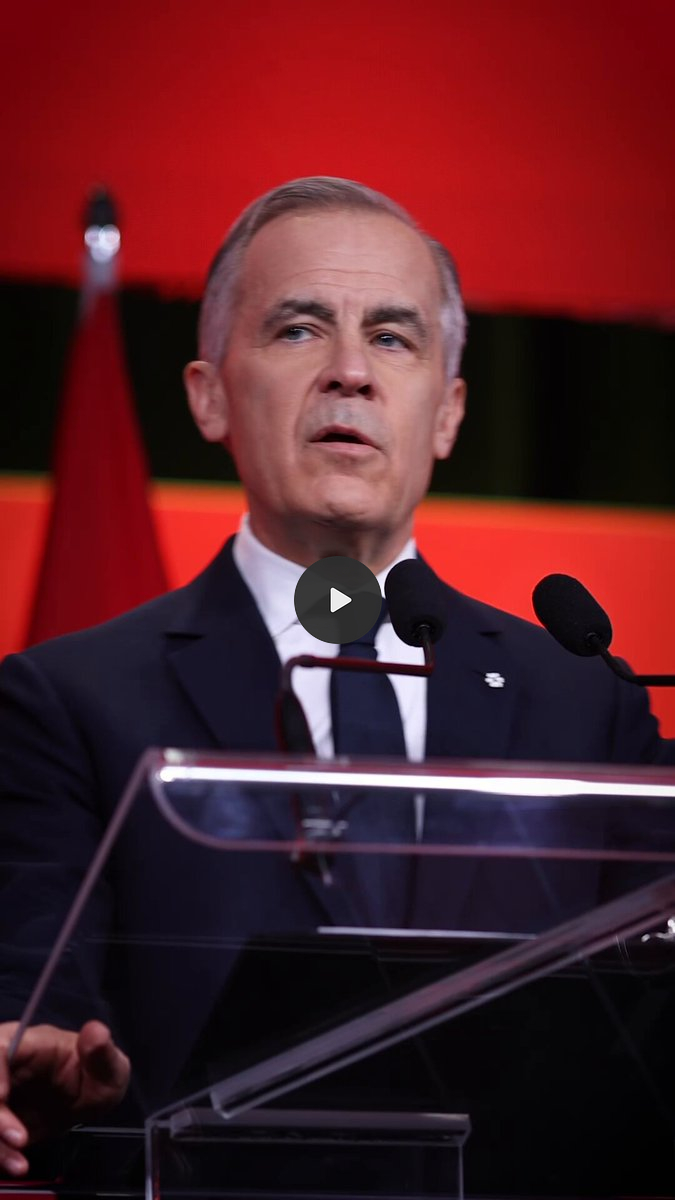
“Canada is worth fighting for.”
This is the syrupy treacle flooding X—funded, naturally, by your taxes. Not merely cloying, but faintly sinister; “cringe,” as the children have it.
Carney is auditioning for the role of wartime prime minister—trade war, in this case—because nothing corrals a nervous public like a manufactured emergency. Frighten the children, and they’ll run back to their father.
Strip away the theatre and the motive is embarrassingly plain: a trade war is not a policy—it’s a campaign strategy.
As to his “Canada is worth fighting for?”
Yes. No kidding. So is peanut butter. So is cheap internet. So are dog-waste bags that open without a struggle. The fact that something is broadly agreeable does not make it meaningful, though it does make it extremely useful as a slogan.
It is, in fact, a perfect sentence. Not because it is profound, but because it is unassailable. It contains no policy, no cost and no measurable claim. It asks nothing of the speaker and risks nothing in return. It is all tone, all sentiment—language sanded down until it offers no edge to grasp.
And that, increasingly, is the point.
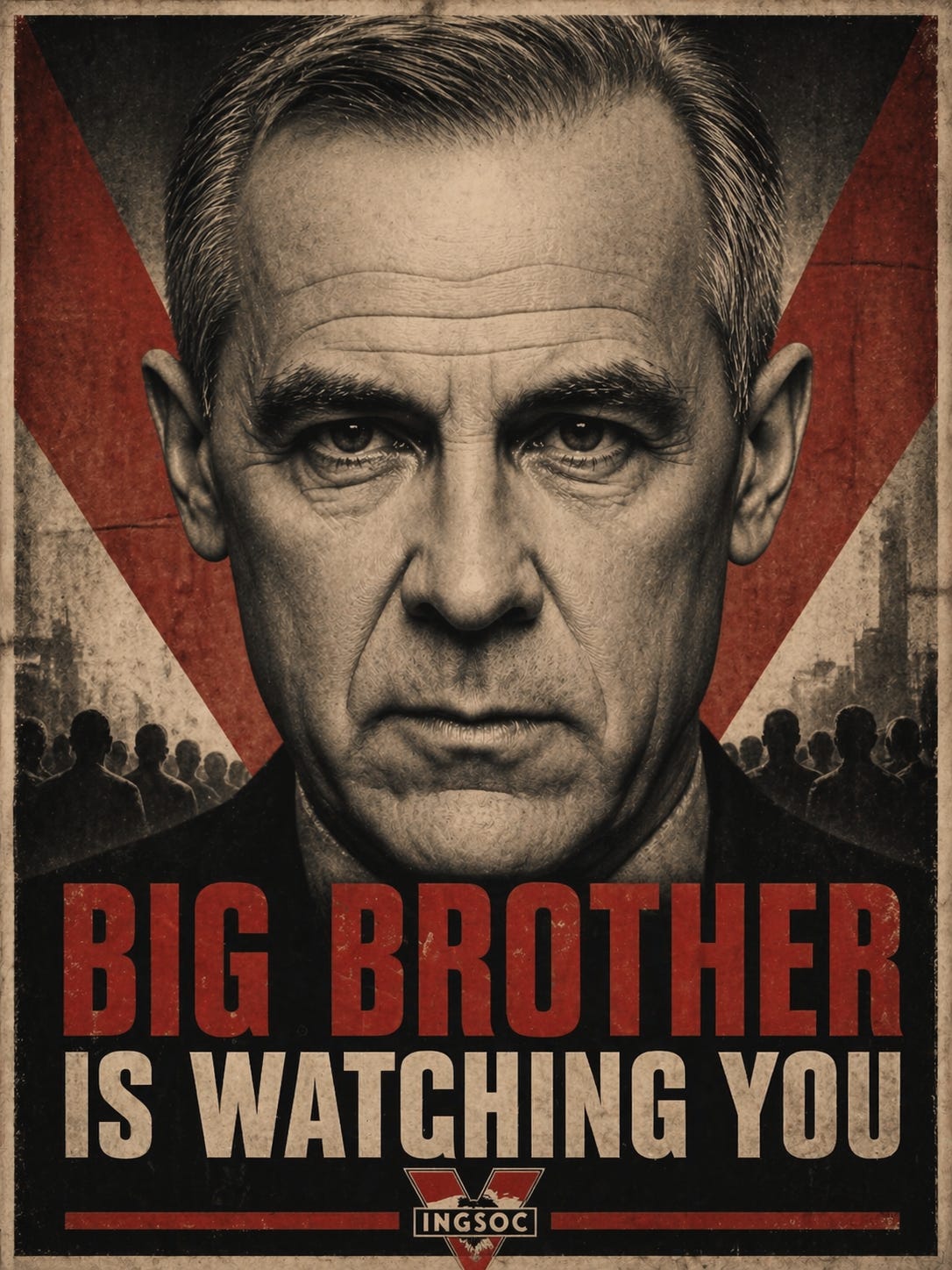
There is something faintly unsettling—call it Big Brother-lite—about this style of politics. Not the crude authoritarianism of Orwell’s world, with its boots and batons, but something softer, more modern, and in some ways more effective. Politics of mood. Of managed feelings. Of language that does not instruct or persuade so much as envelop and pre-empt.
Big Brother, after all, was not merely feared. He was curated. A presence. A face. A steady, reassuring stream of simplified truths delivered in a tone designed to eliminate friction. You did not argue with Big Brother. You absorbed him.
We are not living in that world. But one recognizes the aesthetic.
Watch the language closely. It is broad, emotional, and frictionless. “Worth fighting for.” “Standing together.” “Resilient.” These are not arguments; they are atmospheres. They do not clarify—they displace. One leaves the message with a vague sense that something important has been said, and a distinct inability to recall what it was.
It is politics as ambient sound—pleasant, continuous, and carefully stripped of anything that might interrupt it.
This is not entirely new. Every era produces its clichés. But what is striking now is the degree of refinement. The modern political figure can speak at length while committing to almost nothing, and can occupy space without leaving a trace. It is less rhetoric than presence—the projection of authority without the inconvenience of specificity.
One sees it again in the curious repackaging of “forward guidance.” Presented now not merely as a technical instrument, but as a kind of governing disposition—a continuous stream of calibrated reassurance. There is even, in the telling, a faint suggestion of authorship, as though this were something newly minted rather than long established.
It is not. The concept predates its current custodian by decades. It has been used, refined, and occasionally mishandled by others long before. Its record is mixed. And yet here it returns, polished and reintroduced—not as policy, but as persona.
This is where the unease deepens.
Because the figure at the centre of it all does not argue so much as appear. He cycles through roles with a kind of frictionless competence: technocrat, schoolmaster, national comforter. Each sentence lands softly, like a hand placed on the shoulder. Nothing jars. Nothing commits. Nothing binds him to anything that could later be tested against reality.
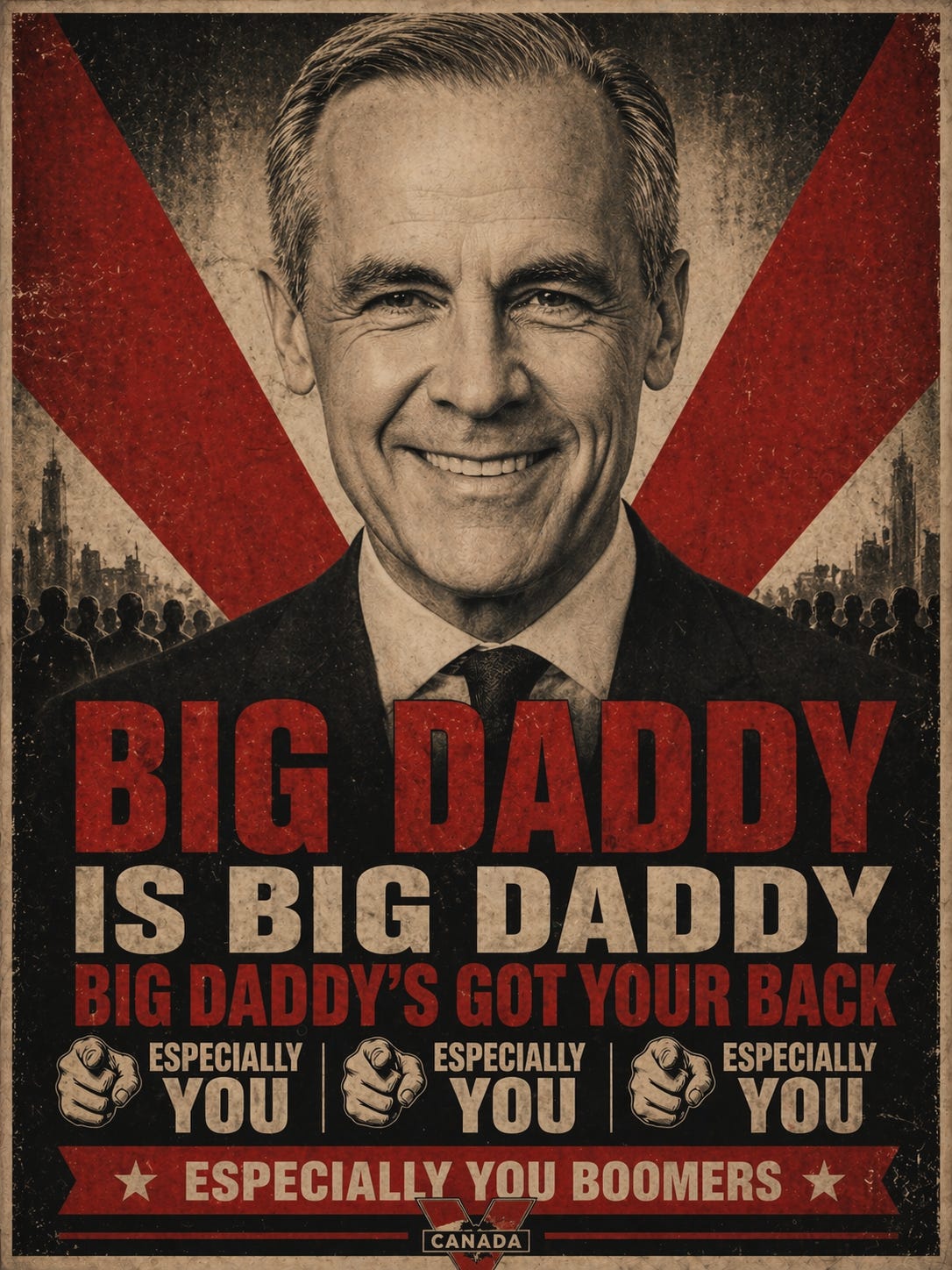
There was a telling moment at a recent gathering. Asked what they admired, a young supporter—half-laughing, but not entirely—offered a single word: “Daddy.”
It was received as a joke. It was not entirely one.
Because it captures something that the more polished language obscures. This is not merely a politics of persuasion. It is a politics of reassurance—of managed dependence. The figure is not asked to explain, justify, or even persuade. He is there to steady, to soothe, to occupy the role.
Big Brother demanded obedience. The modern variant is gentler, more paternal. Less a figure looming over the citizen than a presence one leans into. A kind of warm, steadying authority—familiar, undemanding, and carefully curated. For many voters, particularly those who prize stability and calm above disruption, it can feel like a kind of political comfort: a reassuring voice, a steady cadence, a promise—implicit rather than stated—that nothing too jarring will be required.
There is, in this, a quiet inversion of the Churchillian model. Churchill used language to clarify—to name dangers, to demand sacrifice, to prepare a population for the cost of survival. The modern variant uses language to diffuse—to soften, to reassure, to create the impression of resolve without its burdens. One rallies not around a plan, but around a phrase.
“Canada is worth fighting for.”
Yes. Of course it is. Which is precisely why the line works. It invites agreement while avoiding responsibility. It produces unity without requiring direction.
The unsettling part is not that such language exists. It always has. The unsettling part is how completely it now fills the space where something more demanding ought to be.
Because in the absence of clarity, tone becomes policy. In the absence of action, presence becomes achievement.
And the audience—accustomed now to being spoken to in this way—responds as expected. The message is received, the feeling is registered, the moment passes. Nothing has been decided. Nothing has been risked.
And yet, somehow, it feels like leadership.
That is the craft.
And that is the part that should give us pause.
I can’t stand the creep. He makes my skin crawl. I’ve known Carney was all smoke, mirrors and fog machine - spraying verbal ativan everywhere-from first hearing him. He’s a far more accomplished, therefore dangerous, liar than Sock Puppet.
It’s amazing how you manage to explain the ineffable!