How a Canadian university, its union, and a human rights process turned one pro-Israel comment into a two-year campaign of suspension, defamation, false accusations, and dismissal. July 24, 2026.
There are scandals that erupt loudly, filling front pages and provoking parliamentary outrage. And then there are scandals that unfold quietly inside institutions so small that almost nobody notices.
The latter are often the more revealing.
The University of Guelph-Humber is not one of Canada’s large or prestigious public universities. It is a small joint campus operated by the University of Guelph and Humber College, with roughly 4,300 students enrolled - a decline of 500 in the last two years, despite admission requirements having been lowered to amongst the lowest in Canada.
In most national rankings of Canadian universities, it now sits near the bottom tier of the academic hierarchy.
It is not the sort of place that commands national attention.
This may explain why what happened there has received almost no attention.
If the same sequence of events—suspension without charges followed almost immediately by the spread of defamatory allegations of violence and safety risks—had unfolded at the University of Toronto, Harvard, McGill, or York University, it would almost certainly have triggered a serious debate about academic freedom, defamation, antisemitism, and procedural fairness in Canadian or American higher education.
Instead, it occurred at a small campus that few people outside Ontario have heard of. And so the story has largely passed unnoticed.
It begins with a professor named Paul Finlayson.
For roughly fifteen years, Finlayson taught business courses at the University of Guelph-Humber. During that time, he developed a strong reputation among students and faculty.
The campus ran a recognition program known as “shout-outs,” in which students were asked to identify their favourite professors. According to Finlayson and numerous students, every year the program was conducted, he received more votes individually than the rest of the business department combined.
He wrote or co-wrote four textbooks. He built courses. He stayed late; students called him on the weekend when they were jammed up on a project; his classrooms were known for their humour. His student evaluations were consistently strong. He accumulated no disciplinary record. He minded his own business.
By the ordinary standards of academic life, it had been a modestly successful and largely uneventful career. CNN was not calling for his opinion. He was not an academic star, but he was still a dependable lecturer at a small, relatively unknown university. Students frequently said his classes were the only ones in which they actually learned something.
Then came October 7.
After the Hamas massacre in Israel, Finlayson responded, as millions of people around the world did. In an online exchange with a man in Pakistan who had called for the eradication of Israel, Finlayson replied that he stood with Israel and described Hamas as Nazis, pointing out that Hamas emerged from the Muslim Brotherhood—an organization founded in 1928 that historically expressed admiration and solidarity with Hitler’s National Socialist party.
Finlayson’s comment was directed at someone with no connection to his university.
Finlayson says he still has no idea how the exchange reached the University of Guelph-Humber administration.
But once it began, events at the heavily Muslim campus moved quickly. He was suspended almost immediately, without charges or explanation. At the time, he had no idea that a routine social media post had set such dire machinery in motion.
Criticism of an organization designated as a terrorist group by the Canadian government was unacceptable at the University of Guelph-Humber.
On November 27, 2023, the University of Guelph-Humber Assistant Vice Provost (AVP), George Bragues, acting at the direction of his superior, Vice Provost Melanie Spence Ariemma, immediately removed Finlayson from campus without providing any clear explanation. The only communication from the AVP was a casual comment that the reason was related to what Finlayson had said on social media, though Bragues said he knew no more than that and noted that he was simply following orders.
Finlayson was then instructed not to contact students, staff, or faculty. Humber College Public Safety and university counsel would follow with repeated letters warning him not to communicate with anyone—effectively imposing what he later came to understand was, according to the Human Rights Tribunal of Ontario (HRTO), whose rules the university was mandated to follow, an unlawful communication ban.
When someone is forcibly silenced in this way, it becomes extremely difficult, if not impossible, to defend oneself.
Finlayson says that, after he was suspended, it felt almost surreal. Within hours, students began contacting him—confused, alarmed, and asking what on earth had happened. Why wasn’t he attending his classes?
But that was not their most important question; students reported that staff and faculty approached them on the floor of Guelph Humber’s single four-story building and repeated an extraordinary story about an incident that had supposedly led to Finlayson’s removal.
The story being circulated was that Finlayson had been arrested on campus, handcuffed by police, and taken away to jail after assaulting a student. There was only one version - the student’s shirt had been torn, and the scene had ended with the professor dramatically led away in handcuffs. They also said that Finlayson has had many criminal encounters like this in the last five years.
The tale was remarkable for its sheer absurdity. Finlayson was known among students as one of the mildest-mannered professors on campus. He had never even raised his voice in class. There wasn’t even a seed of truth; it wasn’t gossip, it was manufactured and sharply focused, deliberate character assassination.
He had said he stood with Israel, and the weight of the small university collapsed on him; it was a sin they deemed unforgivable.
The staff were pulling students aside aggressively and repeating the same story. ‘Finlayson had been arrested, handcuffed and taken off to jail.’
“It was surreal,” Finlayson said. “I had never even met the new Vice-Provost. I had no communication with the union. I kept my head down, focused on teaching my students, and then one morning the institution—apparently led by this VP and her professor friend Wael Ramadan—declared war on me.”
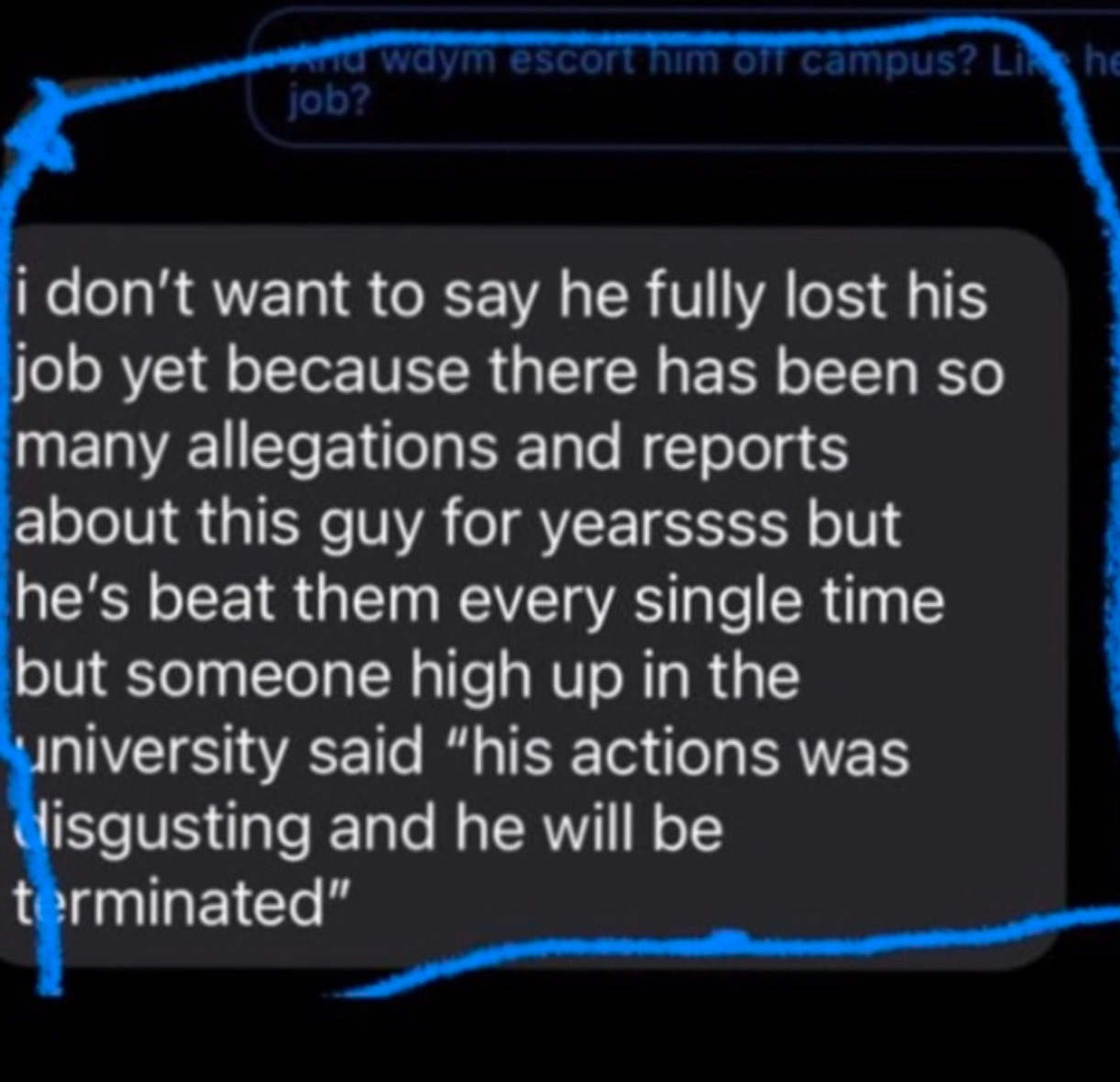
Below are screenshots showing Humber College staff communicating with students, repeating the criminal and reputation-destroying libel against Finlayson, along with a message from a supportive student who informed Finlayson that faculty members were also repeating the “assault” story about him to classes. They said they heard it from other faculty members, all within hours of Finlayson being suspended without charges.
The allegation was not merely inaccurate. It was entirely fabricated. A few students who actually knew Finlayson apparently laughed when they heard it, but its destructive march proceeded with steely determination.
There had been no assault. There had been no arrest. There had been no handcuffs. There hadn’t even been a raised voice. Finlayson had been thrown off campus directly after his meeting with the AVP.
Finlayson said he observed that a certain schadenfreude—the pleasure some take in seeing others brought low—seemed to be in full force.
It was the biggest news to hit Guelph-Humber in years.
Except it was a deliberately invented lie. And a lie that could have only started in the executive suite.
Within a few weeks, Finlayson was told that the story had already hardened into campus folklore—the sort of tale that, repeated often enough, quietly promotes itself from gossip to “fact.”
In academia, a reputation is normally built slowly, layer by careful layer, through years of teaching, research, and course development. Yet the edifice he had spent years constructing was undone in a matter of weeks, buried under a rumour that had been repeated so frequently it began to masquerade as history.
Defamation, particularly when those in authority decline to correct the record, spreads with remarkable efficiency. Epidemiologists use models to track disease transmission; a similar approach can be used to model the spread of defamatory content within a small institution.
Here, the conditions were ideal: management offered no correction, the accused was harshly muzzled, the story circulated in a single building, students shared common spaces and study areas, and the narrative was repeated by figures of authority who claimed “insider information.” Under those conditions, the rumour did exactly what such rumours tend to do—it spread.
Some students said they tried to challenge the claims, but their efforts went nowhere. A handful of students burst into the Business Department Head Jerry Chomyn’s office and shouted at him, accusing him of destroying the department’s best professor. Chomyn threw them out, and despite direct pleas from Finlayson to shut down the defamation, he refused.
Yet the allegation had an obvious problem. Modern campuses are filled with students carrying phones capable of recording anything that happens around them. If such a dramatic event had actually occurred, it would almost certainly have been captured and circulated instantly.
And on that same day, another disturbing piece of information reached Finlayson.
A student sent Finlayson a screenshot of a message dated the same day he was suspended. It was from a staff member and said that a senior administrator - it could only be the VP Melanie Spence Ariemma - had told them that Finlayson would be fired no matter what happened. Any forthcoming due process was already being proclaimed a fiction.
So, the verdict came weeks before charges. Warnings from university lawyers and Public Safety followed, all threatening Finlayson with unspecified financial penalties if he spoke to anyone about the matter.
When Finlayson desperately asked Guelph-Humber staff member Vashti Bagot to stop lying about the fictitious assault, he received no response, only a threat a few hours later from the Humber Public Safety Manager Nancy Deason that if he asked anyone else to stop slandering him, she would call the police and have him charged with Criminal Harassment.
She copied the Toronto police on her email.
As a final blow, the president of his local union, OPSEU 562, Milos Vasic, informed him, also on day one, that, based on its communications with management, the union regarded him as being guilty of a hate crime.
The trial, it seemed, had been cancelled as an administrative inconvenience. Guilt had arrived in advance and was apparently happy to wait for the paperwork to catch up.
Not a good first day.
Normally, the union and management are foes, but when it comes to anti Zionist persecution, they are sympatico.
Only four weeks after this suspension and precisely one minute after the university closed for the winter break, Finlayson received notice of a human rights complaint filed against him by Vice-Provost Melanie Spence-Ariemma. She was the top administrator, a functional president of the university.
As Finlayson suspected by this point, the complaint cited his remark describing Hamas as Nazis and alleged that, because of that statement, he posed a safety risk to students.
There was never any evidence that any of the complainants existed or that these irrational fears existed. All allegations were anonymous and contained no particulars. One Guelph Humber student, Ben France, later said that the Humber College Human Rights Department Manager (who was acting on behalf of the University of Guelph), Kathryn Edgett (an indirect subordinate of VP Spence Ariemma), had invented allegations that Finlayson had threatened him “not to go to the authorities to complain.”
Of course, Finlayson and France’s denial made sense; it would be absurd to tell someone not to complain after the functional head of the University, VP Melanie Spence-Ariemma, had already initiated a complaint. The horse had already left the barn.
Edgett refused comment.
The complaint further claimed that his comments had offended all Muslims and stated that both Spence-Ariemma and the accuser in the human rights complaint, her longtime faculty colleague Dr. Wael Ramadan, regarded Finlayson as a threat to campus safety, claiming that students and parents had said this. They went as far as to complain that Finlayson was now a safety risk to children, implying or coming very close to accusing him of being a pedophile.
Finlayson stayed home from a long-awaited family vacation, desperately trying to defend his reputation and the false charges that staff, faculty and management had so thickly spread throughout the campus.
Finlayson says he immediately noticed what he considered a suspicious detail in the human rights complaint filed by Spence-Ariemma. The allegations echoed the defamatory rumours that had begun circulating among staff and faculty four weeks previously, on the very day he was suspended.
The narrative spreading across campus—that he was absent due to criminal misconduct rather than a management decision—mirrored the language of the Human Rights Complaint almost exactly.
In Finlayson’s view, the rumours had effectively supplied a storyline that the complaint then adopted, with repeated references to “safety,” “violence,” and “threats.”
Using a form of probability analysis known as Bayesian reasoning—a method that evaluates how likely an explanation is based on the pattern and timing of available evidence—the analysis suggested roughly a ninety-five percent probability that the defamatory narrative spreading across campus and the human rights complaint filed by the Vice-Provost originated from the same source.
It is not courtroom proof.
But it raises a troubling question.
If students did not invent the story, and if staff and faculty were repeating it within hours after the suspension, where did it originate? The pattern strongly points to an internal source.
For the next few months, Finlayson existed in a bureaucratic limbo: suspended, publicly accused, prohibited from speaking to colleagues, and desperately fighting to protect his reputation and career.
Eventually, the university hired an external investigator.
Finlayson describes the investigator’s report, which took over a year to produce, as comic in its defects.
Howard Levitt — one of Canada’s most prominent labour lawyers — has famously described external workplace investigators as “firing squads.” 1investigators brought in not to determine the truth but to confirm the conclusions management already wants.
Finlayson says his case perfectly illustrates that description. He received a little over an hour of meeting time, no phone calls, and no follow-up in one year of ‘investigation.’
During their one short meeting, the investigators, Gita Anand and Reilly Cunningham, lawyers from Sherrard Kuzz, badgered him and defended the accuser, the man of thousands of anti-Semitic posts, the management’s favourite Islamist, Dr. Wael Ramadan.
Ramadan was a caricature of the anti-Semitic academic, a man who posted 25 times a day across social platforms, almost exclusively vicious attacks on Jews and Israel, with paeans to dictators like Assad, Maduro, and Putin thrown in.
Anand told Finlayson at the first meeting that Finlayson would get no defence, and she later accused him of planting hundreds of anti-Semitic images on Ramadan’s LinkedIN. Of course, it was absurd; she never made any pretense to evidence.
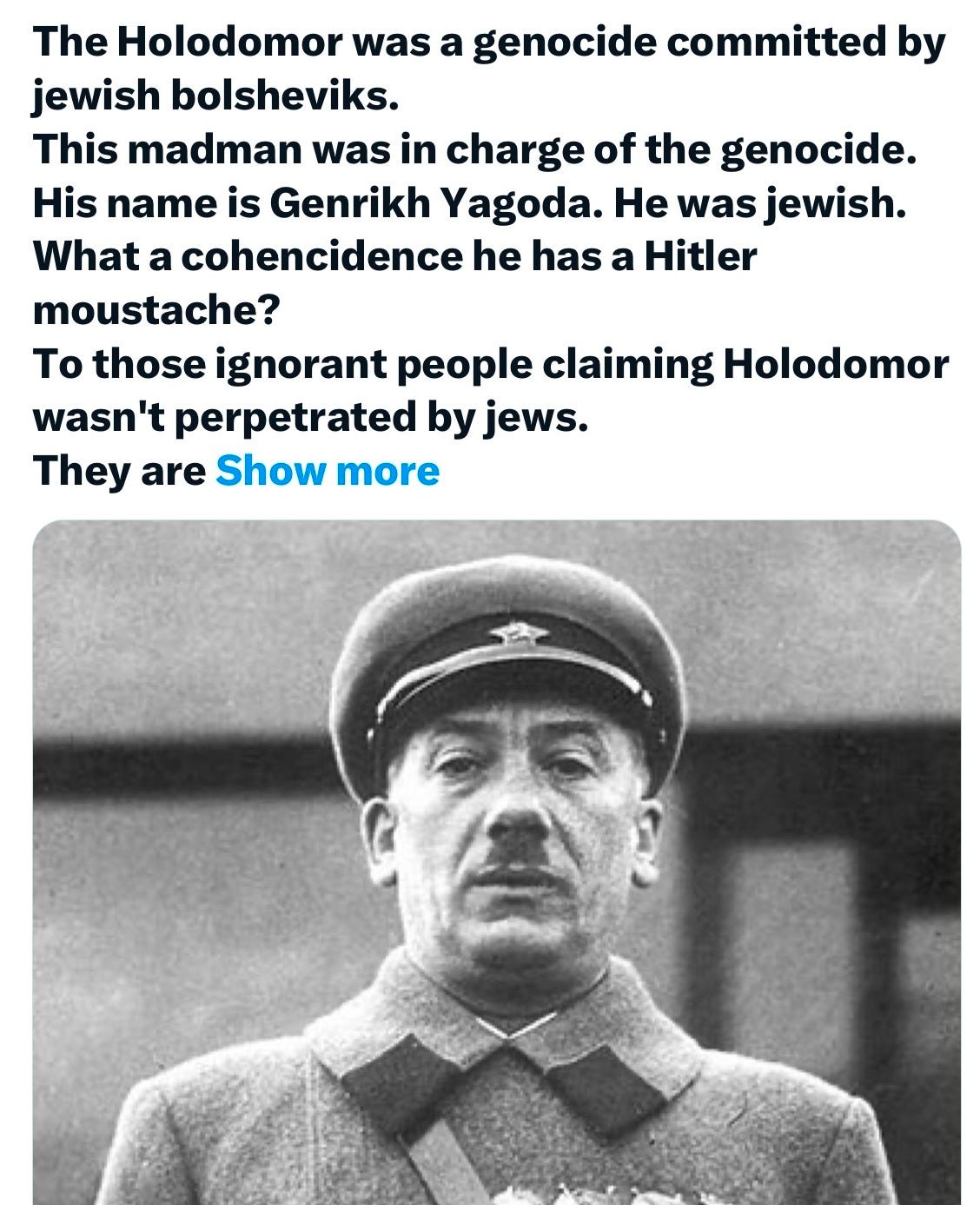
Ramadan, the 15-year colleague of the Vice Provost, as they had worked together at her past place of employment, Sheridan College, would post pictures of Jews with Hitler mustaches drawn on them and accused Jews of being behind any damaging movement, accusing Jews at one point of causing the Holodomor, the starvation in Ukraine and Russia caused by Stalin’s forced industrialization. Finlayson has stored hundreds of posts of Ramadan, all screenshots directly taken from Ramadan’s personal LinkedIN and other of his social media accounts.
Defence witnesses put forward by Finlayson were ignored, exculpatory evidence was dismissed, and the investigator’s conclusions mirrored slander that was already circulating within management. The allegations contained no evidence, no names, no times or dates, and no clearly identified accusers. Hearsay was treated as gospel, and the investigator issued an open invitation to anyone who had ever had a beef with Finlayson to step forward and anonymously attack him.
As a result, Finlayson says he still does not know—and likely never will—whether most of the alleged complainants actually existed or were invented by the Human Rights Manager Edgett, the investigator, Ramadan or the VP to support their predetermined verdict.
What he finds particularly strange is the claim that multiple students supposedly reported feeling physically unsafe after hearing that a professor had described Hamas as Nazis.
“It doesn’t ring true,” Finlayson said. “I had worked there for many years, and was considered very popular with the students.”
Finlayson filed two appeals challenging the report. The university’s response was astonishing. The appeals were returned to him unread, forty pages of complex point-by-point arguments, all vetted through counsel with precedents supplied, returned by untrained, unnamed administrations with the comment “not accepted.”
One appeal of the report was absurdly routed to the report writer herself, and the other went into the anonymous bureaucratic borg. The point of an appeal is to have an unbiased higher court or authority examine the original verdict; sending it to the originator violates the central axiom of justice that no one can serve as a judge in their own trial. An unnamed appeal “reader” violates the essence of any appeal.
The inference was clear: “We made up our mind to fire you on day one, so why would we allow you a defence or read appeals?”
His union local, OPSEU 562, had long since stepped aside, refusing in writing to represent him, as their hard political stance against Israel made him unsuitable for union representation.
Finlayson said that in communication with OPSEU representative Lesley Gilchrist, she had laughed when he noted that OPSEU’s own radical and hostile stance toward Israel and Zionists made it impossible for the union to defend him when the central allegation against him was that he had “offended all Muslims” by saying he stood with Israel.
(Months later, Finlayson’s prediction proved prescient when Gilchrist, acting on behalf of OPSEU, stated that the union, despite its legal obligation to represent members fairly, would not represent the pro-Israel Finlayson.)
At the time, this sounded like OPSEU was in gross dereliction of duty and acting in bad faith. Later evidence surrounding OPSEU’s leadership confirms why Finlayson believed ideological hostility—not an impartial assessment of his grievance—had determined the union’s response.
Finlayson was not the only one who accused OPSEU of institutional antisemitism.
The Centre for Israel and Jewish Affairs (CIJA), acting on behalf of 27 Jewish OPSEU members, filed an application against OPSEU at the Human Rights Tribunal of Ontario alleging antisemitism.2
The watchdog group Canary Mission also documented the public activism of OPSEU President JP Hornick.
Speaking as the representative of approximately 200,000 OPSEU members, Hornick described the war in Gaza as a genocide and declared that “when students and workers rise together we topple governments!” Hornick then pledged to use union members as a physical barrier against the university administration or police:
“Our job is to put our bodies in between you and whatever the administration brings at you. If the police come, we will be your human shields, we will be your line of defence.”
Hornick’s intervention is especially troubling when considered alongside the documented history of another OPSEU executive, Rawan Qaddoura. Canary Mission accuses Qaddoura of promoting violence, supporting BDS, expressing hatred toward Israel and publishing explicitly antisemitic statements during her youth.
Her archived posts included:
“every time I read about Hitler, I fall in love all over again.”
“I honestly wish I was born at the time of the Second World War just to see the genius, Hitler, at work.”
“I just don’t like jews lol #sorrynotsorry.”
Qaddoura also reposted the conspiracy claim that “the whole world is controlled by Zionist Jews.”
OPSEU refused to discipline Qaddoura, and Hornick remains at the head of the union.
Against that backdrop, Finlayson found himself effectively alone.
Aside from the kindness of random Jewish strangers, a handful of faculty, and the occasional Jewish student, he had been abandoned.
While Finlayson was being investigated for a single pro-Israel comment, another professor at the university, and coincidentally a co-accuser in the internal human rights complaint against Finlayson, was Dr. Wael Ramadan, a prominent Palestinian in his community, a man who had long been accused of running down Jews in the classroom and whose social media was a veritable river of anti-Semitic and hate propaganda sewage.
Ramadan bragged to students that he would make sure Finlayson got fired. Over 75,000 persons were solicited via organizations like StopZionistHate, and the hysteria, gossip and malice reached Salem proportions. Ramadan made sure that the anti-Zionist organizations gave their members the University of Guelph Humber’s Communication Department’s email and X contact information so they could write in and demand Finlayson’s termination.
Finlayson began to get threatening messages at home; his family and children were frightened, and he installed more cameras.
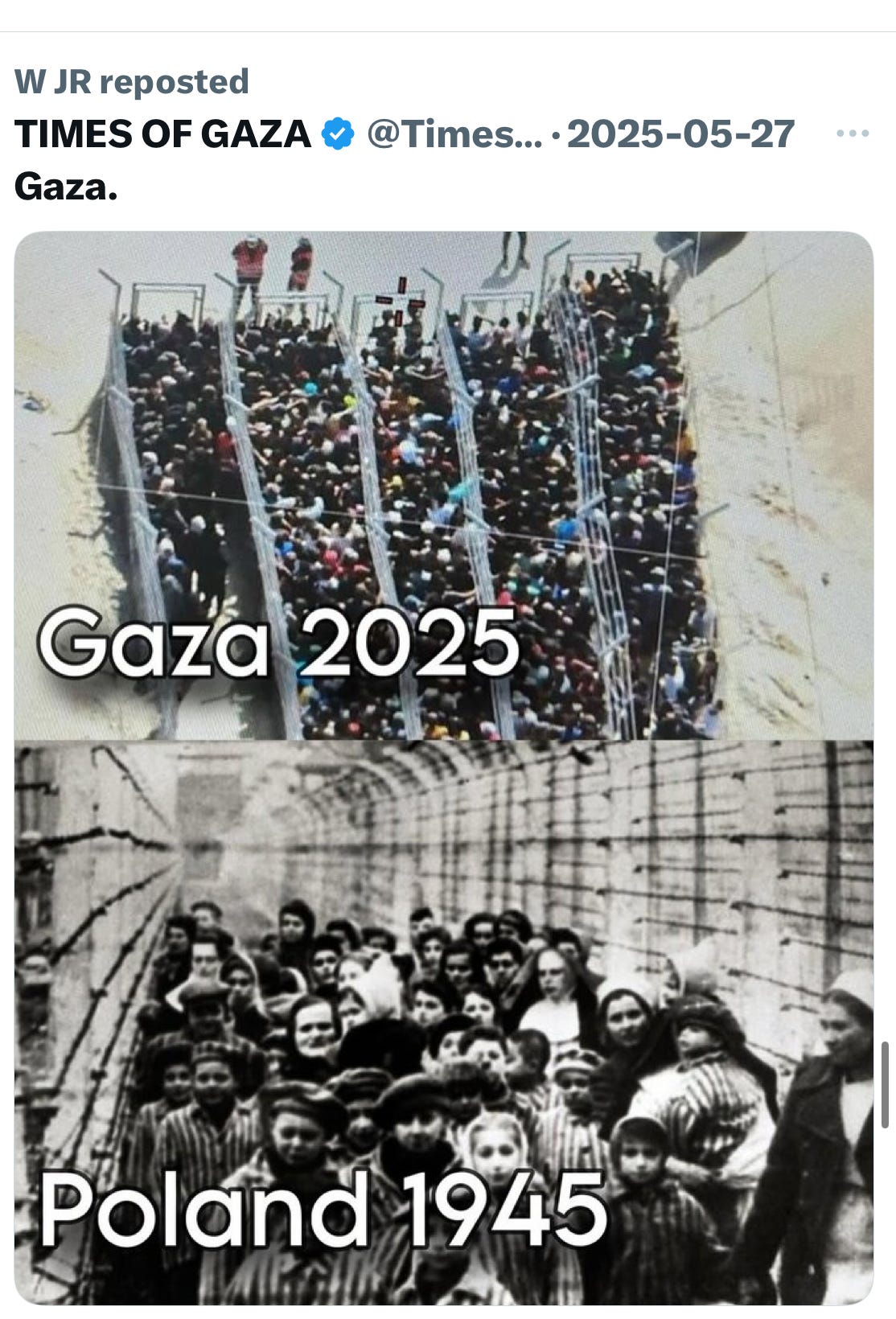
Screenshots below show several of Ramadan’s posts, and others include descriptions of Zionists as devil worshippers, Holocaust inversion imagery, and repeated anti-Jewish rhetoric.
The university took no action against Ramadan.
The conspiracy was beginning to unravel.
The psychological toll on Finlayson and his family was severe.
Finlayson’s workplace safety claim for PTSD or trauma-related injury related to the institutional treatment was eventually approved by the Workplace Safety and Insurance Board (WSIB). The WSIB would turn out to be the only organization that actually interviewed anyone but radical faculty, staff, student and management anti-Zionists determined to end Finlayson’s career.
(Examples of accuser Ramadan’s public posts on Israel)
Despite the volume and severity of these posts, there is no evidence that Ramadan faced any investigation or disciplinary action. Three human rights complaints against Ramadan had been dismissed immediately by the Humber Human Rights department.
As far as Finlayson knows, Ramadan is still teaching both at Guelph-Humber and Sheridan College. They have never spoken.
Meanwhile, Finlayson remained suspended, gagged, and under investigation. The contrast could hardly be sharper.
The institutional pressure on Finlayson continued.
More threats from university lawyers. His access to university systems was revoked. His office was entered, and materials were removed. Once again, the union said it was on management's side, and Finlayson found out only through a loyal student. His papers, collections from his late father who had passed away just before the affair started, were damaged and returned to him only after Finlayson threatened to have the University charged with theft.
The suspension lasted 20 months, ending in July 2025, and culminated in his termination, delivered via a cold-hearted email that simply stated he was fired. No evidence was included.
University of Guelph Provost Bill Rosehart and University of Guelph Humber Assistant George Bragues, a direct subordinate of VP Spence Ariemaa who had filed the Human Rights Complaint against Finlayson, wrote termination letters. Rosehart and Bragues never communicated in writing, in person or by telephone with Finlayson. There is no evidence that they made any attempt to get his side of the story.
Rosehart now serves as the President of the University of Waterloo. Despite numerous media attempts, he has refused comment, as has Bragues.
Finlayson had only one official chance to give a defence, a mandated disciplinary /judicial hearing carved into the collective agreement, but it was cancelled without explanation. The union refused again to enforce the collective agreement.
Today, the conflict has evolved into proceedings before the Ontario Labour Relations Board.
Finlayson has filed a Duty of Fair Representation complaint against OPSEU Local 562. He argues that the union abandoned him, aligned itself with management, and formally withdrew its representation many months before he was terminated; refused to file grievances or pursue pay and benefits; and acted in bad faith because it could not abide Finlayson’s support for Israel.
Finlayson says Humber College, the University of Guelph and OPSEU Local 562 are now doing exactly what the university did earlier — conducting what he calls trial by defamation. Statements and filings, he says, repeat damaging characterizations rather than address the facts.
“It’s painful,” he says. “It’s the same playbook all over again.”
The case now pits Finlayson against a combined institutional force of lawyers representing Humber College, the University of Guelph and two unions.
Finlayson says one kind Jewish lawyer has said she will accompany him to his hearing if it is ever held. The OLRB is statutorily bound to hold a hearing, but pressure from the University of Guelph, Humber College and OPSEU to shut down the hearing has been relentless.
As of July 2026, the OLRB has refused to schedule a hearing and has refused comment, despite setting an initial hearing - which it cancelled under pressure from the noted institutions - for March.
The legal war has now lumbered on for more than two and a half years and, according to Finlayson, has already consumed well over a million dollars in legal fees, investigations, administrative proceedings, and assorted bureaucratic machinery. Before the smoke clears, the final cost may drift toward four million dollars.
And here one encounters one of those small modern miracles of institutional life. Universities and colleges that speak mournfully of budget crises, announce layoffs, offer buyouts, and plead financial distress suddenly discover hidden reserves of wealth when the objective is not educating students or retaining staff, but ensuring that the dismissal of a man for condemning a designated terrorist organization is never subjected to meaningful scrutiny.
Yet the central issue remains simple.
After fifteen years of teaching, four textbooks, and a reputation as one of the most popular professors on campus, Finlayson was suspended, gagged, investigated, and dismissed. The reason given was that his statements poisoned the work environment.
Those statements consisted of saying he stood with Israel and that Hamas were Nazis.
Finlayson says he has no regrets. He remembers visiting Dachau and Auschwitz as a teenager. He is not Jewish. But he remembers the history. The pogroms. The expulsions. The Holocaust.
“I can look my children in the eye,” he says. “And I can look my Jewish friends in the eye.”
What he cannot understand is how a Canadian university turned a political remark into a witch hunt against him, noting that although his guilt is not determined by drowning him and seeing if he floats, the accused witches in Salem were at least allowed to face their accusers.
He says not one of the administrators involved has ever spoken to him directly. Not one of them has looked him in the eye, spoken on the phone or responded to an email.
“Their refusal to directly interact with me and to deny me any defence speaks to their moral cowardice and the weakness of their position,” he says. “Their position is that might makes right; they don’t care a whit that they violate collective agreements, the Human Rights Code, and basic natural justice - the foundation of our legal system - because they believe that, because they have money and power, that is all that matters and they can do as they please.”
Communication has come only through lawyers and investigators, and the substance of that communication has largely consisted of warnings and threats instructing him not to discuss his case with anyone.
No adjudication has taken place.
It suggests there may be much they prefer to keep out of view.
As for the proceedings now underway at the Ontario Labour Relations Board, Finlayson says he approaches them with realism rather than optimism.
“I have faith in a just God,” he says. “But I have lost faith in our judicial, human-rights, and labour relations systems. I doubt the full truth on this will ever come out; they seem very committed to keeping it buried. There is an axiom in law that says with every rule there must be a remedy; in other words, that “rights” don’t matter if there is no accountability or if accountability is financially unreachable,” he said.
“But all they need to do is to shun me, is to do nothing, and hope that they will eventually exhaust me financially and psychologically. And they are right. This is the truth about ‘administrative justice’ in Canada.”
“I have no appeal rights, or at least no rights that don’t mean I have to spend $70,000. The standards are incredibly subjective. And the odds for anyone standing with Jews or Israel at institutions like the HRTO or the Labour Board and getting a fair hearing are slim. It’s 2026, and Jews in Canada are by far the most persecuted religious group. Yet universities like the University of Guelph-Humber still prattle on about Islamophobia.”
Across Canada in recent months, synagogues have been shot at. Jewish schools have been targeted. A restaurant owned by one of Finlayson’s Jewish friends was recently shot up.
“These are terrifying things to see happening in this country,” he says. “I guess I should be thankful nobody has shot up my house.”
For Finlayson, the legal proceedings now unfolding practically represent the final institutional avenue available to him. Beyond that, he says, the options are limited.
“This has dragged on for well over two years,” he says. “It’s difficult to know that two multi-million dollar organizations have you in their crosshairs. They want to do harm to my family and me; that is clear, and it is psychologically devastating. I just wanted to write and teach.
After an industry career, I had discovered at 45 something that I loved: teaching and writing, and because I said I stood with Israel, it was taken from me, and that was not enough; they needed to deliberately destroy my reputation.”
“In the end, it is not just the injustice that sticks with me,” he says. “It is the immense betrayal, hatred and cruelty of these organizations. One day, you are Mr. Popular, and after saying you stand with Israel, they instantly turn the incredible weight of their organizations on me, and yet with all their power and lawyers, they are still afraid of standing before me and letting the facts be examined.”
But the questions raised by the case will not easily disappear.
The issue is not merely the alleged absence of procedural fairness. Institutions fail; procedures fail; people make mistakes. More troubling is the appearance of something colder: not a failure of due process, but a certain contempt for the very idea that due process should matter at all.
The university admitted years after circulating false charges that the criminal charges were entirely without merit, but never admitted that they could have logically originated only in the management suite. They refused to publicly retract the criminal allegations, which they, as the originators of the defamation, of course never brought to the relevant authorities.
Why did the university wait years to correct the record, after all the damage was done, and then offer no public retraction?
Why did a narrative of criminality begin circulating weeks before he had even been informed of any charges? Within hours of the VP putting charges forward?
How could a single Vice-Provost, spending or initiating the spending of hundreds of thousands of dollars in taxpayer funds, wage such an intense campaign against a lone professor she had never met and had never spoken to—and why was she so determined to break him and his family financially, psychologically, and reputationally?
Why could she not once listen or speak to him?
What kind of university traffics in defaming their faculty, inventing false charges, all because they don’t like someone’s stance on Israel? Such underhanded behaviour sounds like something that might happen in the 1930s in the longshoreman’s union, but at a university?
Why did another stranger, Prof. Wael Ramadan, also team up with the VP and the university to effectively declare war against Finlayson? Why was Ramadan protected?
And why did a senior administrator on campus declare that Finlayson would be fired before any investigation had even begun?
Was the wrong person fired over this entire scandal?
Readers may draw their own conclusions.
But the episode raises troubling questions about the state of Canadian institutions: how can a small university and its college partner—remarkably acting in tandem with its faculty union, OPSEU—so thoroughly devastate the career of a single professor and continue attacking him even months after his termination?
All of this, Finlayson says, began because he told a stranger unconnected to the university that he stood with Israel and that supporting Hamas meant standing with Nazis.
He has no regrets. He says he will never apologize. His lost future wages, royalties, pension and benefits, without factoring in inflation, are approximately $1.8 million Canadian.
Support for Israel is not a fashionable position on many Canadian campuses, and expressing it openly can quickly become a career-limiting move.
And so the episode may fade, as many things do in small institutions: quietly and without scrutiny. The University of Guelph-Humber is neither large nor widely known, and it rarely attracts national attention. Perhaps that is why the affair has passed with so little notice. In a place small enough to escape the spotlight, even something this extraordinary can unfold while the wider world barely glances in its direction.
But stories have a way of travelling through quieter channels. If this one moves through Substack and the informal networks of private social media, it may yet find a larger audience.
Feel free to share it if you wish. One clings to the faint hope that enough people—or perhaps even one person possessed of genuine authority and a functioning conscience—might read it and decide that Jewish and Jewish-supporting students and staff at the University of Guelph-Humber ought not to feel compelled to conceal their Jewishness or support of Israel simply to avoid trouble.
If you found value in this article and wish to support my ongoing work, please consider leaving a tip. Your support helps me continue producing uncensored content on critical issues.
Let me also say something about the reality of this process. I am not a lawyer. I am one individual facing four experienced labour lawyers — two from OPSEU and two from Humber. Two days before the hearing they submitted roughly 800 pages of material across five or six separate filings. That is the environment I am dealing with. I have never brought a DFR before. I have no legal training. Yet I have done my best to respond carefully and thoroughly. They asked for particulars — I provided them. My submissions are organized, detailed, and responsive to what was requested. But much of what I am dealing with involves pleading a negative: asserting that certain actions were not taken. By definition, you cannot “prove” a negative in the way they suggest; if the union claims it acted, then it is up to them to show evidence that it did. That is basic logic.
So yes, there is a massive imbalance here: one person without counsel facing multiple institutional lawyers who are filing hundreds of pages at the last minute while trying to derail the hearing. And into that situation you arrive anonymously, claiming to know what happened and accusing me of non-compliance. I have no idea who you are, and you have not even had the courage to attach your name to your comments. If you believe you understand this case so well, then identify yourself and explain your evidence. Otherwise it simply looks like an anonymous stranger jumping in, making confident claims about matters he clearly does not understand.
If anyone on here wants to help, there is and will be no go fund me (you can't litigate against a multimillion dollar institution that has already spent a million), the only thing that would help, and there is no compulsion, that people sign up for the $8.35 paid subscription to my Substack, as other than my farm, it is my only source of income.







Let me also say something about the reality of this process. I am not a lawyer. I am one individual facing four experienced labour lawyers — two from OPSEU and two from Humber. Two days before the hearing they submitted roughly 800 pages of material across five or six separate filings. That is the environment I am dealing with. I have never brought a DFR before. I have no legal training. Yet I have done my best to respond carefully and thoroughly. They asked for particulars — I provided them. My submissions are organized, detailed, and responsive to what was requested. But much of what I am dealing with involves pleading a negative: asserting that certain actions were not taken. By definition, you cannot “prove” a negative in the way they suggest; if the union claims it acted, then it is up to them to show evidence that it did. That is basic logic.
So yes, there is a massive imbalance here: one person without counsel facing multiple institutional lawyers who are filing hundreds of pages at the last minute while trying to derail the hearing. And into that situation you arrive anonymously, claiming to know what happened and accusing me of non-compliance. I have no idea who you are, and you have not even had the courage to attach your name to your comments. If you believe you understand this case so well, then identify yourself and explain your evidence. Otherwise it simply looks like an anonymous stranger jumping in, making confident claims about matters he clearly does not understand.
If anyone on here wants to help, there is and will be no go fund me (you can't litigate against a multimillion dollar institution that has already spent a million), the only thing that would help, and there is no compulsion, that people sign up for the $8.35 paid subscription to my Substack, as other than my farm, it is my only source of income.