


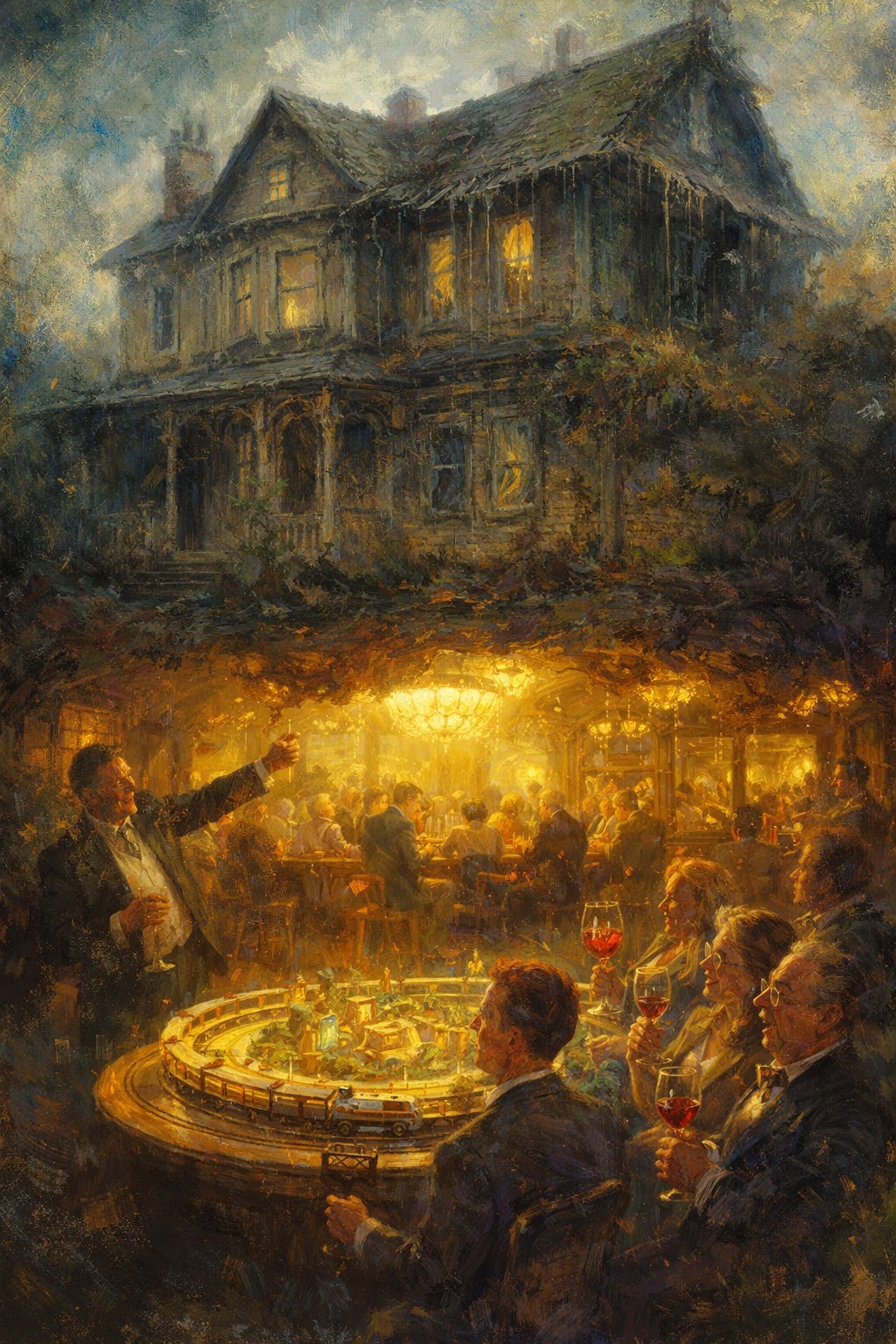
Imagine a family living in a large but deteriorating house.
The roof is leaking. The foundation is beginning to shift. The windows are cracked, the insulation is failing, and there is mould quietly spreading in the attic. The bills are piling up. The credit cards are stretched thin. The income is uncertain.
Actually, welcome to my house.
These are not aesthetic inconveniences. They are structural facts. They determine whether the house stands or falls.
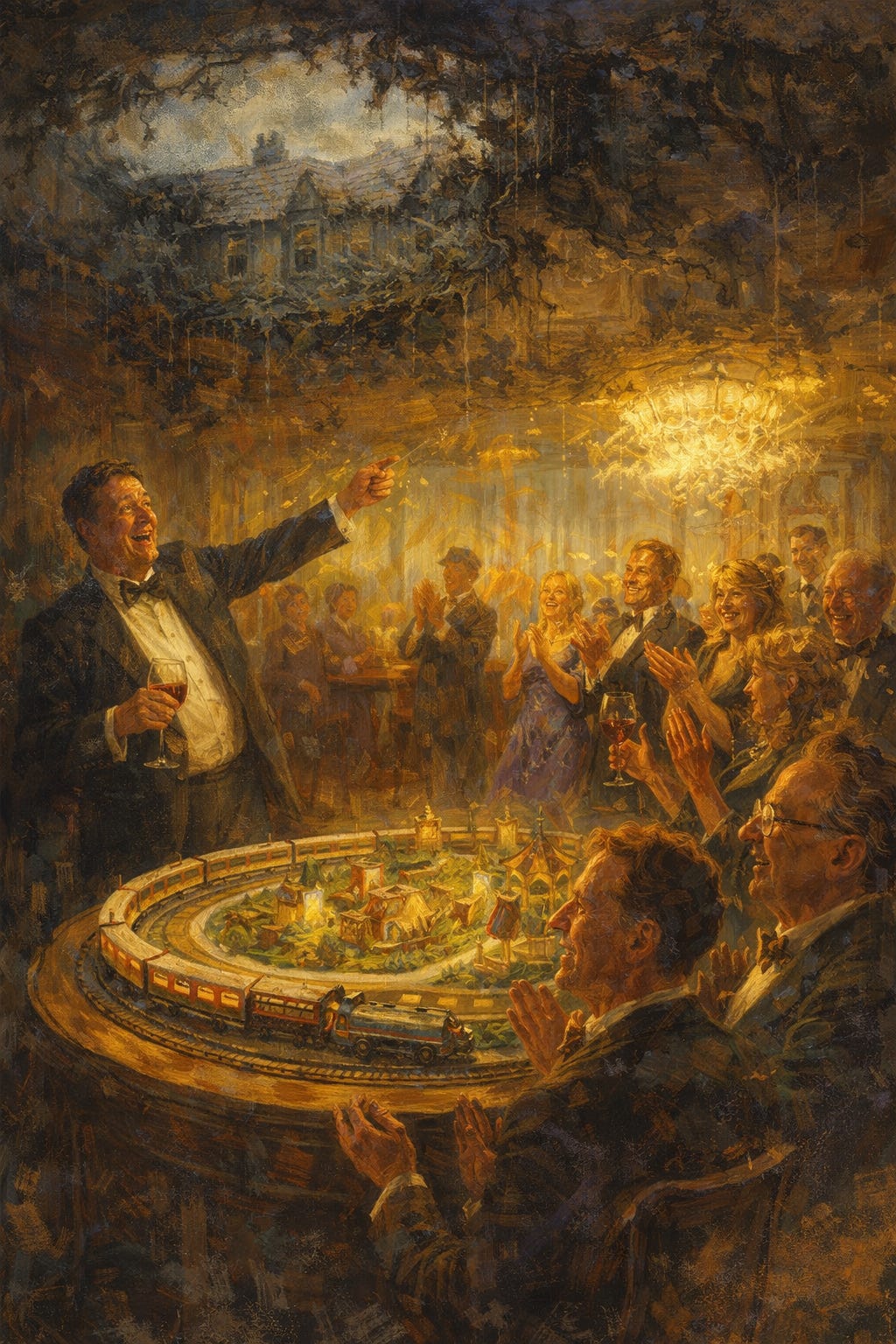
Now imagine the father of this household returning home, not with shingles or beams or a repair plan, but with an elaborate electric train set for the basement. Along with it come designer lighting, a new bar, a gleaming drinks machine, and a wall-sized television. And he plans to hold a weekly European-themed party each Friday, with thousands being spent on new party chairs, expensive French decor and the best of wines.
It will be so cultured, and nobody will invite any Americans.
When asked how any of this will be paid for, the answer is breezy: another credit card.
And the family applauds.
They admire the train. They like the lighting. They are charmed by the sense that something exciting is happening. The house may be failing, but the basement has never looked better.
That is Canada.
Now imagine a relative comes to visit.
Call him Uncle Pierre.
He walks through the house, looks at the water stains, the buckling floors, the draft coming through the cracked panes, and says, quite plainly: " This is unsustainable. The foundation needs repair. The roof must be fixed. You cannot decorate a collapsing structure and call it progress.
These are not controversial statements. They are, in fact, the only adult statements available.
And how does the family respond?
They do not contest the facts.
They do not produce counter-arguments.
They turn on Uncle Pierre.
He is negative. He is tiresome. He is ruining the mood. He ate an apple obnoxiously in front of a reporter who was insulting him. He lacks vision. Why can't he be more supportive, more upbeat, more like the father who at least brings home interesting things? Daddy’s baubles and the tales of his travels are so inspiring, but nothing comes of him, and the house drifts further into squalor.
And so Uncle Pierre is mindlessly dismissed—not because he is wrong, but because he is unwelcome.
That, too, is Canada.
