


If you believe in free speech, here’s the bad news: it isn’t actually free. It costs $6 a month. That’s less than the latte you complain about, less than the Netflix shows you’ll never watch, and far cheaper than your last regrettable bar tab.
For that, you get two essays a week, open comments, and the satisfaction of knowing you’re funding uncensored writing in a world addicted to censorship. Everyone says, “It’s just a cup of coffee.” Fine. But here’s the pitch: give me your coffee money and I’ll hand you something stronger—essays with bite, arguments with teeth, and the freedom to say what others won’t.
Subscribe today. Because silence is free—and it’s worth exactly what you paid for it.
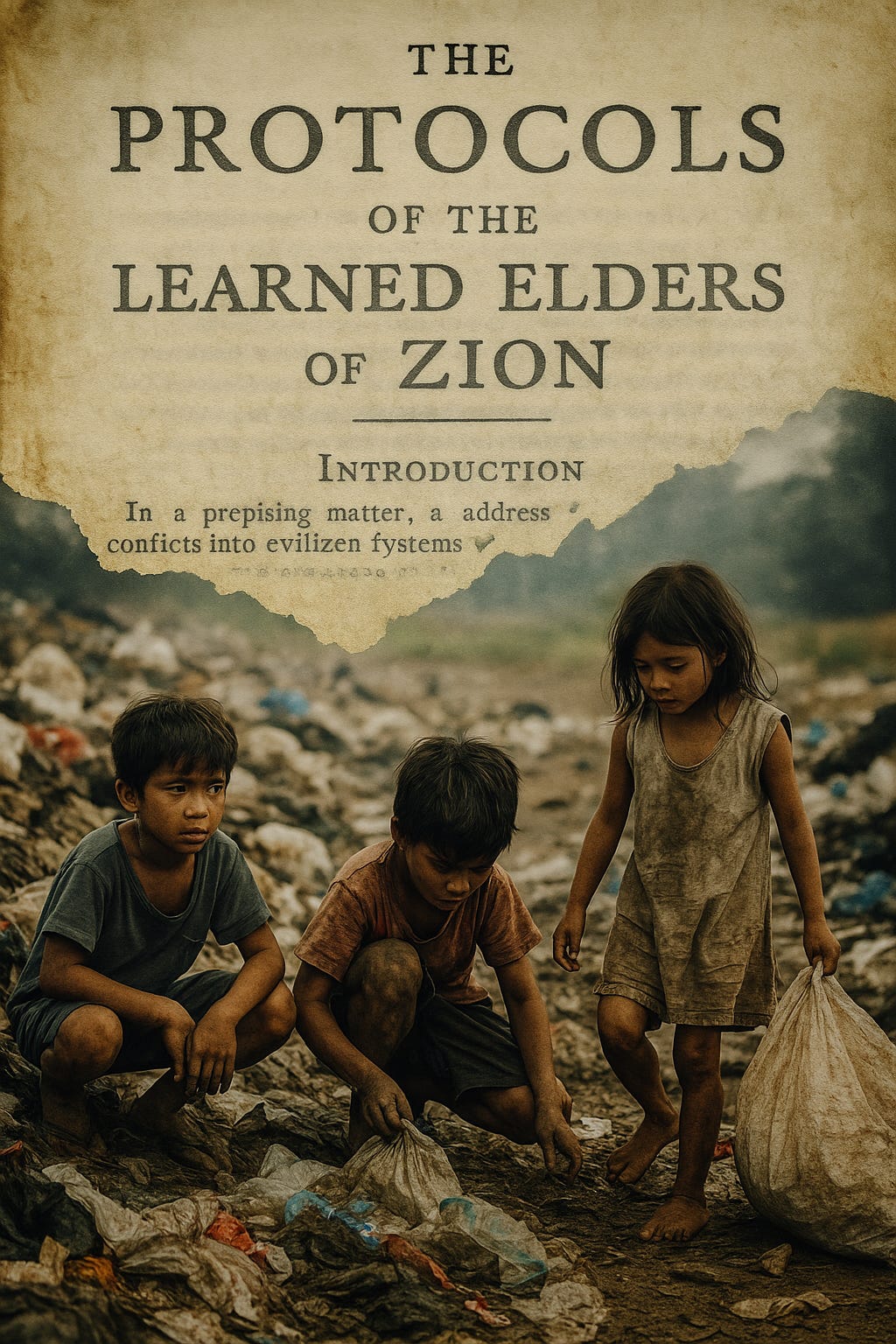
Most people who casually speak about libel have no idea what the word means. Libel is not an insult, nor a heated quarrel, nor even the kind of sharp dispute that intellectual life necessarily demands. Libel is defamation: a publicly circulated falsehood designed to stain a person or a people with crimes they did not commit. Its spoken cousin is slander, but libel has always carried the greater power, because it does not evaporate with the air. It circulates. It accumulates. It becomes, through repetition, a counterfeit truth.
And among all forms of libel, none has been more persistent, more ruinous, or more perversely imaginative than the blood libel: the accusation that Jews murder non-Jews — especially children — and use their blood for food or ritual. It is the oldest running slander in Western civilisation, and it has returned in our century with a confidence one might expect from a lie that has never once been successfully punished into extinction.
The reason for its longevity is depressingly simple. When people hate someone, they will believe anything about them. Hatred is the precursor; belief is the afterthought. Evidence plays no part. Hatred searches for a story to justify itself, and if none exists, hatred writes its own.
A lie as elaborate as the blood libel could never have survived eight centuries if it relied on plausibility. It survives because hatred craves narrative the way the body craves salt. And once the narrative exists — whether whispered by medieval monks or shouted by modern protesters — it becomes its own evidence.
Norwich, Damascus, and the First Violence of the Imagination.
The first fully formed case appears in Norwich, England, in 1144. A boy named William was found dead. His killers unknown, the city reached instinctively for the most profitable invention: that Jews had murdered him in a macabre ritual.
Thomas of Monmouth, a monk with an eye for dramatic fiction, wrote a hagiography describing the supposed crucifixion. It was nonsense, but it was welcome nonsense. It explained the unexplainable, satisfied the crowd’s appetite for a culprit, and gave religious sanction to the persecution that followed. This became the template: a dead child, a terrified community, a religious narrative to give the hatred dignity, and the Jew as a sacrificial defendant.
Centuries later, the script replayed almost word for word in the Damascus Affair of 1840. A Capuchin monk, Father Thomas, disappeared. Local Christians — not Muslims — accused Jews of murdering him to obtain his blood. The authorities tortured confessions out of innocent men. The Ottoman Sultan, displaying more clarity than many modern academics, condemned the affair as “pure calumny,” insisting that the Jews not be tormented based on fantasies. Yet the accusation did not disappear. It travelled.
And travel it still does. A guest lecturer at University College London, Dr Samar Maqusi, recently regurgitated the blood libel verbatim — not metaphorically, not symbolically, but explicitly — during a lecture titled “The Birth of Zionism.” She presented the medieval accusation as historical fact, with the serene confidence of an academic reading out lab results. This was not a critique. This was not “anti-Zionism.” This was the oldest, most poisonous slander in the Western canon, uttered at a modern British university as if reciting multiplication tables.
Intellectual vandalism never appears out of nowhere; it arrives wearing hand-me-down costumes from earlier propagandists. And so, to understand the modern counterfeit, one must return to the original mint where these forgeries were struck.
By the early twentieth century, Europe produced its most toxic artefact: The Protocols of the Elders of Zion, a Tsarist forgery plagiarised from French political satire and German fiction. Fraudulent to the core, but nutritiously satisfying to those hungry for grievance. Nazi Germany devoured it like a starving man gnawing on poison and calling it bread; the Soviet Union dispensed it as ideological vitamin paste; Arab nationalist movements gulped it down in great choking swallows, delighted to inherit a toxin they could pass off as cultural heritage.
Once absorbed, it became the perfect metabolic fuel for movements too lazy or too cowardly to confront reality — a calorific hatred that required no thought, spoiled no appetite, and left its believers permanently bloated with grievance and permanently starved of history.
Where This Ancient Lie Finds Its Modern Echo: My Case
Here, I must make a personal observation that I never wanted to make but can no longer ignore.
In the formal accusations assembled against me by the University of Guelph-Humber, I detected — faint but unmistakable — the psychological architecture of the blood libel narrative, updated for the therapeutic age and the social-justice lexicon.
Not the theology. Not the ritual imagery.
But the structure — the dramaturgy — the narrative choreography through which hatred clothes itself in the language of moral panic.
In my case, one finds the familiar medieval ingredients dressed in modern academic robes:
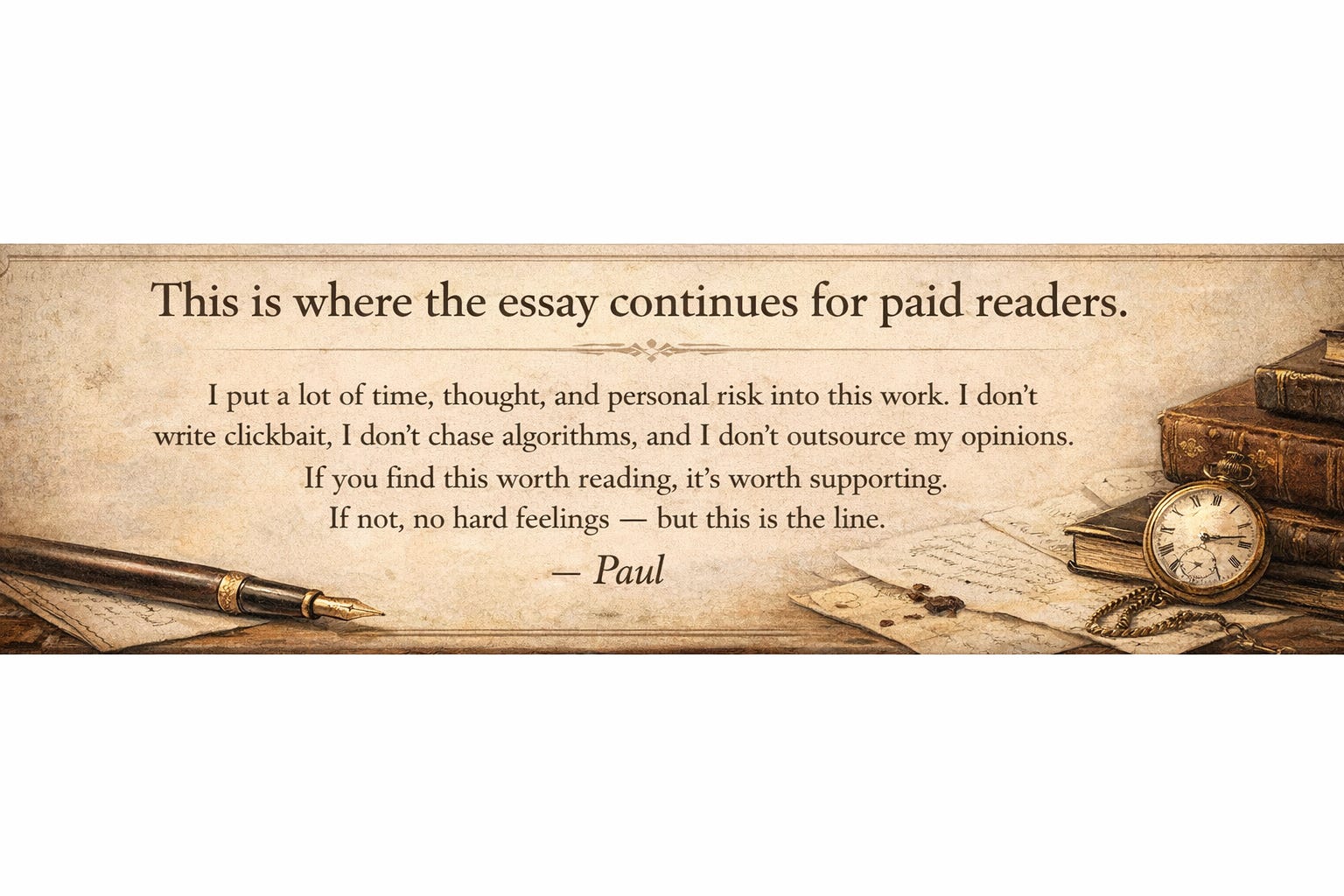
1. Invent a vulnerable youth.
In the Human Rights Complaint filed by the Vice-Provost herself — who acted as complainant, investigator, judge, and executioner — I am said to have made students “fearful,” “unsafe,” “threatened,” and “intimidated.” The students themselves reported none of this.
This was assigned fear, manufactured panic, institutional ventriloquism.
2. Insert a fabricated act of violence.
In one of the formal allegations — drafted, it seems, during a séance rather than any recognisable fact-finding process, because no fact-finding ever actually took place — I am accused of being “aggressive” with a student and of having “ripped off his shirt.” Yes, you read that correctly. Not content with fabricating my moral character, they decided to fabricate my hobbies as well.
This particular slander — which somehow escaped the confines of a small, private management meeting and the freshly minted human-rights complaint within mere hours — did not drift outward so much as detonate.
Staff and faculty moved with such inexplicable synchrony, pulling students aside one by one to ladle out this toxic broth, that one might reasonably suspect management had circulated it by courier.
But the smear did not even retain the shabby dignity of being whispered in shadowed hallways. No — in a gesture of pure intellectual squalor, the rumour leapt proudly into the digital age.
The new generation communicates by text, after all. So a staff member obligingly transmitted the whole sordid fiction via WhatsApp: a neat little parcel of defamation, shrink-wrapped and time-stamped, delivered straight to a student with the efficiency of a courier service.
Fortunately, the recipient was a young man equipped with more common sense than the entire procession of credentialled PhDs who authored this farce.
He immediately forwarded the reeking digital heap to me — proof of how rumours metastasise in institutions where evidence is optional, and hysteria is the default operating system.
It would be funny if it weren’t so clinically stupid.
A ludicrous charge. Ludicrous because it never happened. Ludicrous because no such report exists. Ludicrous because the same institution that invented it never bothered to ask me about it.
Yet precisely because it was ludicrous, it was effective.
It created the necessary visual: the dangerous man, the vulnerable youth, the morality play.
3. Conjure a danger to children or youth.
Like the blood libel of old — which always required a child-victim to sanctify the lie — the modern defamation requires the same psychological alchemy. If you want to destroy someone utterly, you do not accuse him of debating badly. You accuse him of harming the young.
In my case, the Vice-Provost — aided by her longtime ally and campus fire-starter, Wael Ramadan — simply invented a narrative in which I was recast as a menace to students: physically, psychologically, morally —take your pick. No student ever alleged this. No evidence was ever produced. No particulars were ever identified. But why let the absence of reality interfere with a storyline when the villain has already been chosen?
It is the medieval trope translated into campus HR-speak: the “unsafe” Jew, the “dangerous” dissenter, the “harmful” heretic.
4. Allow the invented story to circulate without evidence.
Just as medieval monks copied blood-libel fantasies into manuscripts, modern bureaucracies replicate defamatory allegations inside HR forms, faculty whisper networks, and email chains. The lie achieves the dignity of paperwork. It becomes official.
When I begged the administration to stop the defamation, they refused. They threatened to involve the police if I asked again.
In this way, the false charges took on the same inexorable quality as the ancient blood libel: they existed because authority needed them to exist.
5. Treat the accused as guilty without a defence.
And then we arrive at the most telling feature of all: the treatment of the accused as already guilty, the verdict delivered long before the ceremony of “process” even begins. One might have expected — in a university, of all places — at least the pantomime of fairness. A hearing, perhaps. An interview. The bothersome inconvenience of evidence.
But no: there was no hearing, no opportunity to answer the allegations, no witnesses consulted, no facts tested. Appeals were returned unread, like unopened mail addressed to a dead man. Everything that might have troubled the narrative was ignored with the serene indifference of an institution entirely satisfied with the fiction it had commissioned.
This was not an investigation; it was a ritual — the bureaucratic equivalent of drawing a chalk circle around the accused and announcing that the spirits had spoken.
The outcome was predetermined, and what followed was not a search for truth but the choreography of legitimacy: the genuflections, the paperwork, the impersonation of standards. The university played judge, jury, and dramaturge, staging a morality play in which the facts had been quietly dismissed backstage.
Blood libel survives for precisely this reason. It is hatred refined to its purest narrative form: the conjuring of an invented victim, the invention of an invented violence, the manufacture of moral panic, and the refusal — indeed the terror — of evidence.
The accusations against me are not blood libel in content, but they borrow its architecture wholesale. The same props, the same plot, the same psychological machinery: a demonised defendant, a vulnerable youth drafted as a prop, and a mob that needs no proof because its hatred arrived fully formed.
What we are witnessing is simply the old software running on a new machine.
Hatred upgrades its vocabulary; the operating system remains the same.
What the medieval Church once supplied as theology, the modern Left-Islamist coalition now supplies as politics.
The blood libel has metastasised into an archetype — not Jungian, but something far more vulgar: a ready-made narrative template into which Jews can be dropped whenever a movement requires a convenient monster.
The details change — no one today demands barrels of Christian blood — but the structure remains: Jews as child-killers, Jews as uniquely malevolent, Jews as a metaphysical pollutant whose crimes are self-evident and whose guilt requires no evidence.
It is the same libel, merely translated from Latin into the modern dialects of “anti-Zionism,” campus radicalism, and Islamist grievance. The costume changes; the archetype does not.
The Myth Migrates: What Islam Did and Did Not Contribute
It is essential to say plainly that the blood libel did not originate in Islam.
Jews under Islamic rule were second-class subjects, forced to pay the jizya tax and barred from certain forms of public participation. But they were not accused of ritual murder or blood-use.
Those ideas simply did not exist in early Islamic thought. They arrived in Muslim-majority lands only in the nineteenth and twentieth centuries, imported by European missionaries, Christian communities, and colonial administrations.
The Qur’an and classical Islamic jurisprudence never contained anything resembling the blood libel. That some modern Islamist movements have since adopted it is undeniable — but they did not invent it. It is not an Islamic myth. It is a European one that migrated.
Gaza and the New Masks of an Old Lie
Modern Gaza-era propaganda has resurrected the old slander, albeit in newer costumes. The vocabulary has changed — there is little talk of matzah or sacred chalices — but the structure is intact. Instead of claiming that Jews kill Christian children for blood, one now hears that Israel deliberately murders Palestinian children for pleasure, that Jews harvest Palestinian organs, or — in a newer mutation — that Jews are sexual predators of minors.
In 2009, a Swedish newspaper ran a piece implying that Israeli soldiers killed Palestinians to supply organs to Israeli hospitals. The organs had replaced the blood; the slander remained the same.
In more recent Gaza wars, protesters in Britain waved dolls drenched in fake blood at Jews walking home from synagogue and screamed that Jews kill babies. These were not directed at soldiers or politicians but at any Jew in the vicinity. The target was not the Israeli state; it was Jewish identity.
The accusation has now slithered into its pornographic stage. When bigotry becomes too lazy to invent new lies and too intellectually malnourished to sustain old ones, it reaches — inevitably — for the sexual smear. Thus, in cities that consider themselves enlightened, protesters chant with the confidence of lunatics that “Jews are pedophiles.” No evidence, no incident, no rationale — merely the ancient sewer rising again in modern dress.
And in Toronto — that museum of self-satisfaction, forever draped in its own virtue-signalling bunting — a friend of mine stood across from a Jewish rally and watched pro-Palestinian agitators waving signs. One read: “Jews are pedophiles.” This was 2025, in a polished metropolis that boasts of human rights commissions like other cities boast of sunlight.
What did the Toronto Police do? Precisely what they do whenever the target is Jewish: they enter their familiar Zen state of motionless contemplation, the bureaucratic trance in which officers become decorative rather than functional. You could replace them with traffic cones and the net effect on public safety — and moral courage — would be identical.
And presiding over this ritual of official paralysis is Ontario’s Attorney General, Michael Kerzner, who, despite being Jewish, has elevated non-prosecution of hate propaganda (Criminal Code 318–319, if anyone still cares) into a kind of spiritual doctrine. He refuses to act, not because the law is unclear, but because courage would be inconvenient.
His justification — if one can call it that — is the balm of “community relations.” In actual English, this means:
We know who will shout, and we know who will riot, and we know whose anger actually frightens us — and it isn’t the Jews.
This is not a restraint. This is not prudence. It is cowardice marinated in bureaucracy. It is law enforcement outsourcing its spine. It is the justice system pulling its own fire alarm and bolting for the exit.
When the state refuses to protect its most historically targeted minority because it fears the tantrums of its loudest lobby, it is not maintaining peace — it is paying tribute.

The Paramedic and the Garbage Dump
And Toronto, that chronically self-congratulatory theme park of multicultural virtue, supplied an even darker specimen. In early 2025, Katherine Grzejszczak, a York Region paramedic — a public servant entrusted not merely with bandages and oxygen but with the lives of the elderly, the frail, the vulnerable — posted to social media that the Israel Defence Forces were “luring starving Palestinian children to a garbage dump so they can snipe them dead.”
One could almost admire the efficiency of the lie. The medieval blood libel — Jews hunting Christian children for ritual slaughter — had merely been shoved into a fluorescent-lit parking lot and uploaded to Instagram.
The format was new; the hatred was antique.
But the deeper disgrace was not her invention — medieval fantasies being the one renewable resource the world never seems to exhaust — but the reaction.
CUPE, Canada’s largest labour union, did not condemn her. It defended her.
The CBC did not call it what it was: criminal hate propaganda, proscribed under Canadian law (sections 318–319). It softened it, as though bigotry becomes benign if wrapped in the warm blanket of “labour rights.” And not one of our major Canadian institutions — not the press, not the labour movement, not the political class — could bring itself to say the words aloud:
This woman revived a blood libel.
A blood libel, the thing that once sent Jews running from burning towns in Europe, is now politely rebranded as “advocacy.”
The moral acrobatics were almost impressive. A public employee spreads a criminal antisemitic conspiracy theory — and becomes a martyr. A victim. A saint of the labour movement. A Joan of Arc for bigots.
And mark this well: She was fired, yes — but do not be surprised when she is quietly reinstated.
Somewhere in Richmond Hill, old Jewish women will dial 911 in cardiac distress and find themselves tended to by a paramedic who believes — in her modernised idiom — that Jews kill children for sport.
The Smug Delusion of the Digital Age
There is a modern conceit that we are too educated, too online, too scientifically literate to fall for medieval fantasies. We flatter ourselves that the internet has liberated us from myth, that social media has inoculated us against hysteria, that “information age” citizens are immune to goblins, fairies, demons, and blood rituals.
My own grandmother’s family came from Ireland, and some of them — grown adults, ordinary people — believed in fairies. Some even claimed they saw the odd stowaway Canadian-Irish fairy in rural Alberta, somewhere near the village of Ensign. It was a superstition, yes, but mostly harmless.
Nobody ever used it to justify killing the Irish.
Which is precisely why we should not get too full of ourselves in 2025. At least the fairies were silly. They did not demand violence. But the digital reincarnation of medieval antisemitic myths does demand violence — because it was built for violence.
Science Cannot Save Us From Hatred.
And here is the fatal conceit of the age: that science, technology, and “information” can disinfect hatred. That a society with Google cannot produce a pogrom. The internet, with its endless citations and counter-citations, will expose libel and disarm it.
This is childish.
The blood libel has never been defeated by information because it has never been motivated by ignorance. Ignorance is curable; malice is not. Hatred seeks a justification, not a fact. It scours the world for a story that flatters its venom, and if none exists, it manufactures one.
Technology does not cure this instinct; it accelerates it. A superstition once whispered in a medieval courtyard can now be broadcast globally in seconds. The lie does not compete with science because it operates on an entirely different plane — the plane of desire, of resentment, of the need to harm. And the object of that harm, more often than any other people in history, has been the Jews.
The Lie Evolves. It Migrates. It Persists.
The medieval imagination never died; it merely found Wi-Fi. The hatred that once required a cathedral or a public square now thrives on the algorithm. A superstition that once travelled on horseback now travels at the speed of reposts.
The blood libel has not weakened; it has been weaponised. It spread faster in 2025 than it did in Norwich in 1144.
The lie persists because it is not primarily about belief; it is a vehicle — a preparatory instrument for hatred. And hatred, once rehearsed, becomes violence.
The Final Stage: “They”
This is why modern Gaza-era slanders are so dangerous. Protesters claim that Israel seeks the deaths of children as a matter of policy, that Jews relish such deaths, that Jews are pedophiles, that Jews lure children to garbage dumps to harm them, and that Jews harvest organs. These are not critiques of military actions. They are indictments of a people’s nature.
And this is the final, fatal stage of the blood libel: the shift from accusation to grammar.
Once a society begins referring to Jews as “they,” as a collective organism with a single malignant will, the machinery of hatred is already in motion. “They poison the wells.” “They kill the children.” “They drink the blood.” The definite article becomes a weapon.
And when the libel metastasises — when “they” is paired with invented atrocities — the next sentence is always the same: they did this, therefore let us go kill the Jews.
Do not imagine it cannot happen again — whether in New York, Toronto, Gaza City, Moscow, Damascus, Riyadh, Paris or London - it can.
History has already demonstrated the portability of this hatred. It travels. It adapts.
It waits, it skulks, it does not sleep. And we are not too good, too modern, or too enlightened to fall for it.
Germany — that nation of Goethe, Schiller, Beethoven, Einstein, Planck — was the most educated, the most advanced, the most cultivated society in Europe, and still it fell for the oldest and dumbest lie on the continent.
The devil’s greatest deceit, as the old line goes, is convincing us that he no longer exists. But he does exist. And the blood libel — this undying, shape-shifting superstition — tells us exactly where he lives.
Footnotes
Schadenfreude — A German word meaning “joy at another’s misfortune”; a psychological accelerant of defamation, mobbing, and hatred.
Coverage of the York Region paramedic case: rabble.ca, “Paramedic fired for pro-Palestinian speech fights for reinstatement,” June 2025; CUPE Ontario public statements; CBC reporting on the labour dispute.
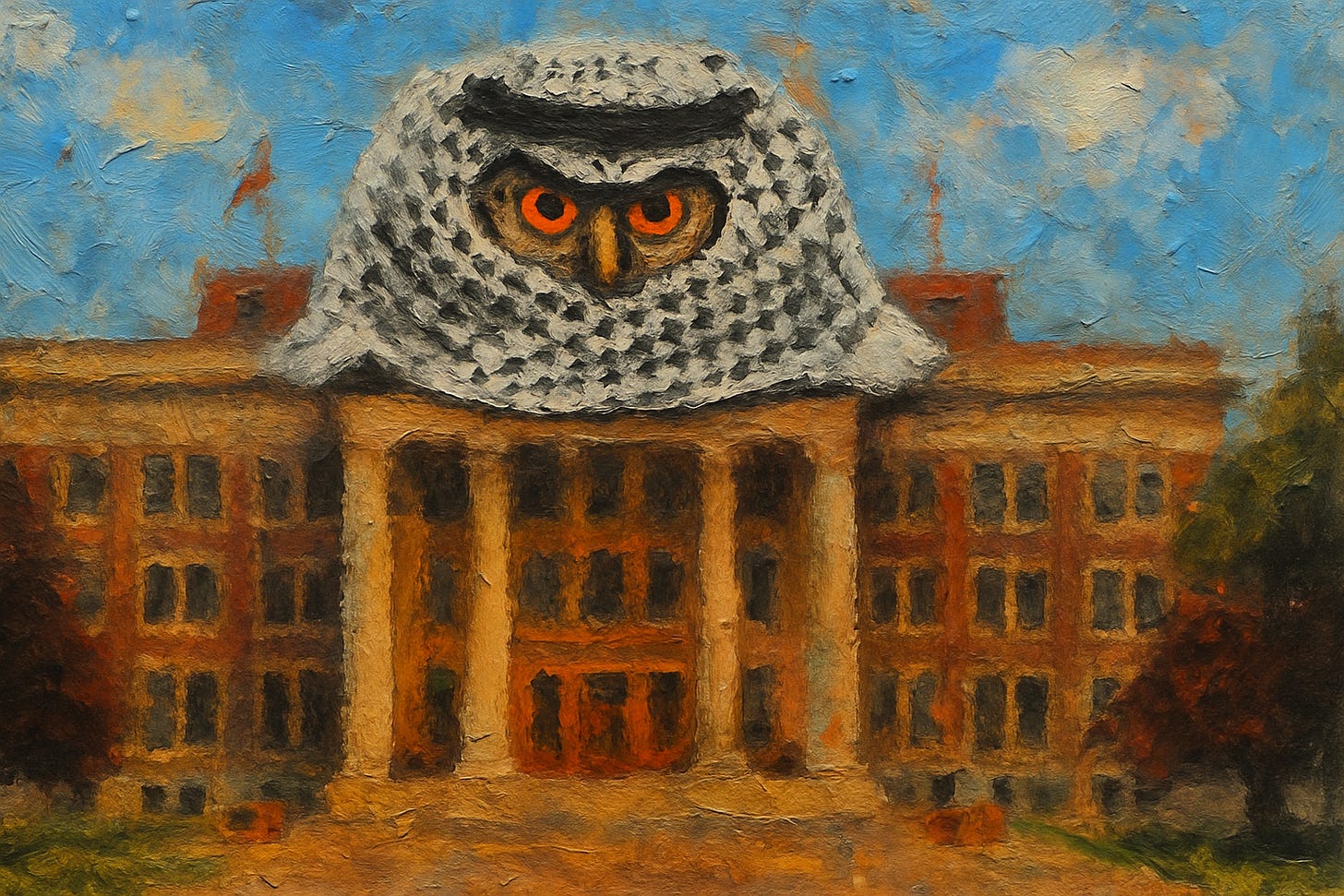
If you found value in this article and wish to support my ongoing work, please consider leaving a tip. Your support helps me continue producing uncensored content on critical issues.
So much wisdom. The Jews are convenient victims. There is a history in the west of vilification. Little explanation is needed. Islam is less known. Glorification of it becomes possible. Its philosophy is cruel and obscene, but it presented itself as the victim and not the vilifier.
You’ve earned a post-doc degree in the Persistence and Evils of Blood Libels. THIS KNOWLEDGE NEEDS TO BE CODIFIED AND STUDIED IN OUR EDUCATIONAL INSTITUTES. Your wisdom, achieved through personal, devastating experience and refined by your intelligent research and analyses, as well as your desperate courage to continue to speak up, is invaluable and trailblazing. Just as ‘cancellation’ with its devastating personal consequences is the modern equivalent of the community-shaming and ostracism of yesteryear, so the lies, chants and distortions of the pro-Pali mobs in Western society mirror the blood libels hurled against Jewish communities for beyond a millennium. WHO HAS THE COURAGE TO HIRE YOU TO DESIGN AND TEACH SUCH A CURRICULUM? Here’s a possible title: “A Comparative Analysis of Witch Hunts, Blood Libels, Cancellations and the Loss of Critical Thinking in the Digital Age.”