


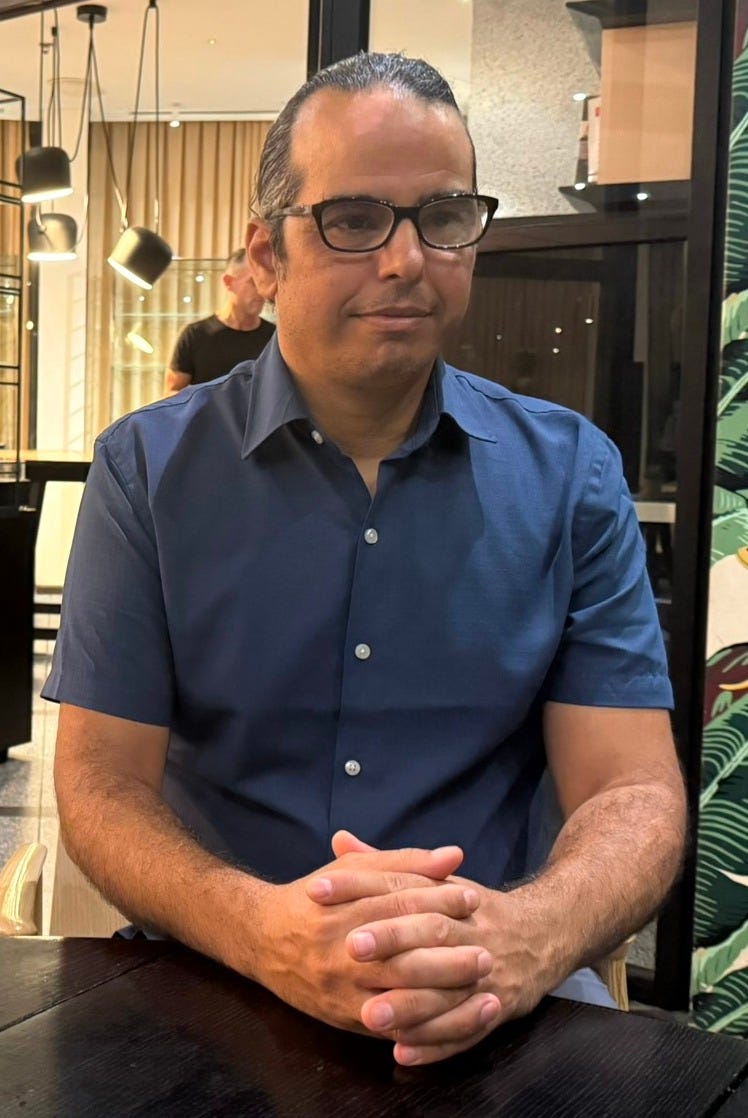
The candy was sweet. The warning came later.
As a small boy in Khan Yunis, Gaza, Dor Shachar accepted candy from an Israeli soldier. He remembers taking the wrapper home and asking his father, who worked in Israel, to buy him more.
Instead, his father warned him never to accept candy from a Jew. It could be “poisoned.”
Yet his father also brought home sweets from Israel. Even as a child, Shachar noticed the contradiction between the Jews he was taught to hate and the people he actually met.
Decades later, that gap—between the Jew of the hateful imagination and the human being standing in front of you—is at the heart of what makes his story worth hearing.
Shachar, who is scheduled to speak in Toronto on Oct. 27, offers more than an extraordinary account of leaving Gaza and becoming Jewish. His story raises a question: What happens when hatred becomes part of a child’s education—and what responsibility do the rest of us have to interrupt it?
For Canadians, that is not an abstract discussion. What do young minds see and hear in Canada? Campuses that fester and foster anti-Zionism. Social media that demonizes Israel and Jews. Elected officials that wear keffiyehs and get selfies with radicals. Public schools that allowed pro-Palestinian chanting at a field trip, and hired anti-Israel “educators” to give “development seminars.” Together, incidents like these could fill a thick volume from the past three years alone. Where, and how far, will it go next? Shachar’s early years give us a glimpse.
That makes Jew-hatred a local problem, not merely a foreign conflict’s distant echo. Antisemitism isn’t something Jews must manage; it is something their neighbours have a responsibility to confront.
Shachar’s account offers a disturbing window into how that hatred can be cultivated.
Born into a Palestinian Muslim family in Khan Yunis, he recalls receiving anti-Jewish messages at home, at school and in religious instruction. In our interview, he described teachers instructing children to throw stones at Israeli soldiers, and relatives presenting the killing of Jews as a duty.
In his telling, hatred was not an isolated lesson, but a message reinforced across childhood. Questioning it meant challenging not just an idea, but the authority of teachers and relatives—and risking punishment.
He recalls his grandfather inviting Israeli soldiers to share food and coffee, then speaking of killing them after they left. To the boy, the contradiction was bewildering: how could someone welcome a person to his table and then demand his death?
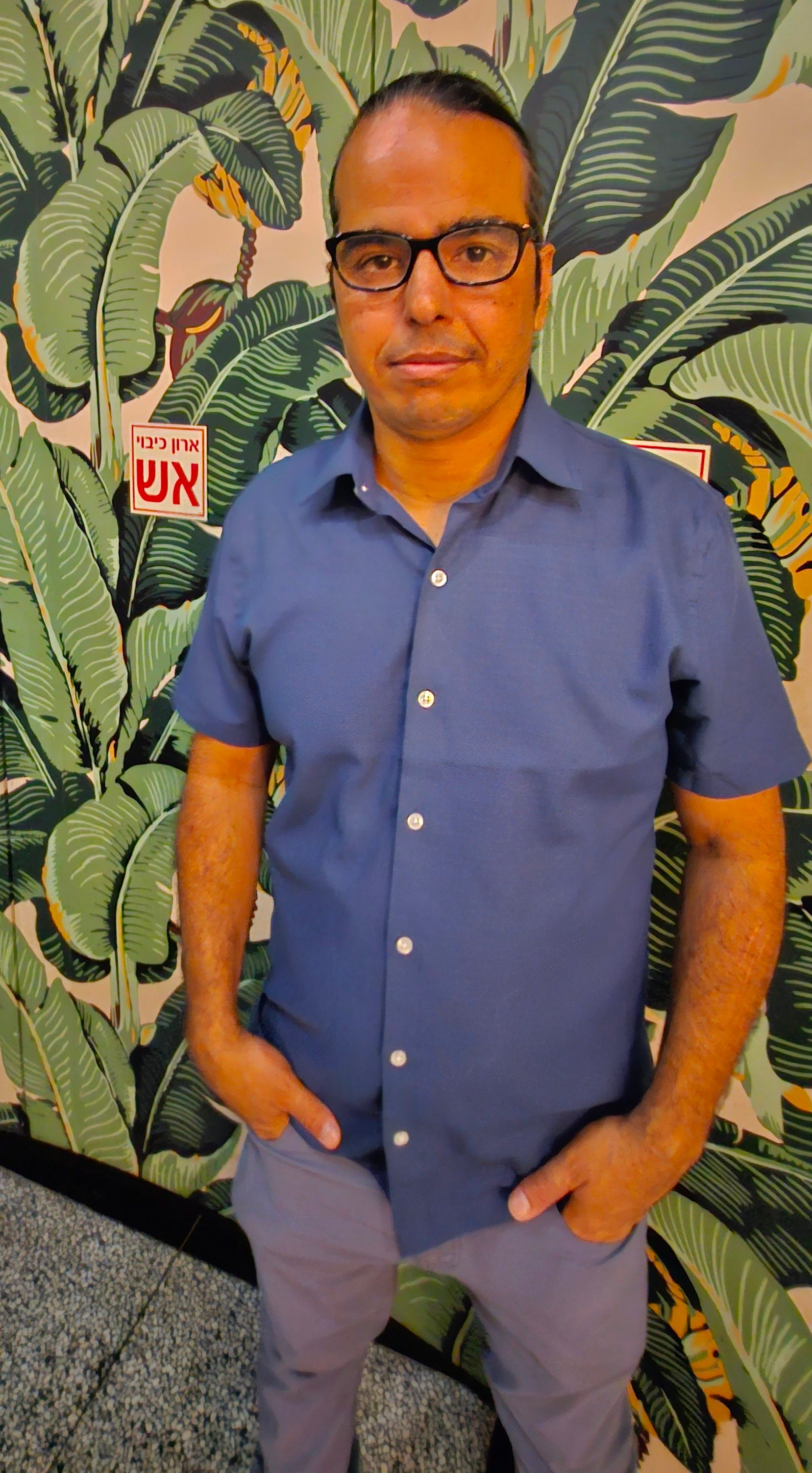
Shachar describes a refusal that cost him dearly.
He left Gaza for Israel as a young teenager. His subsequent journey involved arrest, deportation, a return to Gaza and, he says, seven months of imprisonment and torture after his desire to become Jewish became known. In the interview, he described electric shocks, being suspended upside down and being cut with a blade. He also recounted rejection and violence within his family.
He eventually studied Judaism, completed his conversion and became an Israeli citizen.
Along the way, he says, a Jewish family helped him with food, clothing and money. Their help gave practical expression to the humanity he first saw as a child. It is one thing to praise someone for rejecting the hatreds of his surroundings. It is another to pro-actively help support him.
His message to Western audiences is urgent and uncompromising. He warns that the danger he associates with Islamist ideology does not stop at Israel’s borders, and argues that Western societies underestimate it at their peril. He repeatedly returned to the fear that people would recognize the threat only after suffering its consequences themselves.
Hatred should not be overlooked as an inconvenience; ignoring it gives it permission to grow. Shachar knew this early, and even at great risk, continued to speak out.
For non-Jewish Canadians, that asks more than sympathy after another incident. It asks whether they will challenge antisemitism when it comes from someone in their own political, professional or social circle.
Shachar’s story shows the courage it takes to refuse inherited hatred—and the difference people make when they're willing to help.
At a special event, Dor Shachar will do a fireside chat with Unapologetically Jewish’s Matthew Taub in Toronto on Oct. 27.
You can watch a full interview with Dor Shachar on PragerU
https://www.prageru.com/videos/arab-palestinian-warns-the-world-about-hamas
I had not heard of this man, so this is a great, informative story. Reminds me of the more well-known Mosab Hassan Yousef, who converted to Christianity and is an eloquent and outspoken critic of Hamas. It only makes sense that some Palestinians have enough common sense and courage to escape that hell and think outside the antisemitism they're indoctrinated into. I feel for those who are trapped in that horrible Islamist ideology and culture and don't want to be, who do not go along with the groupthink. It often takes a movement of faith to give one the courage to escape. There are a lot of conversions from Islam these days, in places like Iran, for example. As for the cost of not challenging Islamism, we are seeing that play out in France right now, not to mention the horrors that Western Europeans have had to endure from being "culturally enriched" for decades now, as documented by the Gatestone Institute.