


If you’ve made it this far in life without being fired, cancelled, or publicly flogged for saying something true, congratulations — you’re ahead of me. I write because I can’t not; because silence feels like complicity, and complicity feels like rot. If this piece leaves you nodding, snarling, or muttering, “Well, he’s not wrong,” then you’re precisely the reader I’m writing for.


You’ll get two essays a week — unapologetically long, occasionally bleak, often funny, always honest. It’s eight bucks a month — less than one coffee in Carney’s Canada, or two if you buy the cheap stuff. Everyone says that, of course: “It’s just a cup of coffee.” Fine. But if you’re only going to buy one cup this month, make it mine. It’s $8 a month, and you can cancel anytime.
There are moments in a nation’s moral history when the sky should darken, when the ground should shift, when the collective conscience should cry out and refuse to be silenced. The decades-long grooming-gang scandal in England—decades of raped, beaten, drugged, traded, terrified girls—should have been such a moment.
Instead, it became a footnote disguised as a tragedy: a bureaucratic inconvenience, a political vulnerability, a scandal to be managed rather than a sin to be confronted.
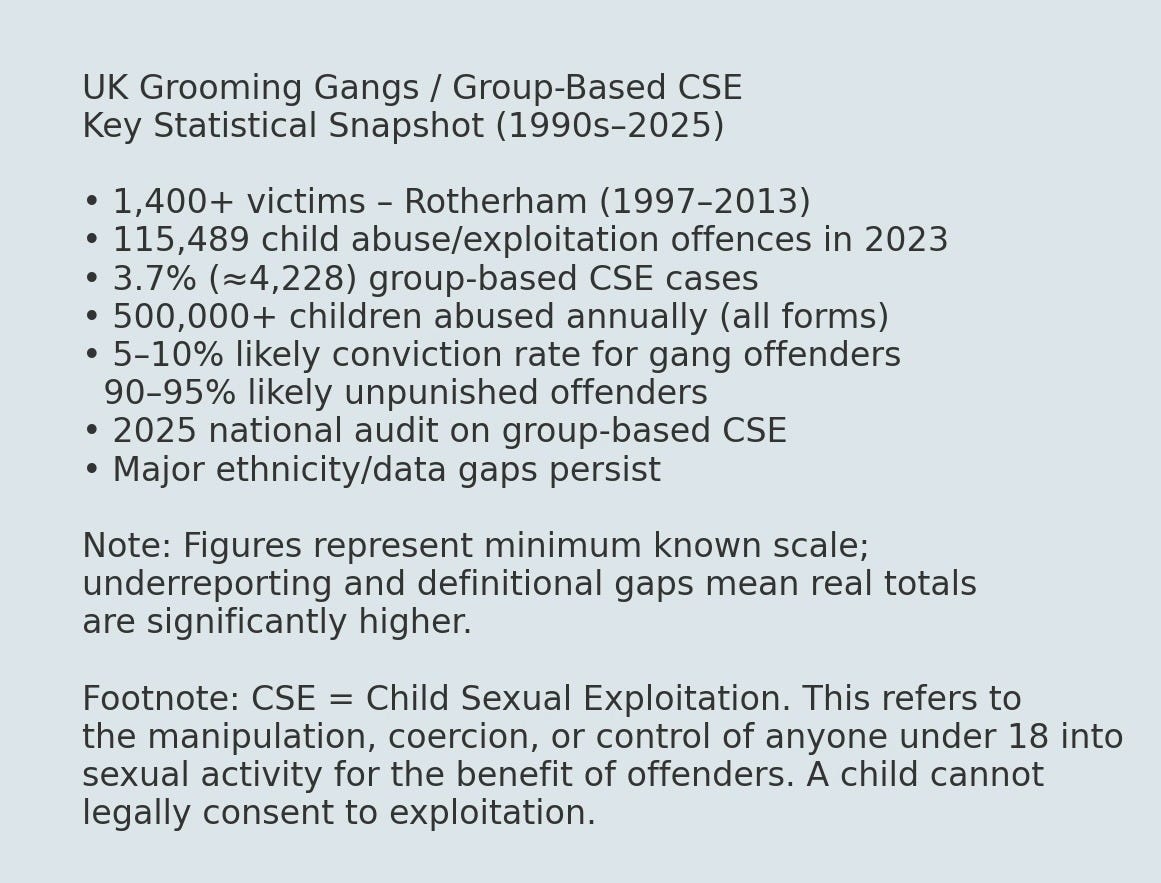
For nearly half a century, children—children, not “young women,” not “troubled youths,” but girls aged eleven, twelve, thirteen—approached police stations in Rotherham, Rochdale, Telford, Oldham, Bradford, Keighley, Birmingham and beyond with bruises on their bodies and terror in their voices. They described rape, gang-rape, captivity, trafficking, torture, forced abortions, beatings, drugs, threats to their families. Anyone with a shred of human feeling should have been moved beyond endurance.
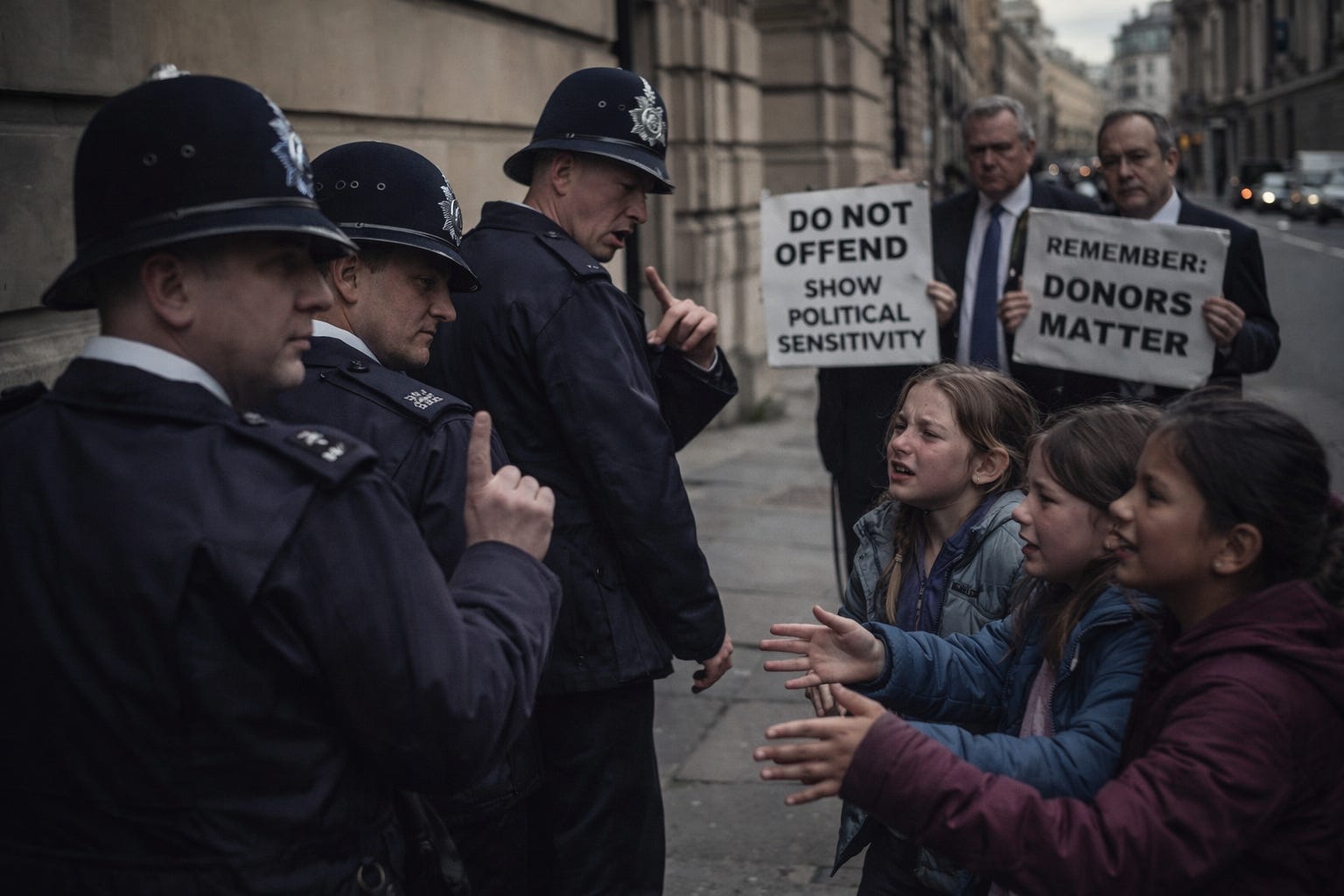
Yet the institutions of the British state—the police, the councils, the social workers, the prosecutors, the judges—did not simply fail them. They abandoned them. Worse: they facilitated their return to the hands of their abusers.
Police wrote down the phrase “child prostitute” as if such a thing were not a moral impossibility. They logged violent rapes as “consensual encounters,” even when the victims were thirteen. They failed to inform parents. They advised girls to stop causing trouble. They shrugged and returned them to the very men who brutalised them.
Social workers dismissed victims as unstable. Council leaders warned staff not to “inflame community tensions. Prosecutors declined cases for fear they might not survive political scrutiny. Judges, when cases did reach them, chastised the girls for their “risky behaviour.”
This wasn’t incompetence. This wasn’t a misunderstanding. This wasn’t a few bad apples. This was the system working exactly as it had been conditioned to: protecting power, protecting political alliances, protecting bureaucratic reputation—at the cost of generations of children.
And here is the part that sears the conscience most personally: I write as a father.
My daughter is nineteen now, but once she was thirteen—open-hearted, trusting, fragile in the way all children are fragile. The idea of her approaching a police officer for help and being met with indifference or contempt is enough to make a father’s blood turn to fire.
Every parent reading this knows the instinct: the sudden heat, the unbearable nausea, the primal terror that grips the soul.
Remember then that the officers who dismissed the girls had daughters of their own. The councillors who buried reports tucked their daughters into safe beds. The MPs who feared “community backlash” fiercely protected their daughters. They guarded their own children while consigning the daughters of the powerless to violence so grotesque it should haunt the nation for generations.
But what could motivate such a monumental, enduring betrayal? The answer is as old as politics: power. And the mechanism of that power was no secret to anyone who studied these towns.
Enter the word Britain’s establishment refuses to speak aloud: biraderi.
Biraderi: The Political Machine Behind the Silence
Biraderi—Urdu for brotherhood or clan—is a kinship-based structure that shapes social and political life in many Pakistani-heritage communities in Britain. It functions as a deeply rooted system of extended-family allegiance in which senior male elders guide or command political behaviour, including voting.
Academic studies, Electoral Commission reports, and multiple election-court rulings show:
Entire extended families vote the same way
Community “leaders” deliver blocs of hundreds of votes
Postal ballots are often collected or filled under patriarchal authority
Candidates court biraderi elders because they can deliver whole streets
In towns like Rotherham, Rochdale, Oldham, Bradford, Telford, Keighley, Burnley, Birmingham—the very towns where grooming gangs flourished—Labour’s political dominance relied heavily on biraderi-delivered votes.
Lose the biraderi bloc, and Labour risks losing the council. Lose the council, and Labour risks losing regional and national footholds.
Thus, a poisonous incentive was born:
Do not offend the communities whose votes keep us in power. Do not acknowledge that many offenders come from those communities. Do not allow safeguarding to trigger a political backlash. The inquiries said this plainly, though wrapped in bureaucratic language:
“Fear of losing votes.”
“Concern about community relations.”
“Avoid inflaming tensions.”
“Political consequences.”
The safety of children was weighed against electoral arithmetic—and the children lost.
This is not to say the community supported abuse. They did not. The perpetrators were a tiny minority. But Labour’s political class feared the consequences of acknowledging that the minority existed at all. They feared scrutiny of Pakistani-heritage offenders more than they feared the wholesale destruction of vulnerable girls.
Thus Britain committed an unholy exchange: Its children for its political stability.
And after the scandal finally burst into daylight—not because the state sought the truth, but because journalists and victims forced its hand—the bureaucratic response was as cowardly as the silence that preceded it.
