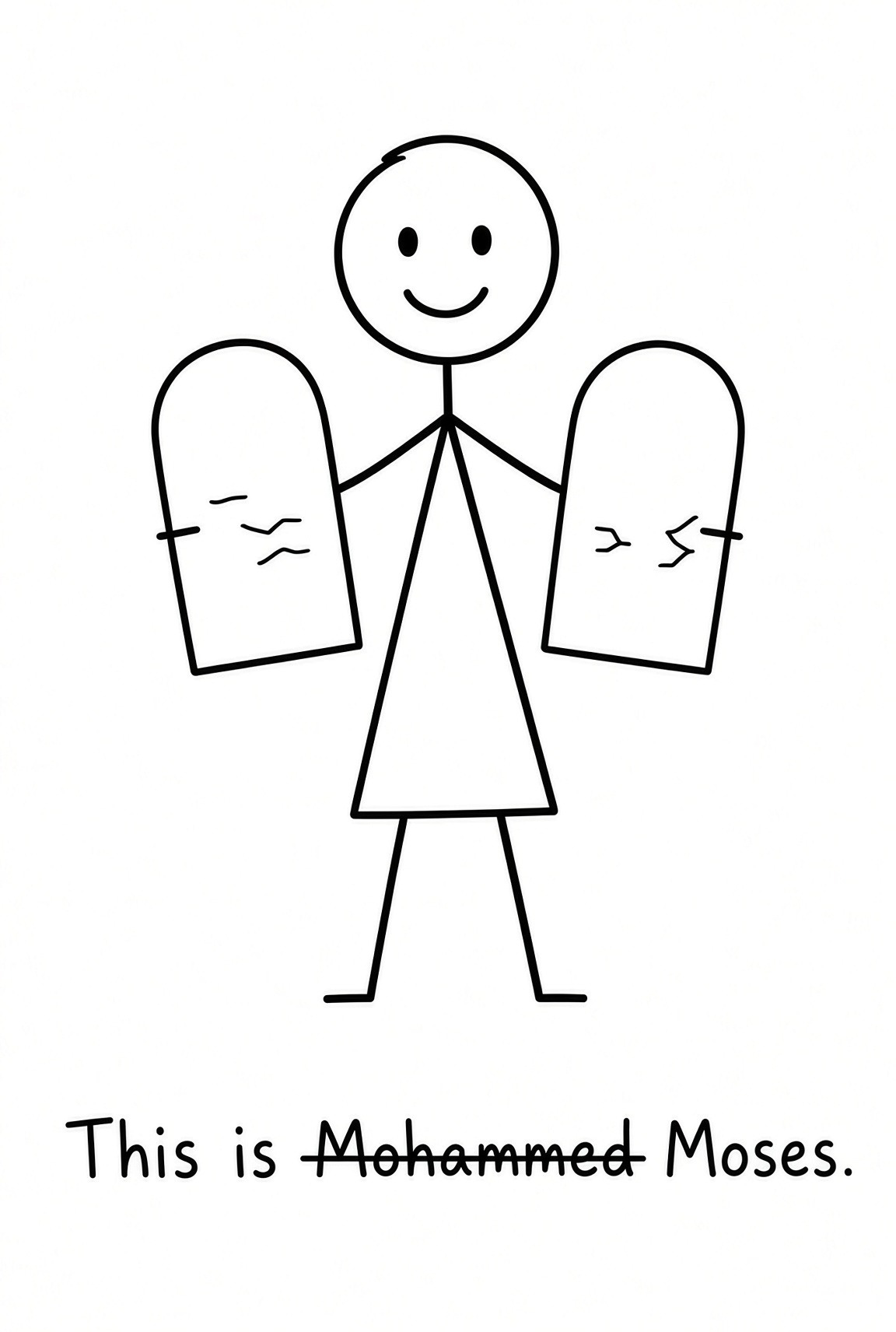
On March 6, 1927, Bertrand Russell stood up in Battersea Town Hall and told a roomful of Londoners why he was not a Christian. He called hell cruel, found Christ morally defective in places, and said religion depends mainly on fear. Then he went home. Nobody stabbed him. The lecture has never been out of print. Christians were offended and said so in print, which is what free people do with offence.
I am a Christian, and I disagree with nearly every line Russell spoke that night. I would never have wished him harm, or imagined the Gospel needed a policeman to protect it from him. My sky daddy doesn’t need human speech or enforcers.
So I start with Russell to ask a question he never had to ask. Why can a man still explain why he is not a Christian and expect to get home safely, while the same lecture about Islam is treated across the West as recklessness, provocation or a hate crime? Why does the act of condemning Mohammed by a non-believer risk life and limb?
Here is my thesis. Sometimes the way to deal with a bully is to stand up to him. Islam is a bully religion (though Islam is more than a private faith: it is a religious tradition with an extensive legal and political heritage - profoundly imperialistic), and I will say so.
The bully religion? - I mean a body of doctrine, the men who enforce it, and the Western institutions that defer to them. I do not mean my Muslim neighbours and former students, most of whom want what I want: to raise their families, do their work and be left alone.
The bully religion and its dangers do not require a military confrontation with the West. They don’t have the power to take us on.
Islamist extremists, though, can exercise coercive power through sporadic violence and the credible threat of more. We see it on the streets of Montreal, Toronto, Paris, Marseille, Milan and others.
The problem deepens when institutions respond to intimidation by accommodating demands for religious deference, treating accusations of offence as grounds for censorship, or allowing public spaces to be dominated through threats and harassment. Peaceful protest and complaints of discrimination are legitimate; neither confers a right to silence others. The governing principle should be unequivocal: religious conviction and feelings of grievance give no one permission to threaten, intimidate, or commit violence.
A free society can tell a man from his creed. A frightened one cannot, or pretends it cannot.
Section one.
Four scenes. On July 25, 2021, Hatun Tash, an ex-Muslim Christian evangelist, was stabbed at Speakers’ Corner in Hyde Park while wearing a Charlie Hebdo T-shirt. Her attacker has never been caught. The next year, a man was arrested on his way to buy a gun to shoot her there. Tash herself was also arrested in the park, and the Metropolitan Police have paid her damages. Her summary is better than mine: I am Christian, and by default I believe that Muhammad is a false prophet. I should be allowed to say that in the UK or Canada without being stabbed or repeatedly arrested.
On Feb. 13, 2025, Hamit Coskun burned a Qur’an outside the Turkish consulate in Knightsbridge. A passer-by came at him with a knife. Coskun was later convicted of a religiously aggravated public order offence, though no English law forbids burning your own book. The man who burned the book and was stabbed became the criminal, not the man who assaulted him. Mr Justice Bennathan quashed the conviction, holding that free expression must include the right to express views that offend, shock or disturb. English justice got there in the end, but it took two appeals to establish what the law had been all along.
On Jan. 7, 2015, the Kouachi brothers murdered twelve people at Charlie Hebdo in Paris, among them the police officer Ahmed Merabet, himself a Muslim. Two days later, Amedy Coulibaly murdered four Jewish hostages at the Hypercacher supermarket. In October 2020, a Paris teacher, Samuel Paty, showed two of the Mohammed cartoons in a class on free expression. A pupil who was not even in the lesson told her father a false story about it; a campaign followed, and on Oct. 16 an eighteen-year-old Muslim beheaded Paty near his school.
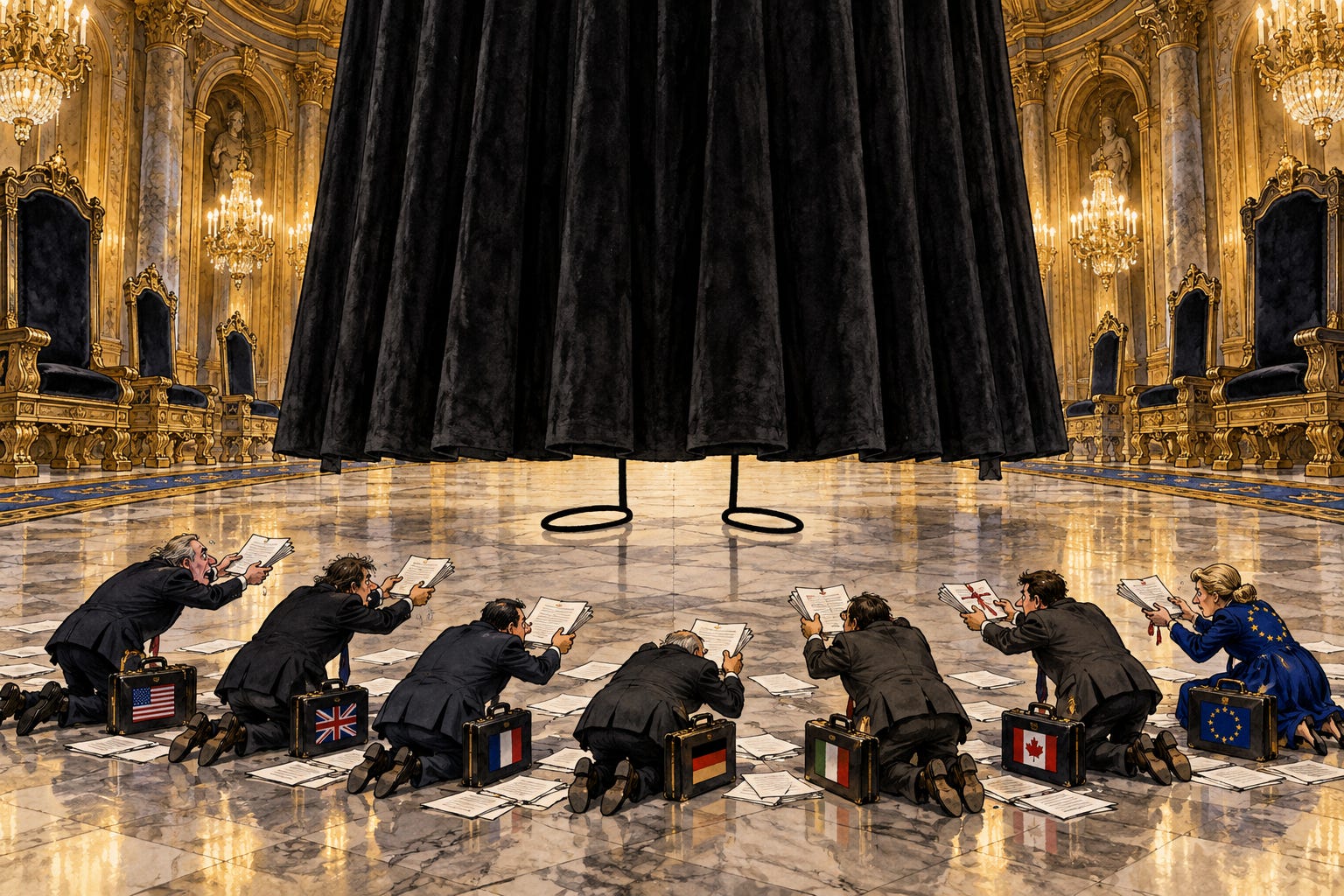
Four scenes, one lesson. Islam is shielded in the West on two levels. The first is raw fear of violence, which is at least honest about itself. The second is a strand of the progressive left that has decided criticism of Islam is racism or a pathology, a phobia, which gives fear a moral alibi. Together they produce a posture I call supplication: an anxious bowing that calls itself respect.
Section two.
The bully thesis. A bully is defined not by what he believes but by what he does when contradicted. I judge Islam by that test, at the level of doctrine, institutions and pattern, and leave aside the private piety of people who have hurt no one.
Doctrine first. Sahih al-Bukhari, the most authoritative hadith collection in Sunni Islam, records the Prophet saying, “Whoever changed his Islamic religion, then kill him.” It records him asking, “Who is willing to kill Ka’b bin Al-Ashraf who has hurt Allah and His Apostle?” Ka’b was a poet. His offence was words. These are the founding precedents for treating mockery and desertion as capital matters.
Then institutions. Blasphemy and apostasy are crimes in a number of Muslim-majority states, and in some they carry death. From 1999 to 2010 the Organization of Islamic Cooperation sponsored annual UN resolutions against the defamation of religions; Pakistan’s first draft was titled “Defamation of Islam.” The ambition was plain: to make an idea immune from insult across the world.
Then the pattern. In 1989 Iran’s head of state pronounced a death sentence on a novelist, and in 2022 a young man stabbed Salman Rushdie on a lecture stage in New York. Add Hyde Park, Knightsbridge, Paris and Conflans. These crimes share a grievance, a vocabulary and a list of targets: the cartoonist, the novelist, the teacher, the apostate, the woman in the T-shirt. I do not say every believer is a bully. I say the creed contains a licence for bullying, its zealots use it, and the rest of us have learned to flinch.
Section three.
Tolerance means putting up with what you dislike. Appeasement means changing your conduct to buy off a threat. What the West practises towards Islam is mostly the second, dressed up as the first.
The argument I reject goes: “It’s just a few bad apples, so your criticism unfairly condemns every Muslim.” That is a deflection. First, I dispute that the problem is confined to a handful of individuals; I argue that most of its teachings are rot in the barrel itself. Second, my criticism concerns those teachings, not every person who professes the religion. You may dispute my reading or defend the ideas. But turning an argument about doctrine into an accusation against every believer misrepresents the argument rather than answering it.