


A dentist can look at a tooth and know something the patient cannot.
The enamel shines. It looks healthy. It reflects the light. But beneath that polished surface, decay may already be working its way inward. Teeth do not fail dramatically at first. They soften quietly. The outer layer weakens. A fracture forms. Bacteria enter. The rot spreads toward the root.
By the time the pain arrives, the damage has been underway for some time.
Our institutions gleam.
Canadian universities are masters of enamel. The statements are immaculate. The human rights language is precise. The holiday greetings are dutiful. Solidarity is expressed with care. Inclusion is affirmed. Everything is polished, public, reassuring. From the outside, there is no cavity.
But decay does not begin in public statements. It begins with habits. In private indulgences. In quiet double standards. In the selective enforcement of principles. In the unspoken understanding that some rhetoric will be scrutinised and some will be excused.
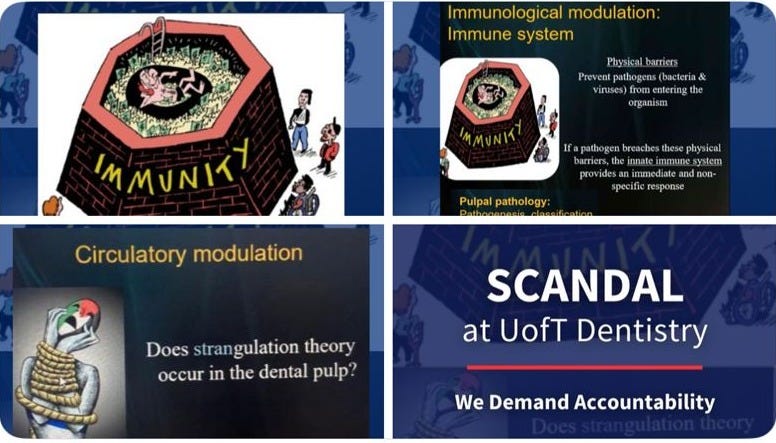
Recently, at a university in Toronto, a dental lecture used imagery long associated with antisemitic caricature to illustrate tooth decay. The metaphor was clinical. The historical echo was not. Jews were depicted as rot within society — corruption at the core.
This language has a lineage.
In twentieth-century Europe - and long before - Jews were not merely criticised; they were recast. Not as opponents, but as an infestation. Not as citizens, but as a disease. When people are described as rot, removal feels hygienic. Conscience relaxes. Exclusion becomes treatment.
Metaphor is not decoration. It shapes instinct.
An investigation has been announced. That is appropriate. Process matters. But comparison matters too.
For stating publicly that I stand with Israel, and that Hamas — a designated terrorist organisation openly committed to the destruction of Jews — are Nazis, I was suspended, silenced, and ultimately terminated.
I stand by my words and have no regret.
I committed no crime. Yet on the first day of my suspension, false claims circulated that I had assaulted a student and been arrested. They were untrue. A human rights complaint existed; the criminal rumours were inventions.
Once a person is framed as contamination, removal becomes easy.
Reputation weakens first. Isolation follows. The formal act merely completes what the language has already prepared. It does not take much force to break what has already been hollowed.
And this is why the metaphor of rot matters.
When any people — Jews most tragically among them — are described as decay within the body of society, as corruption at its core, one is not merely indulging in metaphor. One is stepping into a long and terrible inheritance. History is quite clear on this point. Violence does not begin with the blow. It begins with the vocabulary.
There is always a moment — often subtle, often dismissed — when neighbours cease to be neighbours. They are reclassified. No longer adversaries in argument, but contagion. Not citizens to be debated, but infestation to be managed. Language, having first softened its conscience, then sharpens its blade.
Once a people are spoken of as disease, as rot, as something corrosive eating from within, the moral imagination adjusts itself accordingly. Removal ceases to feel like injustice. It begins to resemble sanitation. What was once unthinkable becomes merely administrative. The lexicon prepares the landscape long before the first act of cruelty appears.
And by the time the cruelty comes, the words have already done their work.
When that shift occurs, cruelty becomes psychologically easier.
One does not begin by hating. One begins by speaking carelessly. By repeating images. By absorbing metaphors. Even soldiers in darker chapters of history wrote that they did not begin with hatred, but learned it through instruction, through repetition, through the normalisation of contempt.
The inverse is also true: love can be cultivated. So can indifference. So can disdain.
When dehumanising images enter classrooms — even under the banner of metaphor — they do not remain confined to slides. They shape instinct. They dull empathy. They make it easier, incrementally, to treat someone not as a person but as a problem.
And once that threshold is crossed, exclusion feels administrative. Expulsion feels procedural. Violence feels aberrational rather than inevitable.
This is not hysteria. It is pattern recognition.
Jeremiah warned against healing wounds lightly. We are adept at light treatment. We condemn the visible incident. We reassure. We move on. And the underlying shift — the small erosion of moral language — remains unexamined.
Decay does not begin with catastrophe. It begins with a metaphor.
And metaphor, once repeated often enough, reshapes conscience.
This is not about vengeance. It is about moral measurement.
A society can be judged by many metrics — wealth, power, innovation. But history suggests something simpler: you can often gauge the moral health of a culture by how it treats its Jews. Not how it speaks about them ceremonially, but how it treats them when it costs something to defend them.
Winston Churchill warned that “the malice of the wicked was reinforced by the weakness of the virtuous.” Rot does not advance because it shouts. It advances because those who could resist it hesitate.
And then come the reassurances.
After controversy, leaders speak gently. They cite policy. They affirm commitment. They say everything is being handled. Jeremiah wrote of those who say, “Peace, peace,” when there is no peace.
Peace declared is not peace secured.
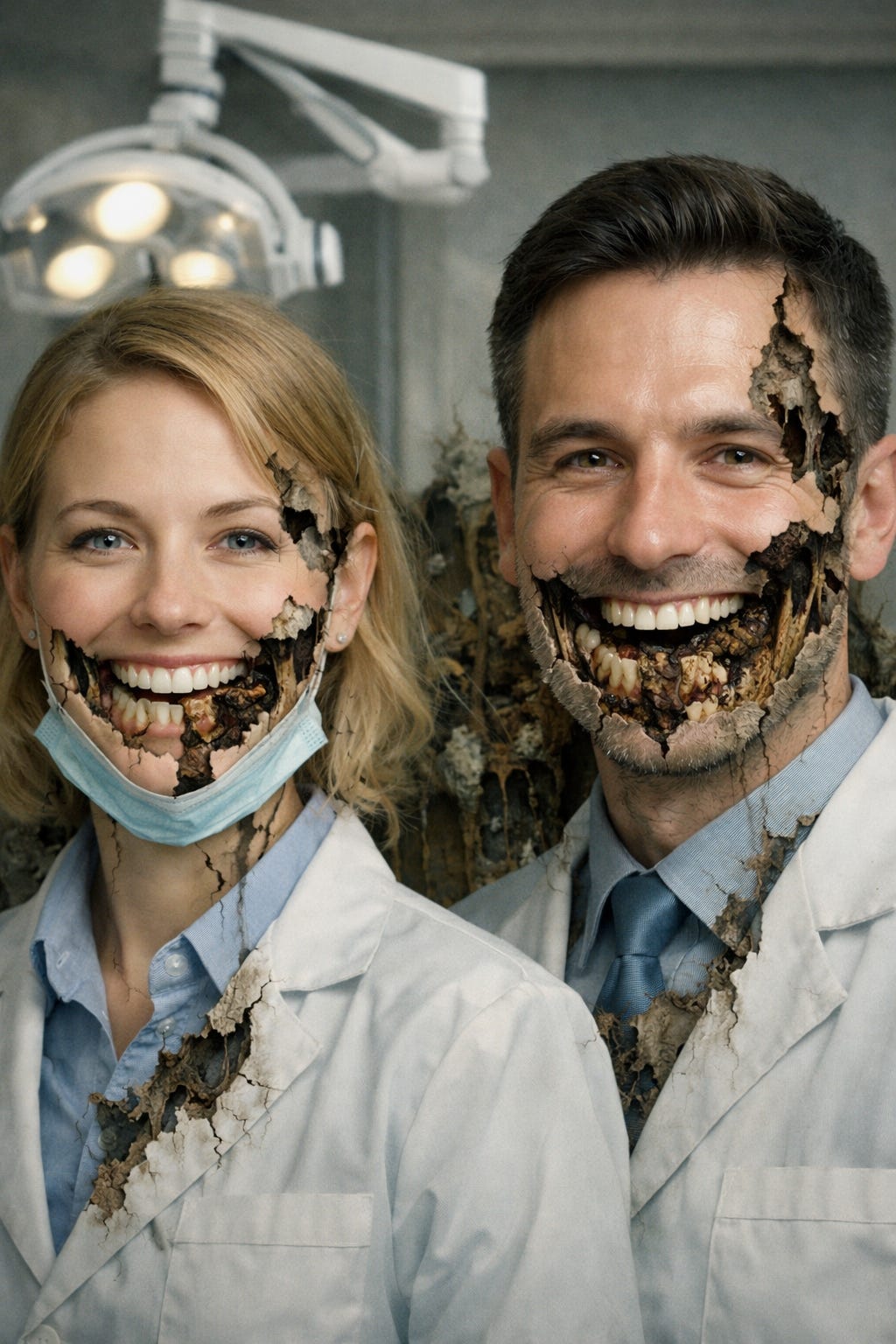
Dentists understand a basic principle: decay does not reach the root unless the enamel has first been breached. The breach may be small — almost invisible. But once compromised, the infection travels inward.
That is what concerns me. Not the isolated incident. Not even the offensive slide.
The breach.
The quiet normalisation of dehumanising imagery. The swiftness with which some speech is punished and other speech is excused. The lesson absorbed by faculty who watch carefully and draw conclusions about what is safe to say — and what is not.
When silence becomes prudence, prudence becomes policy.
And policy, over time, becomes culture.
To my Jewish friends in Toronto, especially, I say this with restraint: I fear for you.
Not because a catastrophe is inevitable tomorrow. Not because every institution is hostile. But because I see the fracture. I see the softening of standards. I see the reluctance to confront certain forms of prejudice with equal seriousness.
We have no societal dentist to whom we can send a culture for repair. And those who probe the decay are often told they are exaggerating — or worse, that they are the problem.
Untreated rot does not remain dormant.
It returns. It returns in slogans. It returns in threats. It returns in moments that shock the conscience, then recedes, leaving the same polished enamel and the same assurances that all is well.
Each time, we act surprised.
But surprise is not a treatment. Hope is not restoration. Gleam is not health.
If the fracture is ignored, the root will rot. Quietly. Patiently. Until one day, the pain is undeniable.
And when that day comes, it will not matter how often the enamel shone in the light.
Societies do not collapse because they lack polish. They collapse because decay was permitted to spread beneath it.
I write this not in anger, but in sadness.
The enamel still gleams. But there is already a fracture. I have seen the breach.
Google says this was the dean of dentistry! That is significant imo.
There are many people in Canada who support the Jews and their state. If necessary, they can overcome the infestation of anti semites in the country but my fear is that it cannot happen peacefully when we have governance, law enforcement and institutions that refuse to support law and order and morality, because of self interest and manipulation.