


OTTAWA – Prime Minister Carney today welcomed the latest round of threats, memes, tariffs, and insults from Trump, describing them as “an extraordinary, wonderful, inexhaustible political resource.”
“He got me elected,” the Prime Minister said, “and somehow he just keeps giving. Every tariff threat, every name change, every insult, every idiotic statement — it’s another opportunity to explain that whatever is going wrong is his fault. It’s beautiful.”
Carney paused.
“I love him,” he said. “I mean, I really love him.”
The room went quiet.
“Trump’s like Jesus to me,” Carney continued, his eyes tearing up. “He just keeps giving. He keeps saving me — every time I think Canadians might start asking awkward questions about productivity, taxes, regulation, people’s actual lives, or why the standard of living has been crawling along for a decade — he’s like a saviour. He just comes in and performs another miracle.”
The Prime Minister smiled. “Loaves and fishes. Tariffs. Same basic concept.”
Carney said he remains “very excited” about the possibility of further economic weakness.
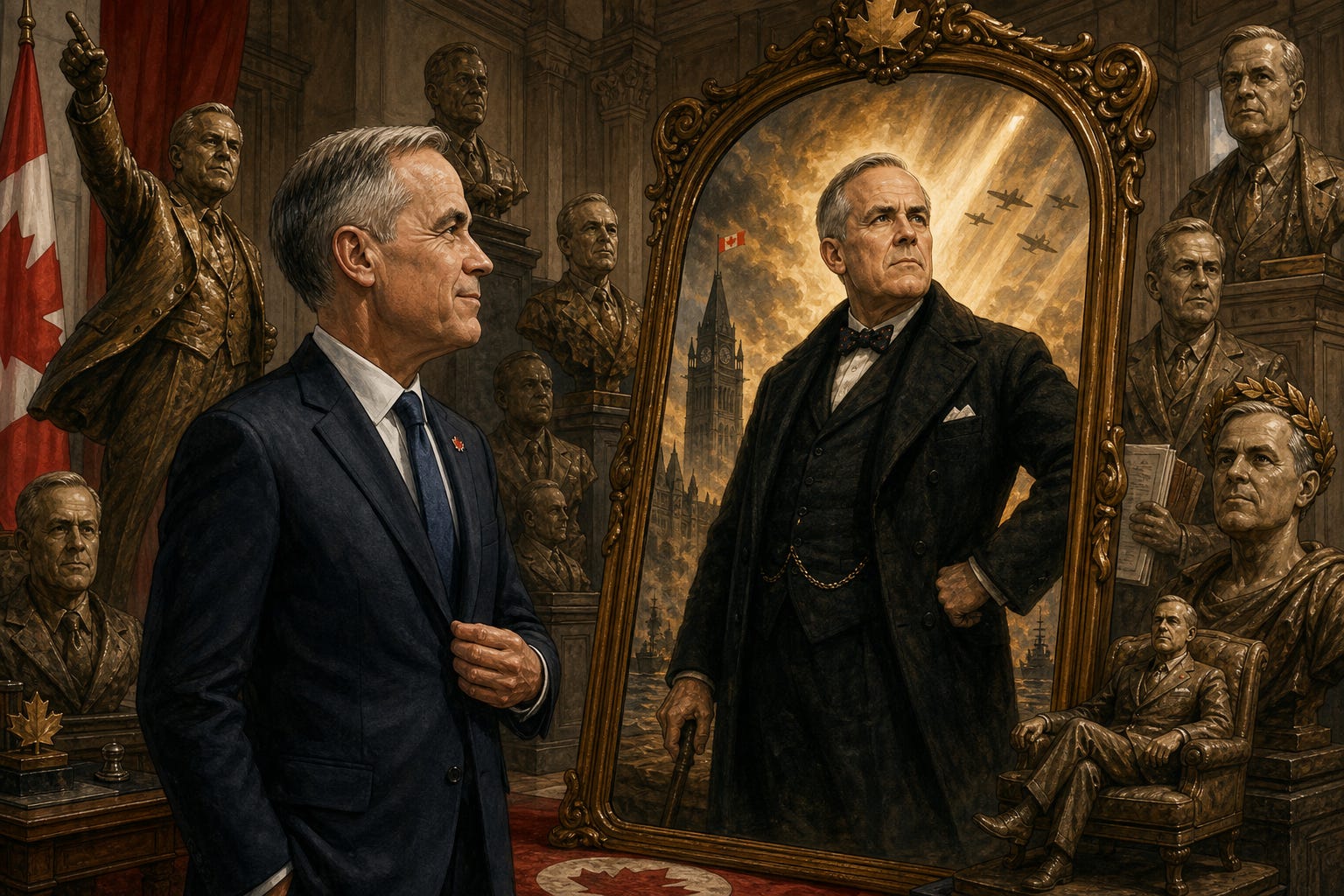
“A recession may be difficult for Canadians, but who cares?” Carney said. “But for me? Tremendous upside; if unemployment reaches eight percent, people get nervous. At nine percent, they really hate him. At ten percent, I become Churchill.”
The Prime Minister then turned to food bank usage. “The longer the food bank lines grow, the greater the Cons will rot and blow,” he said, before catching himself and shrugging off the embarrassment.
“Okay, it’s not great poetry. I’m an economist, leave me alone.”
Standing beside him was Linda McAllister, a 75-year-old constituent who had been slowly working through a box of tissues, weeping at being in the Prime Minister’s presence.
“Linda, write that down,” Carney said, leaning toward her. She put it on a sign.
Asked whether growing food bank lines were a concern while Canadians remain focused on Washington, Carney said it would only help his approval numbers. “Seventy percent seems entirely achievable. Eighty would be encouraging. At ninety percent, I think we start talking about statues.”
