


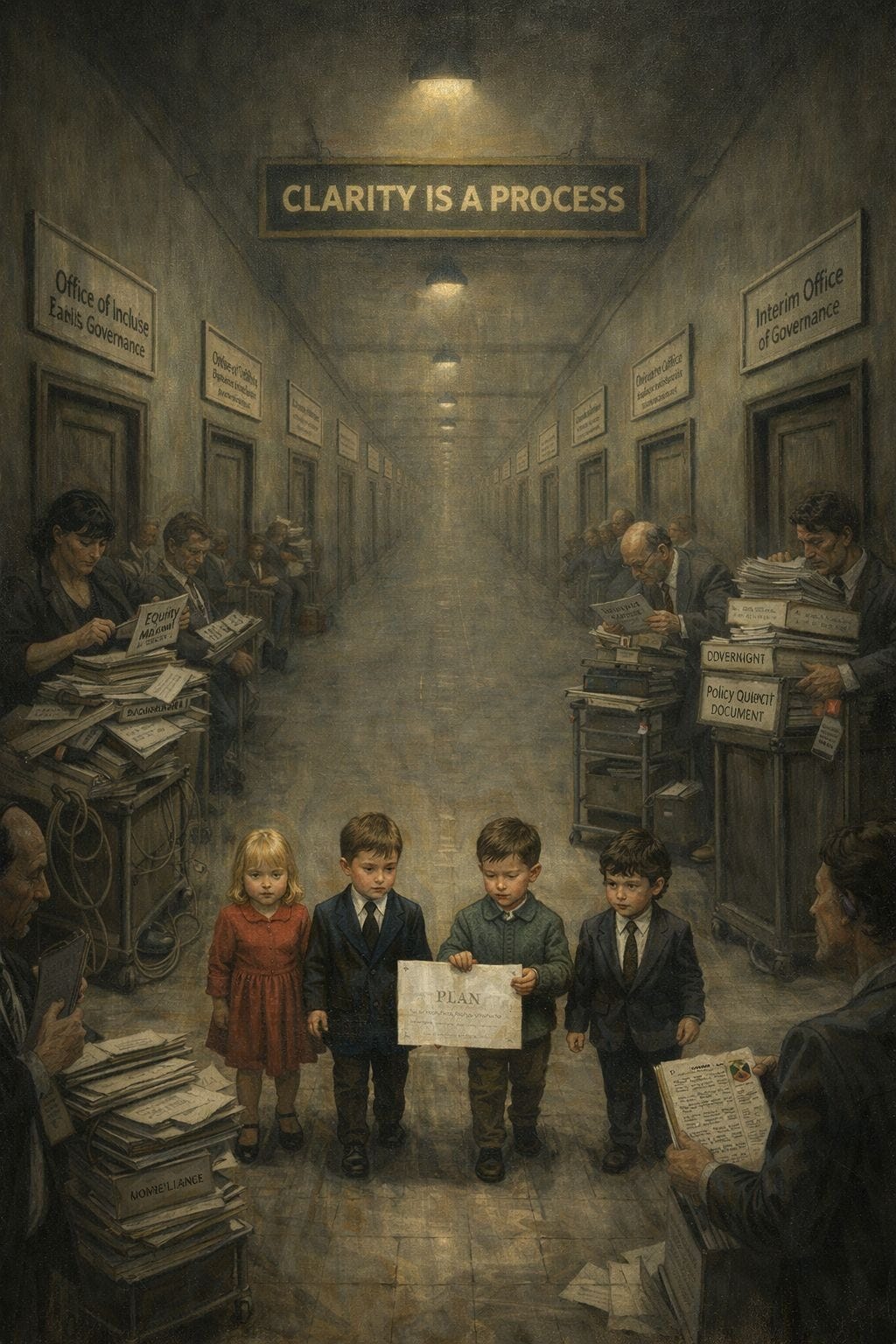

Kenilworth, Warwickshire — After the government affirmed that children as young as four possess sufficient self-knowledge to determine their own gender and preferred identity, the National Directorate for Diversity, Equity, and Forward Alignment convened an emergency symposium to consider an obvious institutional question:
If a four-year-old can authoritatively declare who they are, why should they be excluded from declaring municipal tax policy?
Within weeks, the answer emerged in a document described by insiders as “inevitable once written.”
Kenilworth Borough Council has now become the first authority in England to comply with the newly expanded Early Insight Civic Participation Framework, mandating that no fewer than 20% of elected officials be drawn from citizens aged four to six — a demographic the Directorate praised for its “unclouded epistemology.”
A spokesperson clarified:
“Adults frequently suffer from doubt, hindsight, and conflicting evidence. Young children, by contrast, demonstrate admirable certainty. Governance benefits from certainty.”
No one asked further questions.
The New Council
Councillor Arabella Moon (4) — Cabinet Member for Personal Truth
Councillor Theo (5) — Chair, Committee on Fairness (Except When Unfair)
Councillor Idris Maximus (6) — Strategic Threat Assessment, Including Dragons
Councillor Florence (5¾) — Emotional Climate and Hurt Feelings
Councillor Rupert (4½) — Transport, Sirens, and Buttons Not To Be Pressed
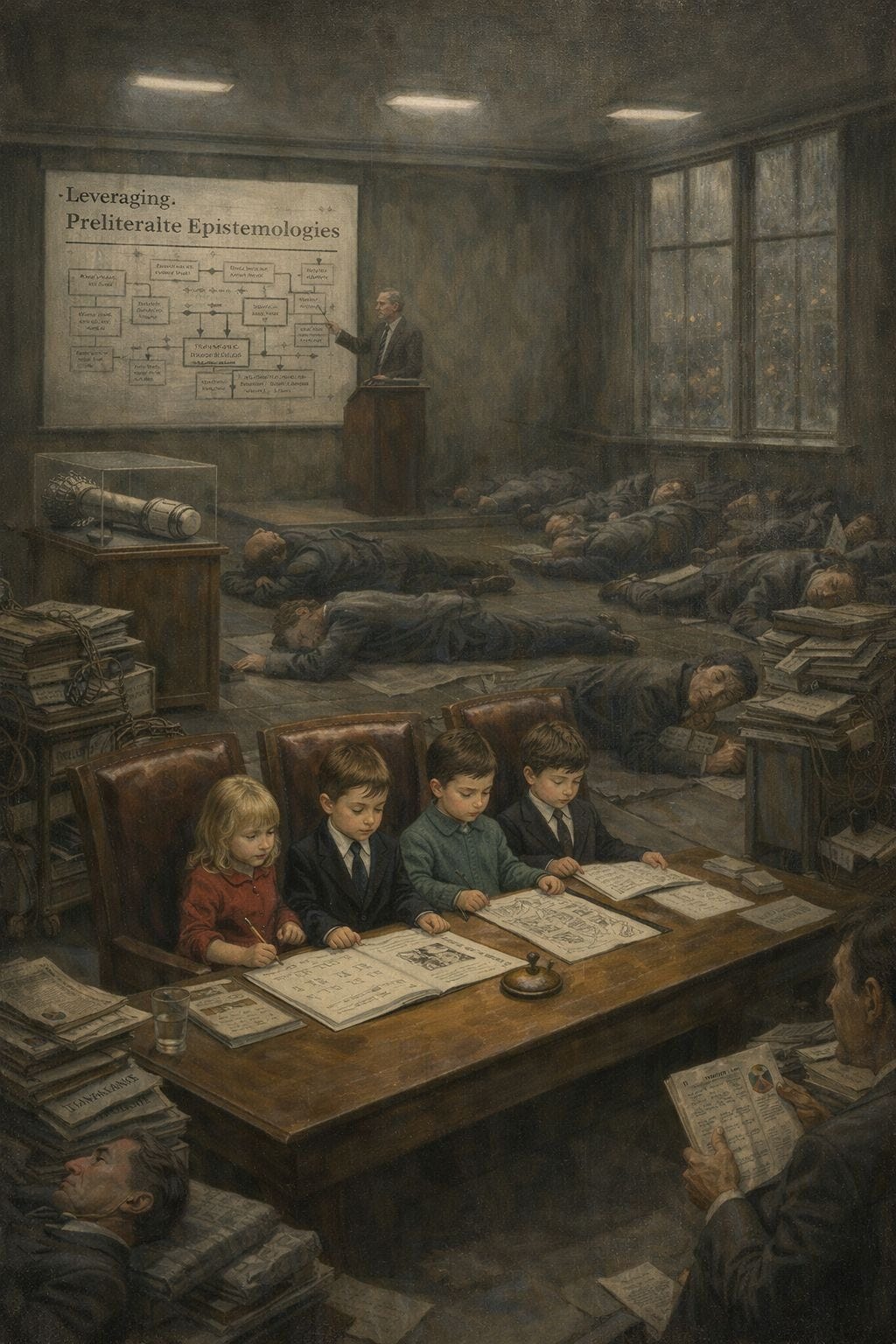
Each councillor selected their portfolio following a rigorous sticker-based consultation exercise overseen by three facilitators and a behavioural specialist.
The chamber itself has been adapted to modern standards. Hard edges were removed, debate corners padded, and several longstanding policies placed gently out of reach.
Opening Justification
The Mayor addressed the assembly with a tone usually reserved for memorial services.
“If society acknowledges the profound self-awareness required for early identity determination, it would be structurally inconsistent to deny that same awareness a vote on sewage infrastructure.”
The statement was later circulated as a leadership quote.
Motion One: Ontological Efficiency
Proceedings opened when Councillor Theo asked:
“Why do we have a borough?”
The Clerk paused before recording this as a foundational governance inquiry.
A working group has been formed to explore whether the borough might be replaced with something less confusing.
Budget Presentation
The Treasurer began outlining a deficit described in internal documents as “suboptimal.”
Councillor Arabella suggested a corrective fiscal instrument:
“We should just make more money.”
When informed this was not the current practice, she replied:
“Then change the practice.”
The remark has since been referred to as “refreshingly unconstrained.”
Planning Reform
The Planning Committee voted unanimously to halt construction of a mixed-use development in favour of “a castle that is also a slide but tasteful.”
When an official mentioned regulatory barriers, Councillor Florence observed:
“Barriers keep people outside things.”
This was entered into the minutes without comment.
Evidence-Based Transport
Councillor Rupert proposed eliminating red traffic lights on the grounds that they were “discouraging.”
Traffic engineers conceded that discouragement has historically been central to road safety but agreed to review the tone of the lights.
Strategic Risk
Councillor Idris Maximus raised an overlooked security concern:
“If a Tyrannosaurus Rex arrives, where will people go?”
Emergency Planning acknowledged that prior councils had maintained no dinosaur readiness posture.
A cross-functional resilience task force has been commissioned.
Governance Modernization
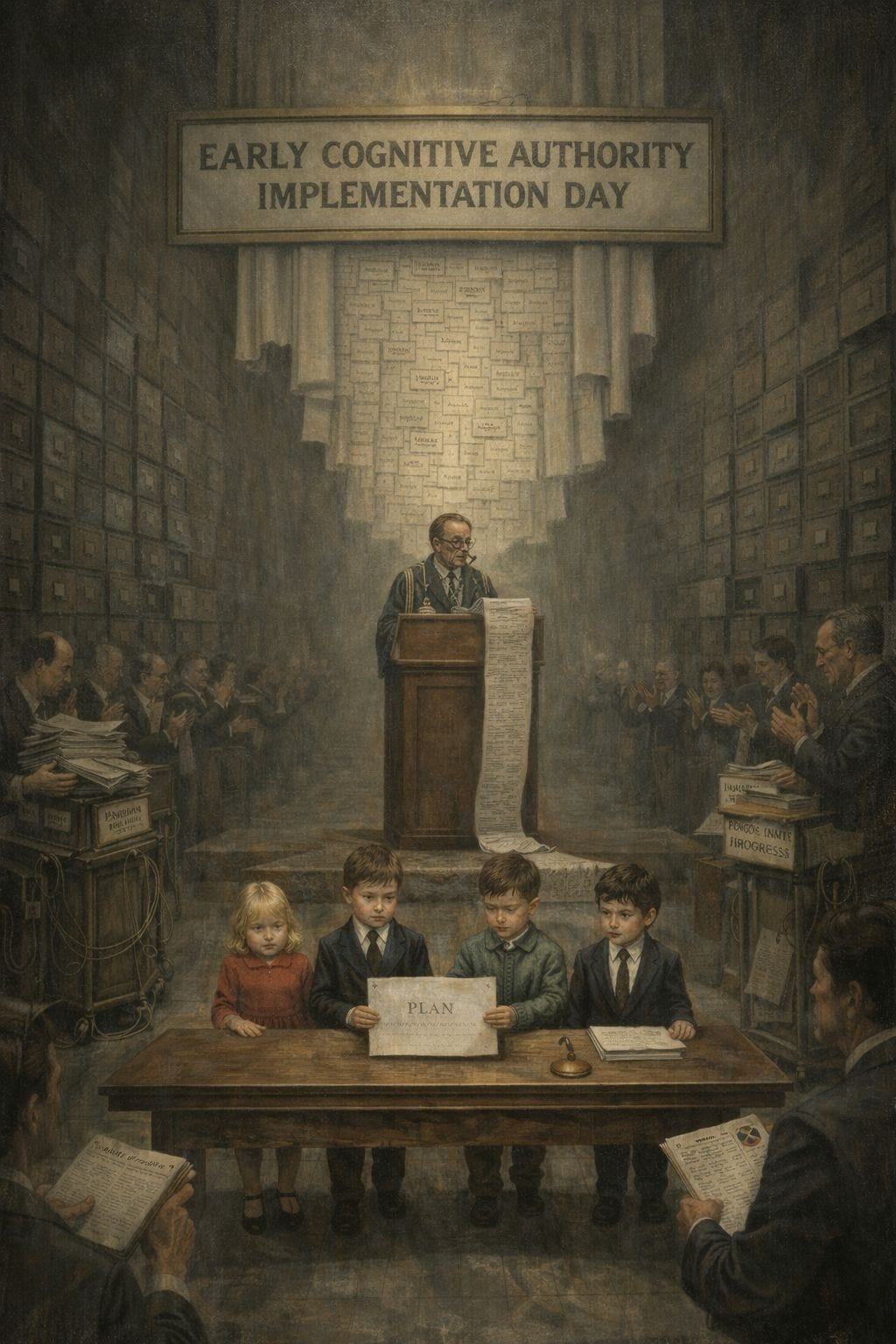
Nap time has been formally redesignated as Compulsory Horizontal Consultation, reflecting the council’s commitment to restorative leadership.
Several veteran councillors have expressed interest in pilot participation.
Radical Transparency
When asked whether she had reviewed the borough’s 418-page infrastructure proposal, Councillor Arabella replied:
“No. But it is very long. I also can’t read.”
Observers described the moment as one of unusual administrative honesty.
Public Questions
A resident asked whether rising property taxes might soon stabilise.
Councillor Rupert leaned forward and said quietly:
“Have you considered being smaller?”
Analysts later described the comment as “philosophically efficient.”
Committee Outcomes
The Environment Committee has voted to explore the feasibility of cancelling rain on weekends.
Housing recommends that everyone live together “unless boundaries are needed.”
Economic Development has adopted a growth strategy titled “More Ice Cream, Fewer Feelings of Lack.”
The Governance Committee ruled that meetings exceeding ten minutes may constitute a well-being risk.
National Response
The Directorate praised Kenilworth for “aligning institutional authority with emergent identity cognition.”
A senior official added:
“Competence has long been overprivileged in public administration.”
Markets declined to react.
The Incident
As the session drew toward adjournment, a procedural stillness settled over the chamber — the sort typically preceding either reform or litigation.
It was at this juncture that Councillor Rupert, having been unusually quiet during a discussion on drainage modernization, announced with grave transparency:
“I think something has happened.”
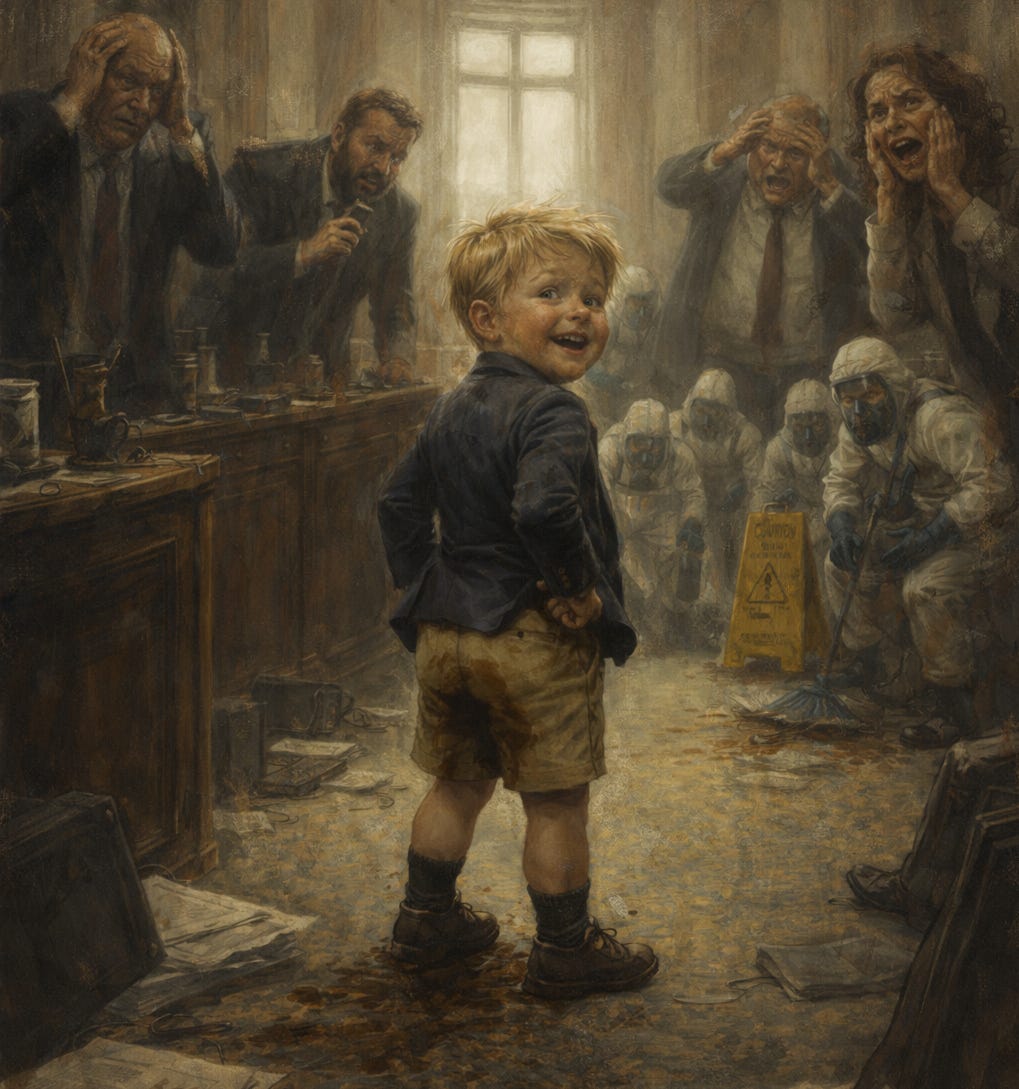
What followed has already been described in internal memoranda as “a sanitation event.”
Proceedings halted. The Clerk stopped writing.
The Mayor stood up, sat down again, and then pressed a button that historically had been used only during electrical fires. Within moments, Facilities Management activated the borough’s rarely deployed Rapid Environmental Response Protocol, informally known as the sanitation squad.
Senior administrators were observed speaking into radios with the hushed urgency typically reserved for structural flooding.
A perimeter was suggested. Then expanded.
The Director of Operations issued a statement reminding attendees that “unexpected outcomes are a natural part of dynamic governance.” Several councillors nodded solemnly.
Across the chamber, Councillor Florence whispered, “This feels like a metaphor,” though no one pursued the thought. The sanitation team arrived with professional discretion and equipment that suggested long institutional experience.
Meanwhile, Rupert regarded the unfolding response — the sudden choreography of adults, the whispered consultations, the strategic opening of windows — with mounting delight.
He swung his legs beneath the oversized council chair, surveyed the commotion he had single-handedly produced, and declared to no one in particular:
“This is the funniest thing I have ever seen.”
If you found value in this article and wish to support my ongoing work, please consider leaving a tip. Your support helps me continue producing uncensored content on critical issues.