


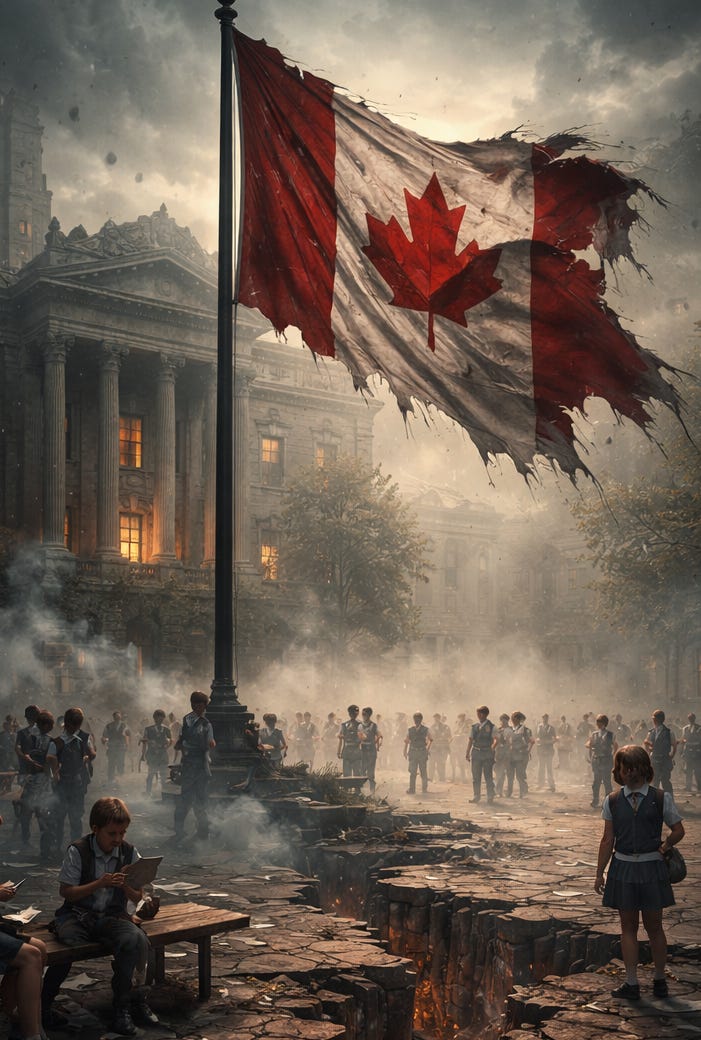
Is this still a democracy in any meaningful sense? And if it is, why should any Canadian bother to vote?
We already have four MPs who have crossed the floor. Now, according to multiple sources openly discussed, as many as nine more are in conversations about doing the same.
From four… to thirteen.
That is not politics as usual. That is the potential rewriting of an election after it has already happened.
And it sits atop a system that is already stretched thin. In Canada, MPs vote with their party roughly 99.6 to 99.7 percent of the time. Congress in the US? A little over 90%.
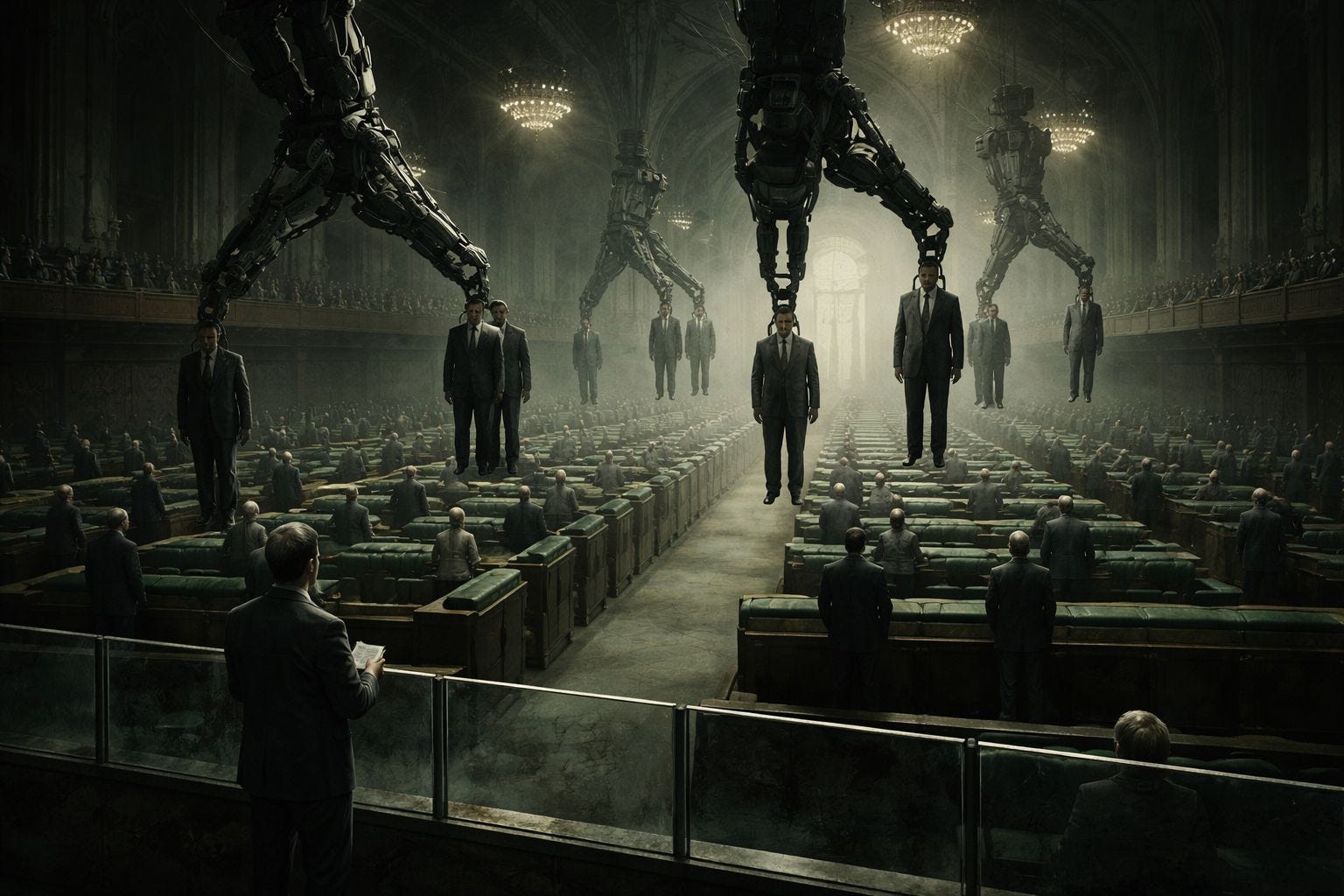
So our MPs are not independent actors in any real sense. They are whipped votes. Predictable. Programmed. The PMO’s office has the real power.
So what are you choosing when you vote? A representative—or a relay switch?
And now we are told that even that switch is portable.
Because after the election, your MP can simply walk across the floor and carry your vote with them.
We are told this is principle.
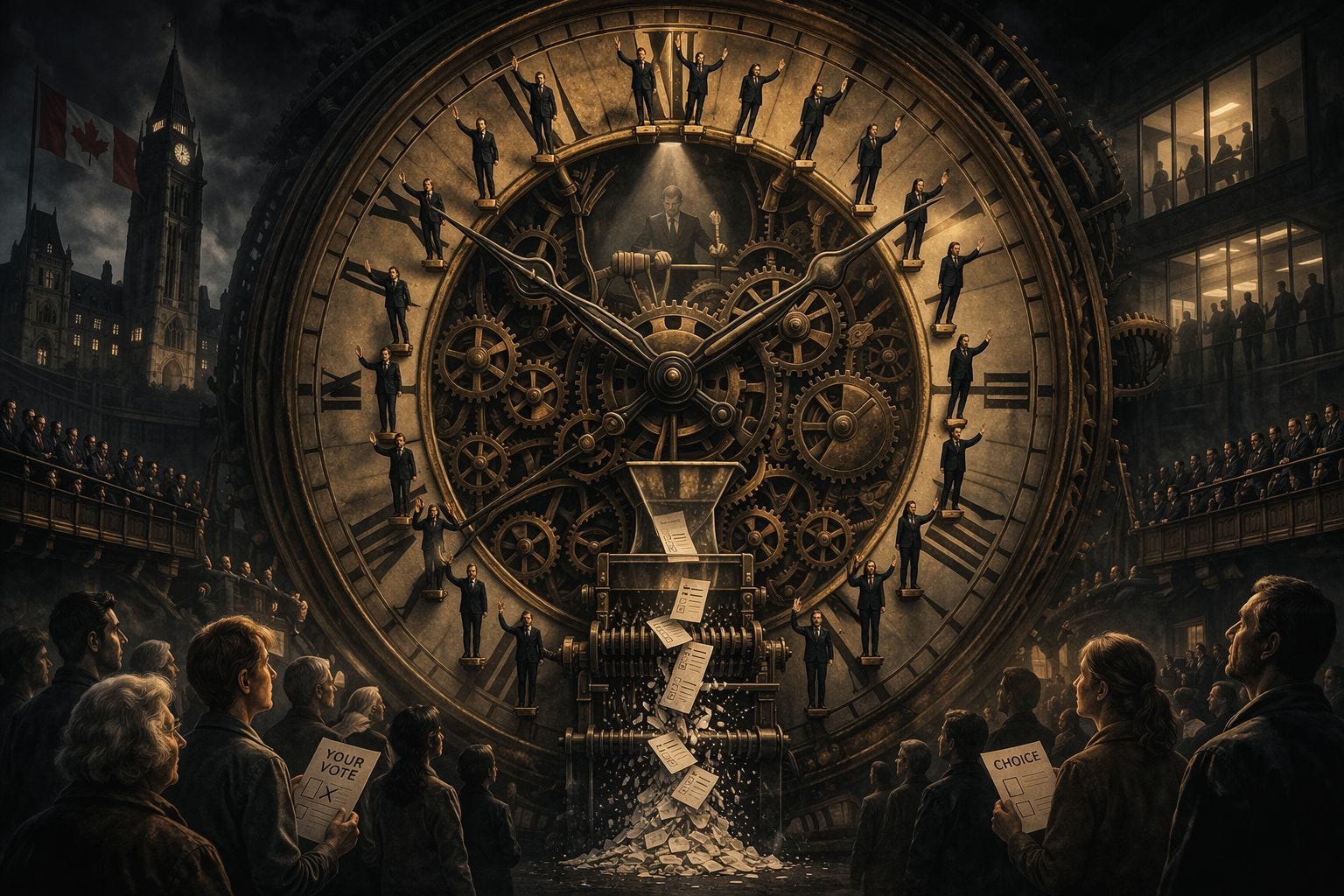
But listen to how at least one of these decisions has been described. Strip away the language, and it sounds less like statesmanship and more like a schoolyard - where a kid doesn’t get enough attention in their social clique, so they switch to another.
Indeed, ex-Liberal MP Gladu’s departure was nothing more than a hissy fit with a stench of inducement: “I was overlooked. I deserved better,” she complained.
That’s not a constitutional moment. That’s a playground.
And yet, if four becomes thirteen, that playground logic is enough to reshape who governs the country.
Not through voters. Not through a new mandate. Through movement.
And here is the point nobody wants to confront.
Where is the mechanism to examine what drives that movement?
Where is the mechanism to uncover whether enticements exist—whether access, benefits, future roles, or advantages are discussed, implied, or offered?
There isn’t one. None. No automatic review. No requirement to disclose. No obligation to return to voters.
A system already defined by near-total party control now allows post-election realignment with no transparency at all.
We are told not to speculate. But we are also given no way to know.
And that is the problem.
Because if, in three or four years, these same floor crossers emerge into well-placed, well-paid roles connected to government appointments, positions, influence—what will we be told then?
Is that a coincidence?
Or will we finally admit what it looks like?
Because at that point, the implication is unavoidable: political appointments may already be for sale. And that should never happen in a democracy.
This is what a weakening democracy looks like. Not a sudden collapse, but a quiet erosion. A system where the voter’s choice is provisional, where outcomes shift after the fact, and where there is no mechanism to examine why.
The alarm bells should be ringing. They should be deafening.
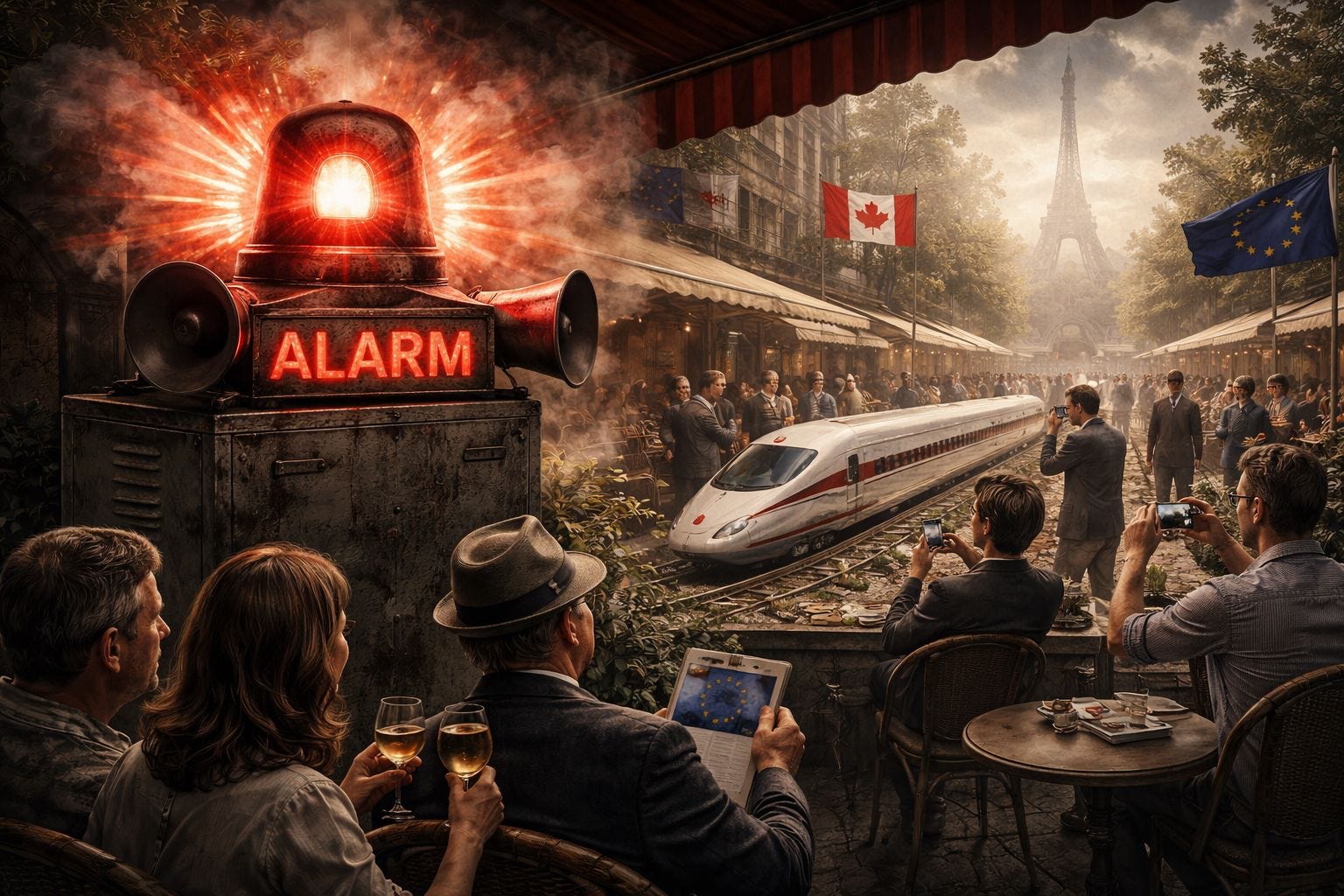
Instead, the alarm bells are muffled—smothered beneath a polite haze of distraction—while the only sound we register is the cheerful ding of the next political toy. A sleek, Euro-chic choo-choo glides in, promising elegance and modernity, quietly demanding massive subsidies per ride.
Meanwhile, voters indulge the fantasy that Canada might somehow “join the EU,” a notion the Liberals are only too happy to encourage. Perhaps Regina, newly imagined as a European outpost, can adopt the hauteur of well-coiffed Parisians, sipping cappuccinos on the Champs-Élysées.
Oh yes, it looks impressive. It sounds sophisticated. It feels like progress.
And all the while, something far more fundamental is being lost.
Because this is not a small thing.
If your vote can be reassigned after the election—if four can become thirteen, and thirteen can reshape who governs—then what exactly did your vote accomplish?
And if the honest answer is “very little,” then why vote at all?
Why participate in a system where the real decisions happen afterward, out of sight, beyond your reach?
We are told the next election will fix it.
But a democracy that only works later is not a democracy.
It is drift.
And that drift is not neutral. It is directional. It is drifting toward one-party dominance, toward a concentration of power that increasingly resembles authoritarianism rather than democracy.
This is not a false alarm.
If you value this work, consider leaving a tip. It’s cheaper than therapy, less pious than public broadcasting, and the only censorship here is my bad taste. On second thought, it’s bad therapy.
So glad you are addressing this! Why is there seemingly no discussion in the mainstream media about how the Liberals’ poaching of elected MPs is damaging democracy. No discussion of legal options to stop or control the process.
How about - floor crossing is only allowed after the MP holds a referendum/vote in their riding. If they do not receive a mandate to switch parties they should resign and run for the party of their choice.
The quiet erosion of Canadian demock-ery