


If you believe in the importance of free speech, subscribe to support uncensored, fearless writing—the more people who pay, the more time I can devote to this. Free speech matters. I am a university professor who was suspended for criticizing Hamas - so I am not speaking from the bleachers.
Please subscribe to receive at least three pieces /essays per week with open comments. It’s $8.35 per month, less than USD 7. Everyone says, "Hey, it’s just a cup of coffee," but please choose my coffee when you come to the Substack counter. Cheers.
Generally, diarrhoea is not a good conversation starter.
But it features in my trip to County Donegal and the village of Kerrykeel, where I discovered Irish roots, met distant relatives, and chased the romantic dream I’d called Ireland. The itch began earlier, with stories from my grandmother — how our family had tired of being crapped on by the English. In 1904, half said “enough” and sailed for Canada.
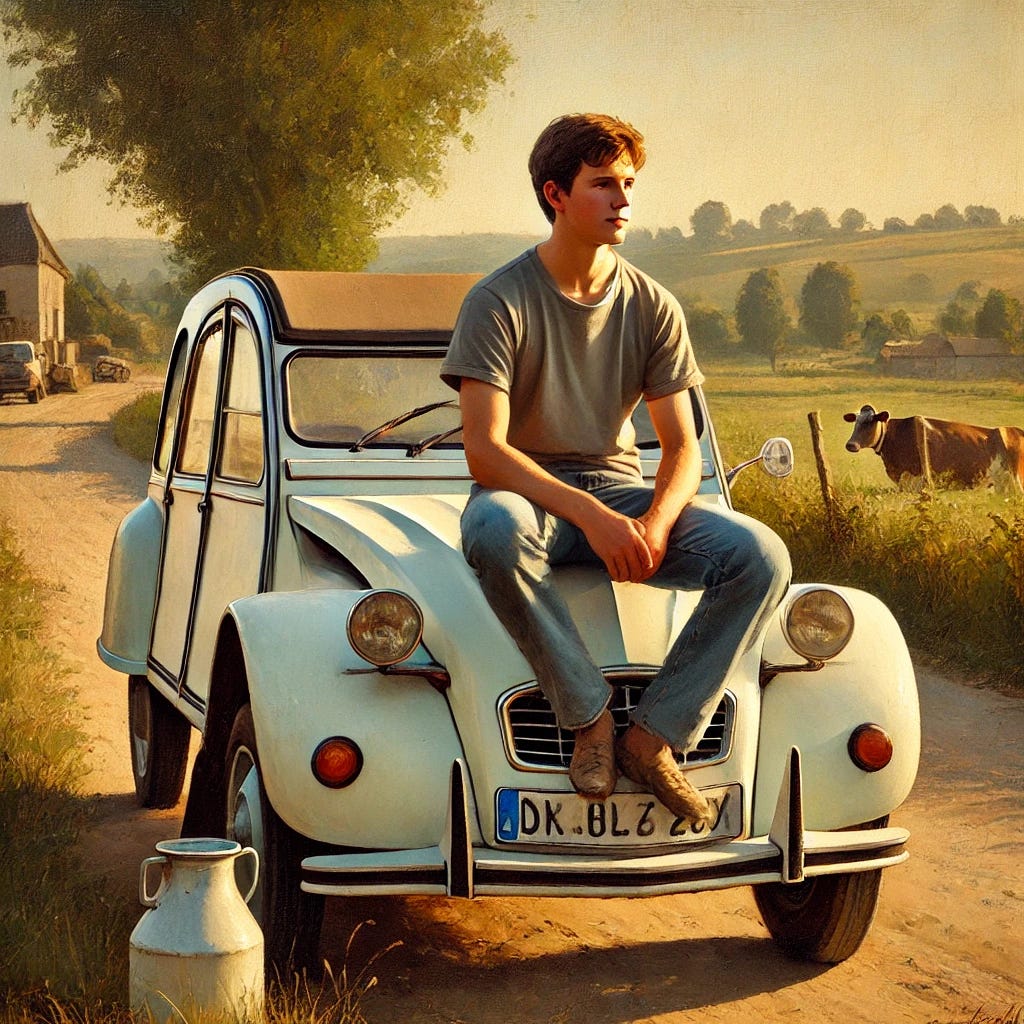
At 19, I worked on a farm near Strasbourg. My labours mostly involved crisscrossing the French countryside, dropping off bags of milk and ensuring the fly-infested ones were redirected for home consumption. Character-building, if not exactly cinematic.
Life in Winnipeg wasn’t going well, so I escaped to Europe for a volunteer year. I’d started university at 17 — woefully unprepared — in a brutal pre-vet program that chewed me up and spat me out.
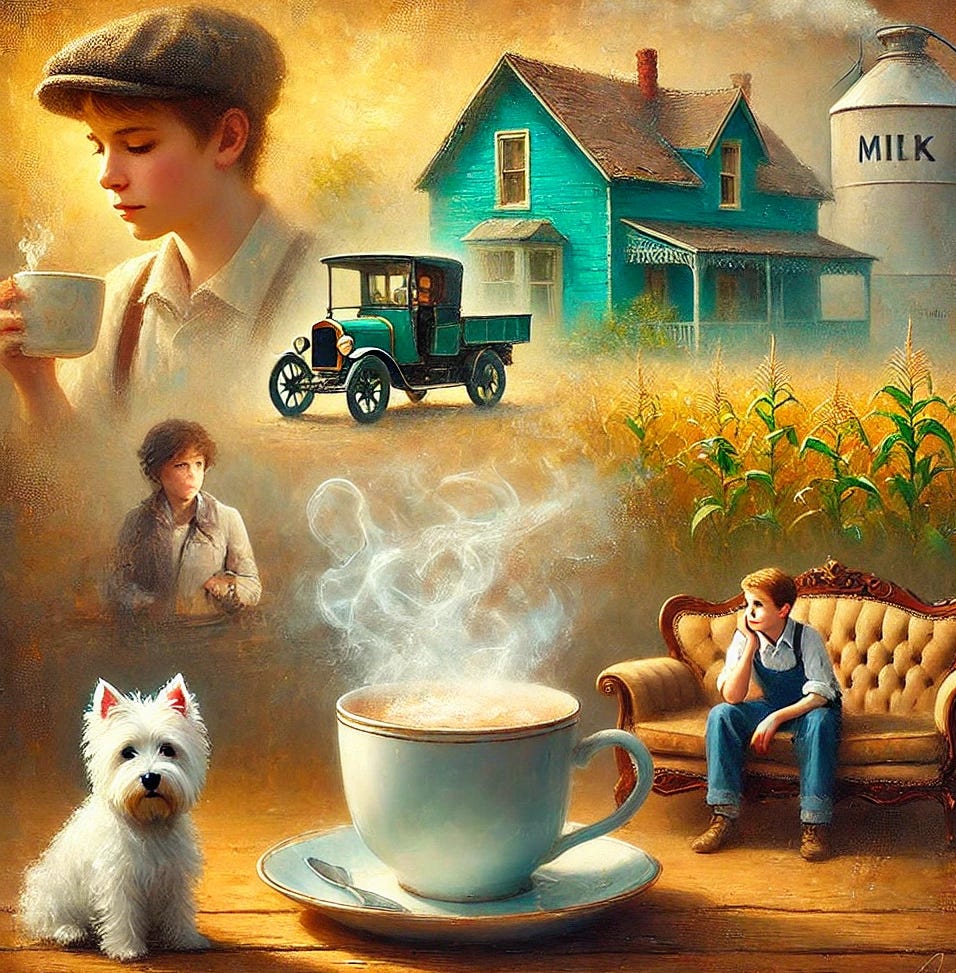
Home life in our turquoise two-story in Fort Garry was chaoic. My sister had long left. My brother and I were often on our own, dad was taking care of mum.
Mum had been diagnosed with terminal cancer when I was 15. She was in and out of the hospital, her impending death hanging over the household, bringing with it a pervasive melancholy that I could not drive out.
Mum distracted herself buying wigs, chemo having claimed her hair.
I remember sitting in Mr. Albertson’s chemistry class after my parents delivered the news. It wasn’t the day to light Bunsen burners or laugh at Mr. Albertson’s casual racism toward the two Chinese exchange students in the front row. It was 1980.
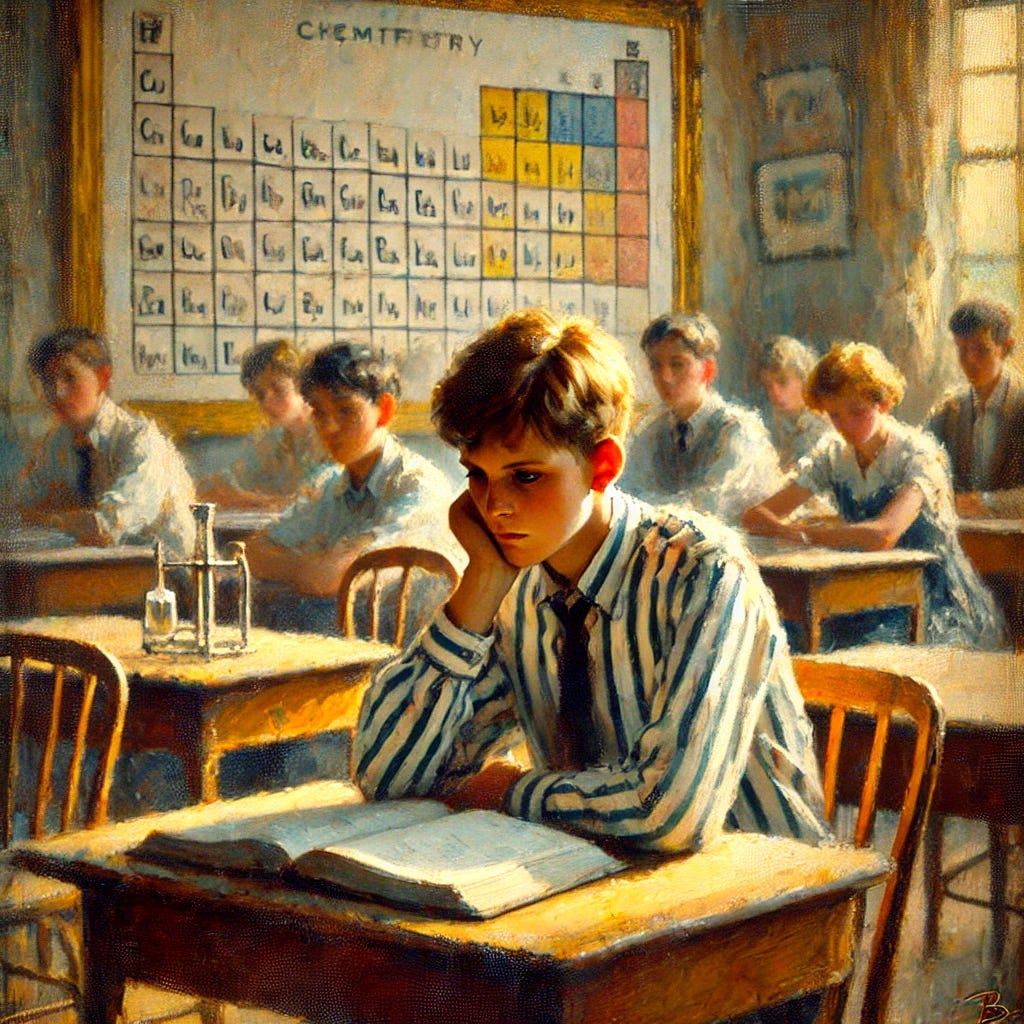
Mum was going to die. There would be no parents, plural. My dad wasn’t the remarrying type. My shoulders dropped. No more tomato soup lunches in the tiny kitchen with Misty, our Westie, tapping at my leg for a cracker. The weight of anticipatory grief hunched me forward; I feigned a lash in my eye.
We were told she could last years. There remained a small, hopeful seat in the corner. Mum didn’t seem down about it.
They weren’t exactly forthright. Years later, as my brother Doug and I waited outside her palliative ward, a nurse leaned in, breathlessly optimistic: “She might live six more months,” like she’d just told us we had enough gas to get to Emerson and back without stopping at the Domo.
Memory doesn’t play like a recorder. It comes in flashes—smells, fragments, sudden intrusions.
We built life around Mum’s chemo schedule. After each treatment, she and Dad would retreat to our farm near Vulcan, Alberta. My brother and I would fill the house with our friends — mostly boys.
Drinking was a dedicated enterprise. We calculated alcohol by cost-per-drunkenness. Cooking sherry or 7% Club beer were preferred, even though they were wretched. Drunkenness wasn’t a byproduct; it was the goal.
Our neighbours — God help them — would peek out at 1 a.m. to see us playing a game called “Pee Ball,” which, as the name suggests, involved urinating on the ball. Apparently, I played it.

In those days, neighbours didn’t call the cops. They just sighed and waited for us to grow up.
Mum stayed optimistic. There was always talk of “fighting,” but no, the cells were not intimidated by a positive attitude. You don’t fight cancer. You comply. You endure. She did it all: radiation, chemo, hormone therapy.
Dad, for his part, slept beside her on a thin blue yoga mat on the tile floor. Not a man of tears or declarations, he fought with his presence. It was like watching a small boy take wild swings at a Goliath — futile but ferociously loyal.
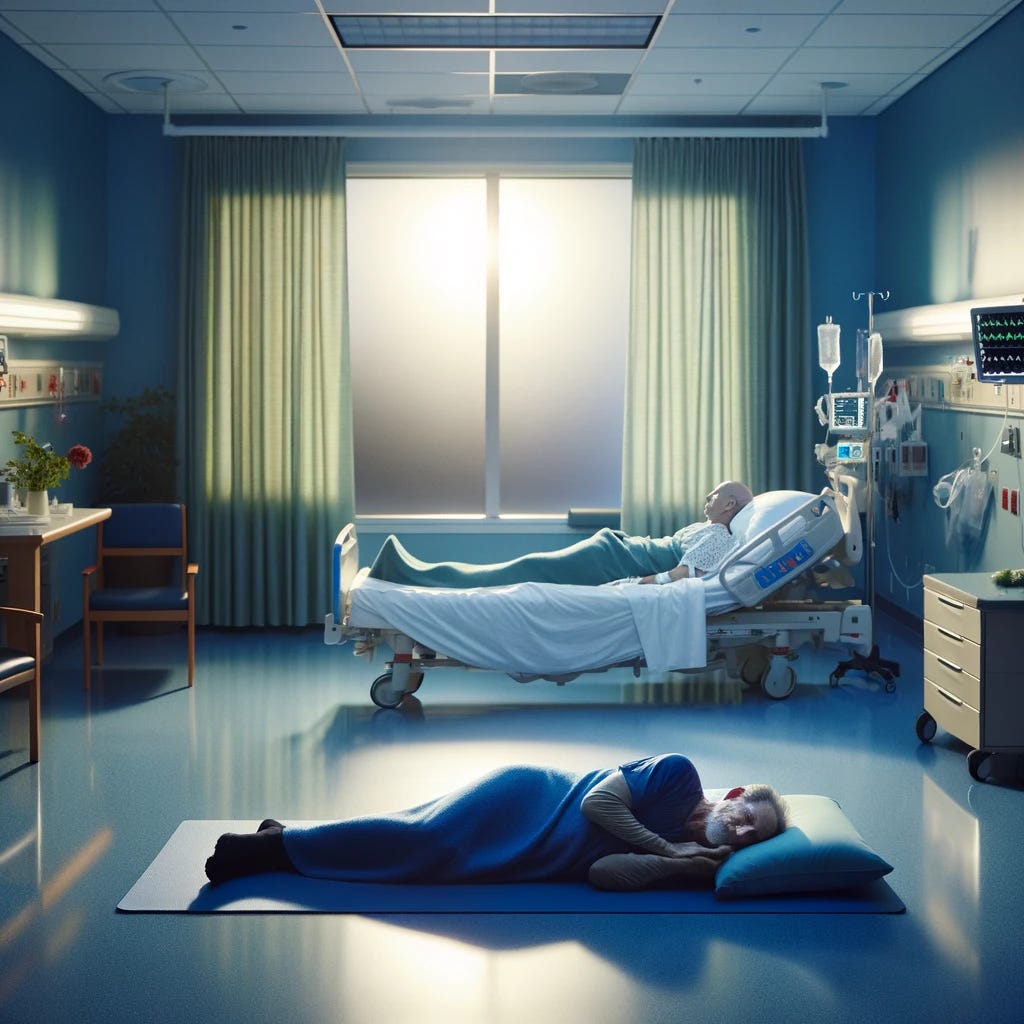
By then it was 1986 — nearly 40 years ago — and we staggered down that hallway, punch-drunk on early grief. We hoped for miracle cures, yet we knew better. We collapsed into chairs beneath a window overlooking the St. Boniface parking lot. I remember the yellowed tiles, and the urge to run.
Thirty-eight years later, my father, stricken with cancer himself, lay dying. I can scarcely recall my mother’s face — just scattered impressions. I remember their pride when I won a provincial science medal in grade five.
My last words to Dad — delivered via Facebook video, thanks to my brother — were: “I’m coming for you, Dad. I love you.” By the time I arrived, he couldn’t speak, but he knew. He’d waited. Prairie boys are stubborn that way.
Our family bonded in silence. Readers. Present but quiet. Dad would sit on the floral couch, his feet under the afghan Mum knit — now beside me — while I rocked in the orange velour chair. Presence was enough.
Maybe that explains my borderline-religious devotion to my dogs — two Westies named Toby and Malibu. Today, they flank me on the couch. I offered no invitations. They simply want proximity. They ask for nothing, save my presence. And that presence, like my father’s, is the truest comfort I’ve known.
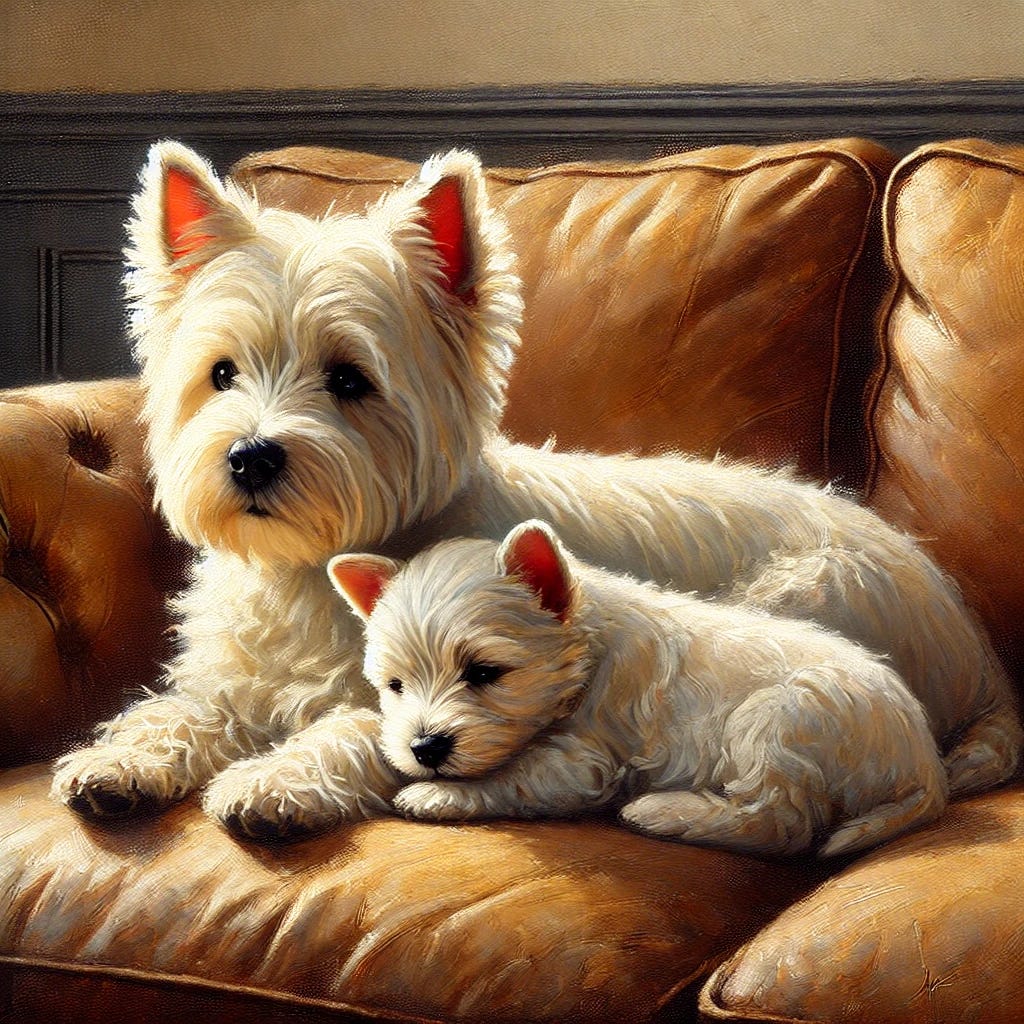
When Dad was dying, I made it back. I regret reading the sports section while he drifted off, but I was there.
The cult of “positive thinking” around cancer — the Oprahfication of death — is as cruel as it is stupid. The idea that one can “fight” terminal disease through optimistic energy is foolish. It quietly shifts the blame to the dying. If you’re losing, you must not be trying hard enough.
Mum got into it — the affirmations, the bright outlook. I think it hurt more than it helped. No, you don’t will cancer away. You follow medical advice and try not to curl into a ball. That’s enough.
Dad believed if she’d gone to the doctor earlier, she’d have had 30 more years. His own cancer was also missed. Everything was COVID. Doctors were off-limits unless you were actively dying. He was misdiagnosed with constipation weeks before lymphoma took him.
He spent days in a converted closet at the Victoria General Hospital. His doctor had the warmth of a wounded badger and doled out care in 12-second increments.
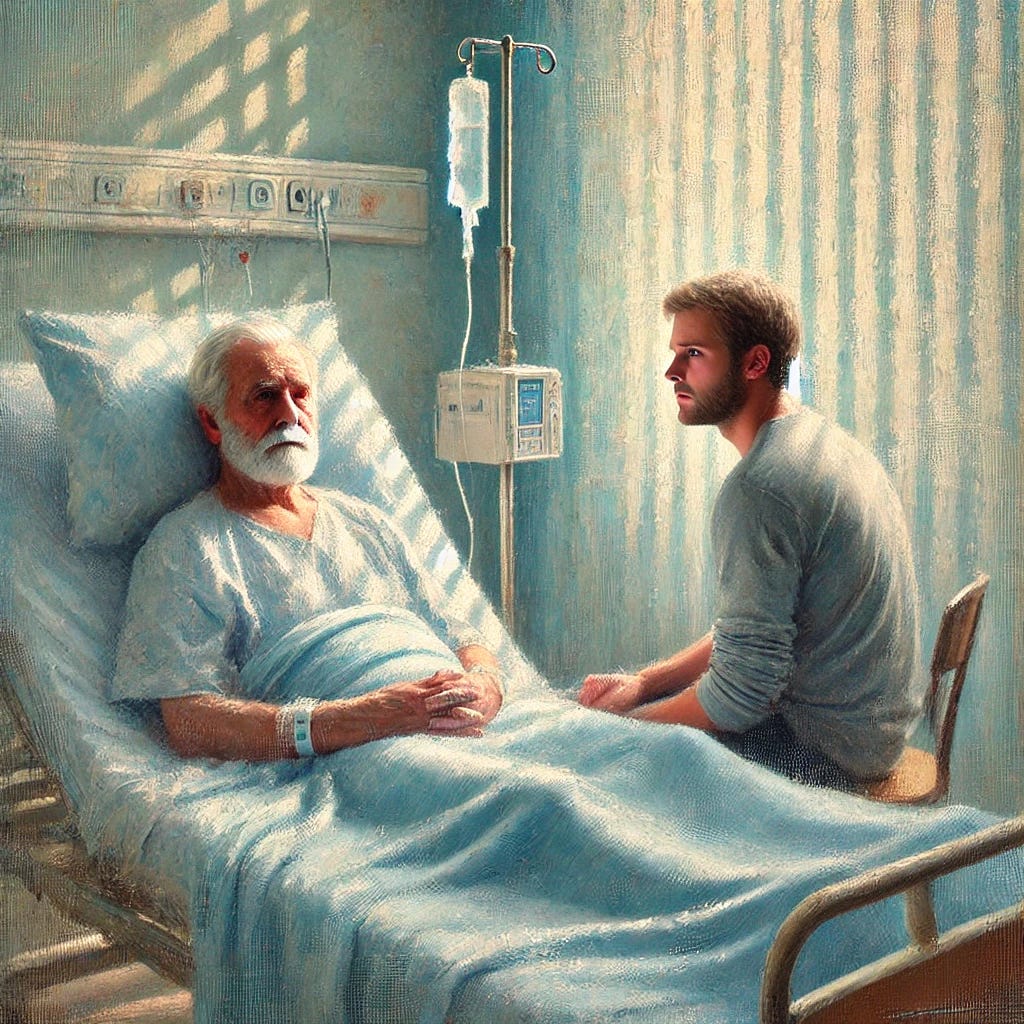
Still, he had been there for Mum — six years of dying, side by side.
When I was 19, while Mum was deteriorating, I was volunteering in France. Feeding cows. Shoveling maize. Not allowed near a tractor. It was hard, grim, friendless work. Mum and Dad even visited. She collapsed in a restaurant. The waiter asked if we still wanted the food. French hospitality at its warmest.
In hindsight, the volunteer year was a discount labour scheme sold as adventure. I thought I’d be an exotic curiosity. I wasn’t. The Swiss girls barely made eye contact.
Lonely, letter-starved, I once drank an entire bottle of cheap vodka and vomited over half the room. I told my host family I had the flu. The shame lingered like the smell. I took a long, penitent walk by the abandoned Maginot Line.
After that year, I moved to Minnesota, went to grad school, and eventually did an MBA in Toronto.
Fifteen years later, I lost a job and went to London for interviews. But being from the colonies meant I “lacked UK experience.” Rejection after rejection. I was fed up with the British sneer. But Ireland — the land of roots and mist — was nearby.
I wasn’t Irish, not really. But I had a passport, a myth, and a few names. So I caught a bus to Letterkenny.
My relatives were kind. They fed me, housed me, showed me the goat shed that used to be my grandmother’s house. I even saw the church where her family name was on stained glass.
And then, before I left, my uncle handed me an “elixir.” Aloe, he said. Ancestral magic. I took it to be polite.
Big mistake.
Fifteen minutes into the return trip, I felt a cramp. Not an “oops” but a biblical reckoning. I staggered to the driver, muttered something about nausea (more socially acceptable than the truth), and begged for a stop.
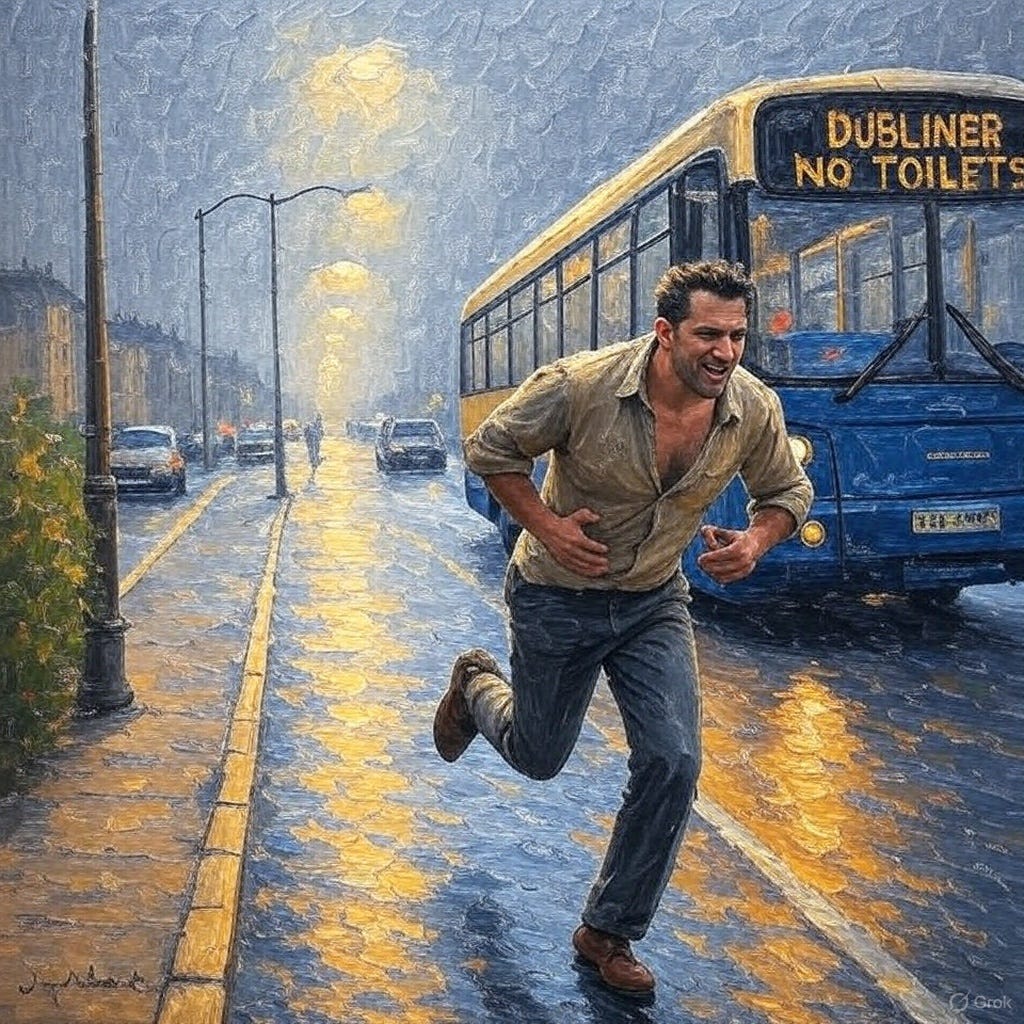
He pulled over. I sprinted into a ditch. Fell into a bush. And then, my dignity died.
There were leaves. There was shame. And, cruelly, there was round two twenty minutes later. I held out. I tried. But eventually, pretending to read Pushkin, I surrendered.
I soiled myself. Quietly. Discreetly. A kind woman whispered, “It’s happened to me too.” I thanked her lie.
Dublin finally arrived. I never saw those people again. But I suspect they remember me — the Canadian who loved the countryside… and ruined a seat.
The job fell through. But I found Guinness. And Immodium.
I wrote to thank my uncle and aunt. I left out the elixir.
And returned to Canada.
If you found value in this article and wish to support my ongoing work, especially during my 18-month suspension, please consider leaving a tip. Your support helps me continue producing uncensored content on critical issues.
I laughed loud and long at the Irish parts. Thank you. You’re talented- it was right after feeling bad for your whole family.
Tough times! So glad you lived to tell the tale.