


If you give even half a damn about free speech, subscribe. It means I can continue doing this without needing to ask a gender-neutral AI for spare change. I’m a suspended university professor, not a pundit barking from the cheap seats. The link is below, click it before the lawyers take it away.
Please subscribe to get at least three uncensored, impolite, fire-in-the-belly essays per week. Open comments, $6/month. Less than \ USD 4. Everyone says, “That’s just a cup of coffee.” Okay, then buy mine.

They arrive not with a résumé, but with a vibe. They want the corner office, but they’d rather get there by TikTok than by tenure. They demand “authenticity” but shrink from a phone call lest they have to speak to someone’s unfiltered natural voice. Yes, Generation Z has entered the workforce—and the rest of us are expected to celebrate their arrival like it’s the Second Coming. Spoiler: it’s not.
Ask any manager worth their salt about this cohort—those born between the mid-1990s and early 2010s—and the reaction is nearly Pavlovian: a twitch, a sigh, a thousand-yard stare. Yes, the Zoomers are here, and they’ve brought with them a cocktail of expectations, neuroses, and digital detachment that would make Orwell blush and Kafka cry.
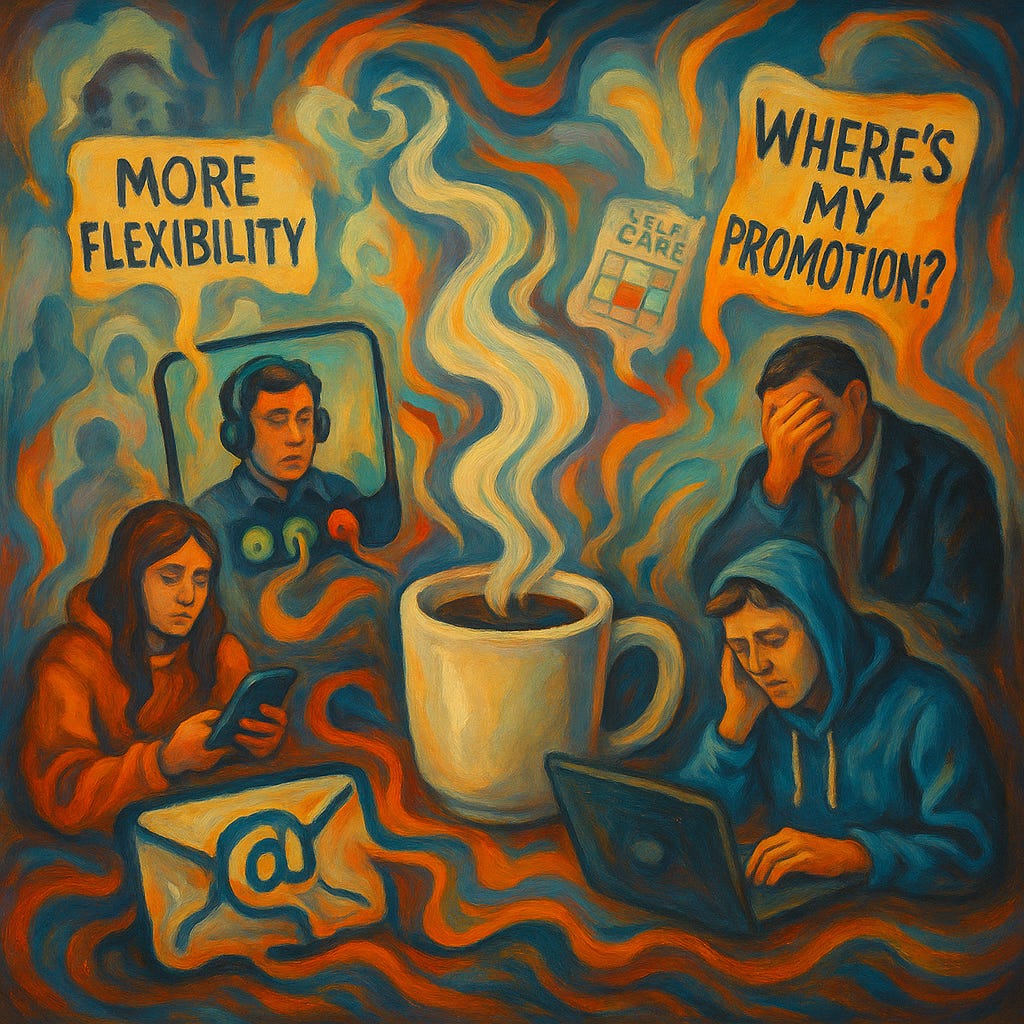
Let’s begin with the numbers, because even these idealists can’t cancel math. According to Deloitte and Stanford, Gen Z is shaping up to be the most diverse, digitally savvy, and—on paper—socially conscious generation in history. They demand a work-life balance, flexible work arrangements, mental health support, ethical leadership, and opportunities for career advancement. They also want salaries that used to require 20 years of hard work and climbing the ladder. And they want it now.
But here’s the problem: many of them can’t answer a phone call, show up on time, or write an email without existential dread.
I’ve seen it firsthand. Students with a barely-there BBA and a resume padded with volunteer gigs in student clubs nobody’s heard of, declaring they’re ready to lead strategic initiatives. I’ve assigned a task—an easy one, mind you—that took me 45 minutes to complete. My Gen Z intern? Twelve hours of radio silence. When I checked in, I found her working from home, in a bathrobe, having discovered “it’s harder than I thought.” I paid her off and moved on. She, no doubt, updated her LinkedIn to say she “collaborated on executive-level strategy.”
This is the generation that claims to crave connection yet ghosts employers on Their First Day. An anonymous manager describes to me this horror with the flat despair of a man who’s seen things. Job interviews missed. Interviews attended, but with candidates who openly trash their last job, manager, or—sometimes—the entire concept of work. And then some simply don’t show up on the first day. They vanish. Poof. No call, no email, just a vibe left behind.
Managers have had to let Gen Z hires go, not for incompetence but for arrogant unreliability. One Gen Z staffer admitted to getting drunk with friends all day and doing their work sloppily at 3 a.m.—a pattern, not an anomaly. Another insisted that working from home was their right, despite being incapable of structuring a single workday. They demanded freedom with the discipline of a jellyfish.
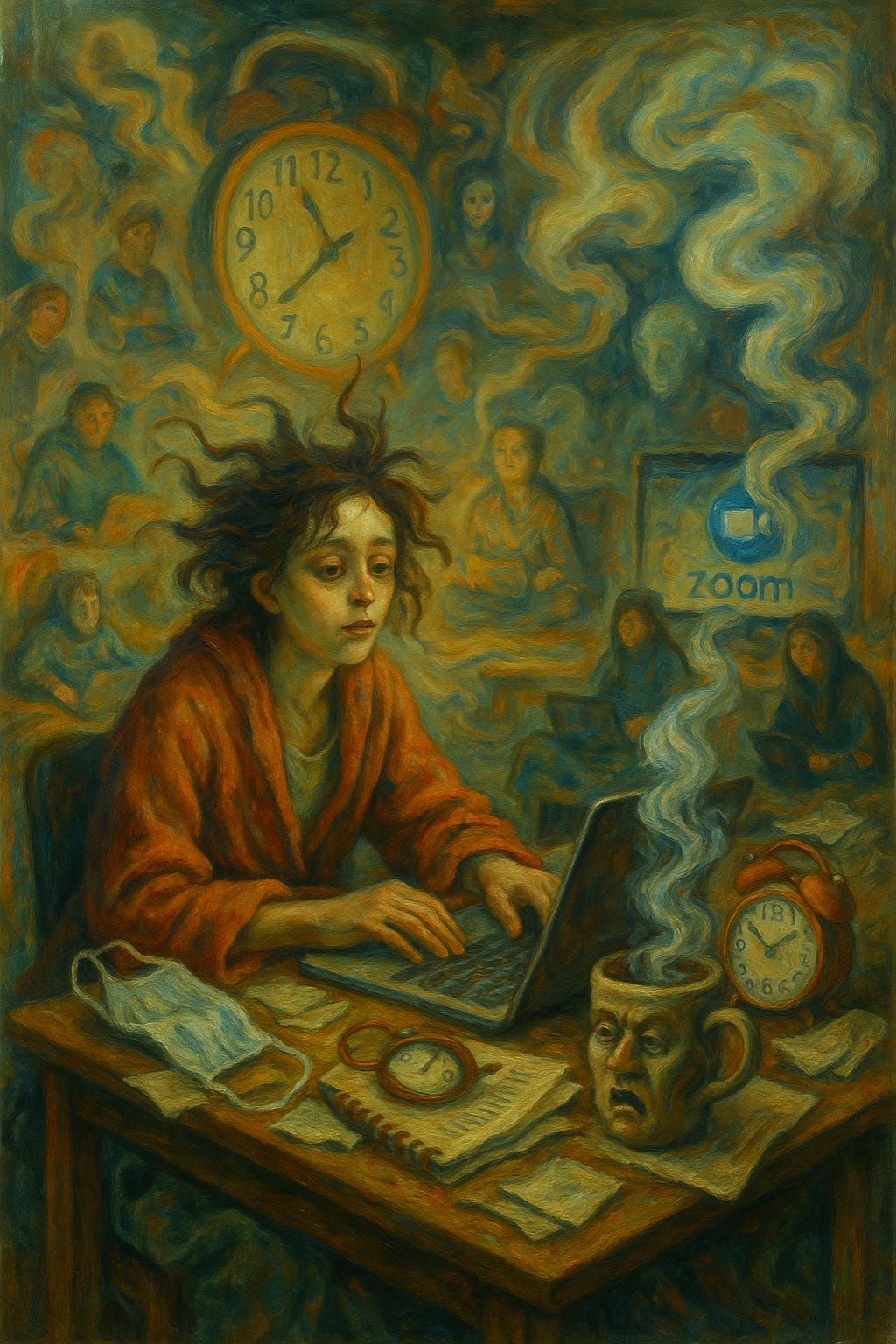
And now we must confront the obvious: COVID made it worse.
The pandemic didn’t just interrupt schooling—it utterly distorted the concept of “work.” Schools went remote. Internships vanished. Part-time jobs dried up. Young adults were told to stay home, attend class in their pyjamas, and “self-care” their way to enlightenment. And when it came to work? “Remote” came to mean “optional.” Productivity slumped, but expectations skyrocketed.
The HR department at my University has become a perennial joke.
Since Covid, all work has been done from home, leaving empty office space and unreturned phone calls. It took six of these geniuses to change my banking information for payroll. Three weeks.
And now we have an entire cohort that believes logging into Zoom at 11:05 a.m. with their camera off counts as effort.
According to a 2023 Gallup survey, remote Gen Z workers are the least engaged demographic in the entire workforce. Only 31% say they are engaged at work; the rest drift between quiet quitting and outright vanishing. Even more striking: a 2022 Microsoft Work Trends Index found that 52% of Gen Z felt “burned out” by hybrid work, even as they clamoured for more of it. Why? Because the habits formed during COVID were never actually work habits—they were coping mechanisms.
Psychologists are now calling this “productivity anxiety”—the stress of not being productive while also being terrified of the structures that make productivity possible. In other words, Gen Z wants to work from home, but has not yet fully learned how to work effectively. They’ve been socialised into the illusion of autonomy, but not the discipline it requires.
Now, to be fair—and fairness is important—there are diamonds in the digital rough. I’ve worked with one young man who prepared tirelessly, sat in the front row, asked thoughtful questions, and worked as though his life depended on it. He’s rising fast, as good people always do. But he is not the norm. He is, tragically, the exception to the rule of emoji-saturated communication.
So what happened? We handed them a screen and called it an education. We handed them a Slack channel and called it a workplace. We buried them in slogans—“You’re enough,” “Your truth matters,” “Work smarter, not harder”—and now we’re shocked that they won’t get out of bed before noon unless there’s an Uber voucher in it.
According to the data, 68% of Gen Z report feeling stressed at work. Of course they do. They’re being crushed between the pressure of performative authenticity and the unreality of influencer lifestyles. They’ve been told they can be CEOs by the age of 25 and also take six-week wellness sabbaticals. And employers—pathetically desperate for fresh talent—feed this delusion with DEI statements, free oat milk, and nap pods.
But behind the slogans, we see the rot. This is a generation that values “transparency” but gets offended by feedback. That demands “inclusion” but will exclude any idea not pre-approved by TikTok therapists. That preaches sustainability while overnighting five Amazon packages a week. And yet they see themselves as the conscience of the workplace.
Even their communication preferences are a mess. Despite being “digital natives,” they crave face-to-face communication because texts are “too ambiguous.” Then they complain about confrontation. So they Zoom, with cameras off and mics muted, one eye on Slack and the other on YouTube. This isn’t multitasking—it’s mismanagement of attention masquerading as productivity.
To adapt to Gen Z, employers are advised to personalise career paths, offer constant praise, create inclusive ecosystems, and accommodate burnout as if it were a chronic condition. Some of this makes sense. But here’s the rub: no workplace can function if every request is treated as a human rights issue. At some point, someone has to do the work.
And let’s not forget the irony: the most online generation in history struggles with basic interpersonal skills. They’ve mastered the algorithm but not the handshake. They’ve built brands, not characters. They demand “safe spaces,” but the workplace is not therapy—it is a place of deadlines, demands, and discipline. Or at least it used to be.
Yes, we must be patient. Yes, we must train. But we must also draw the line. Entitlement is not innovation. Fragility is not a skillset. And ghosting a job is not a revolutionary act—it’s just bad manners.
So let Gen Z enter the workforce. Let them advocate for mental health, sustainability, and a sense of purpose. But also let them show up. Let them answer the phone. Let them hear “no” without crying foul. Let them stop confusing comfort with virtue.
Because if we keep treating them like misunderstood saviours, we’re not just enabling dysfunction—we’re institutionalising it.
If you found value in this article and wish to support my ongoing work, especially during my 18-month suspension, please consider leaving a tip. Your support helps me continue producing uncensored content on critical issues. If you are inebriated and simply open to irrational spending, you may also participate.