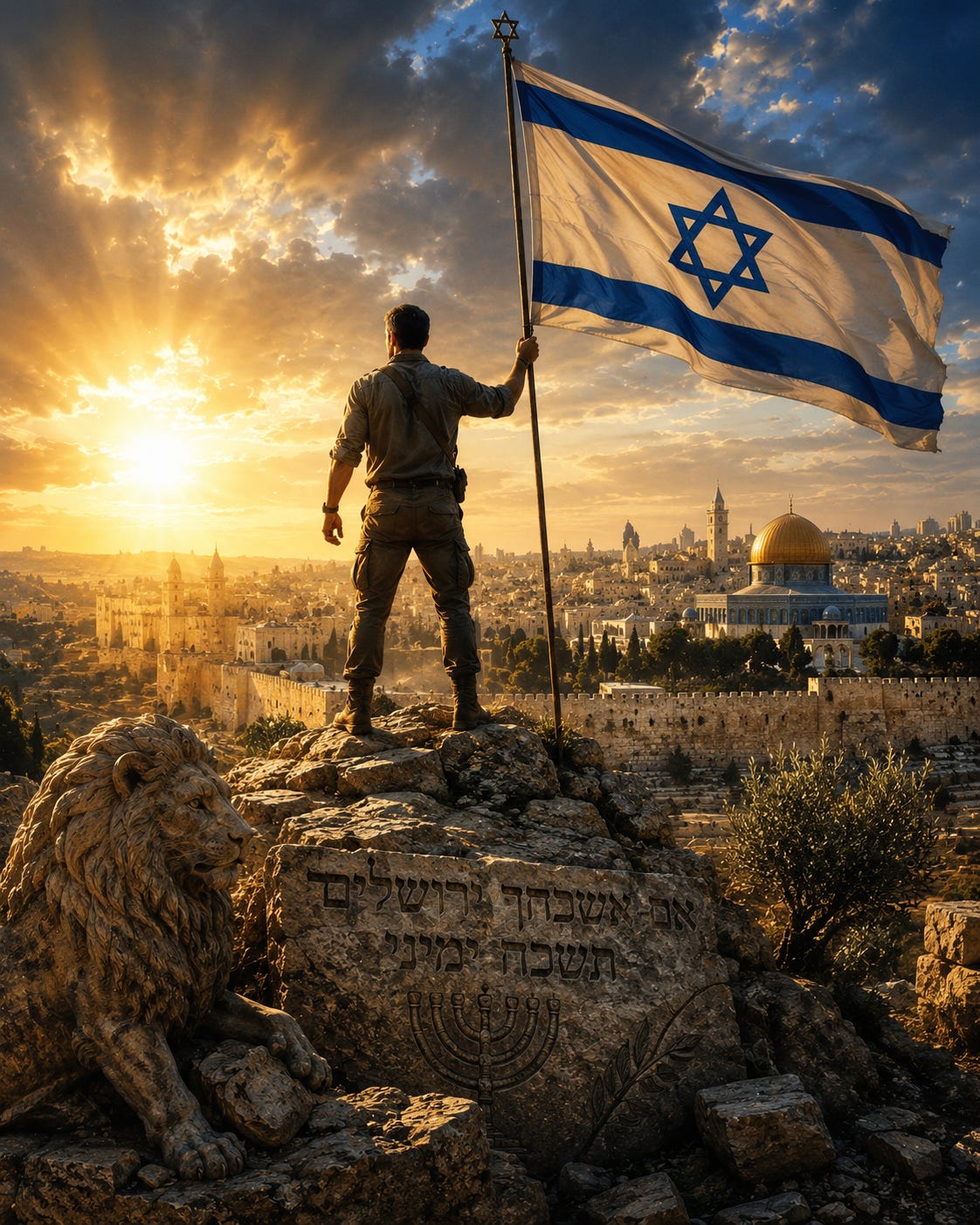
Casey Babb Wants Zionists to Stop Playing Defence
Why Casey Babb Believes Zionism Must Be Asserted, Not Apologized For
Dr. Casey Babb is part of a new generation of Zionist thinkers, refusing to cede the intellectual battlefield. A national security scholar with deep ties to Israel, Canada, and the U.K., Babb has emerged as a forceful voice arguing that in a post–Oct. 7 world, defending Zionism is no longer enough — it must be asserted, defined, and unapologetically championed.
Babb is a Senior Fellow at the Macdonald-Laurier Institute, where he focuses on Israeli national security, terrorism, and the future of warfare. He is also an International Fellow at the Institute for National Security Studies in Tel Aviv and an Associate Fellow at the Royal United Services Institute in London.
Based in Ottawa, he teaches graduate courses on terrorism and international security at Carleton University’s Norman Paterson School of International Affairs.
Babb’s research and commentary on antisemitism, Jewish life, and Middle Eastern security have appeared in leading outlets, including Free Press, The Globe and Mail, Newsweek, The National Post, The Jerusalem Post, and The Hill.
His analysis is frequently sought by major broadcasters such as CNN, CBC, BBC, FOX News, CTV, and Global News. He holds a PhD in International Relations from Carleton University, with earlier degrees from Saint Mary’s University and York University.
In a recent social media post, he issued a rallying cry in October. 7 world:
“We need to spend equal time and energy embracing Zionism — understanding it, celebrating it, and making the case for it with confidence.
Zionism is one of the most remarkable stories in human history: a people who never stopped loving a land, who kept its language alive for thousands of years, who prayed toward it daily, and who, against every conceivable odd, came home. That’s not colonialism, or apartheid, or genocide. That’s the greatest story of hope, belonging, and return ever told.
If we only fight anti-Zionism, we’ll be playing defence forever.
Know what you stand for. Embrace it. Say it out loud.
That’s how we preserve ourselves. It’s how we win.”
Dave Gordon interviewed Babb for Freedom to Offend.
How would you best describe the work that MLI does?
I think we do the work that no one else is willing to do.
Whether it’s trying to come up with policies to better address Islamic extremism, sounding the alarm on antisemitism, or providing fact-based commentary on Israel and the Middle East.
We really try to hold the government to account, to steer decision-makers towards better decision-making for all Canadians, and we repeatedly find ourselves tackling issues that no other think tank in Canada, and really no other entity in Canada, is willing to address.
What would you say as an example of what you would be willing to tackle that no one else does?
Well, one issue that we’re really concerned about right now is Islamic extremism and the normalization of it. Take the Red-Green Alliance, so to speak. This relationship that has emerged over the last couple of decades, but particularly since October 7, between progressives – whatever that even means anymore – and Islamists, and their sort of mutual desire to upend the “system,” and to vilify Jews. Their sort of myopic focus, the singular focus on Israel, and the Jewish question, and their shared interests in seeing much of our culture, society and political systems done away with. That’s a very roundabout way of saying the rise and normalization of Islamic extremism.
Another issue would be looking at the true nature of Hamas. I mean, this shouldn’t be controversial. But MLI, to the best of my knowledge, is the only organization in Canada that has put a considerable amount of effort into actually debunking myths around Hamas and entities that are tethered to Hamas or connected to Hamas, such as UNRWA. There are no organizations in Canada that are willing to really put their neck out there and say “Hamas actually are the bad guys, on the rise.”
They are more Islamic than they are “free Palestine.” They almost never say “free Palestine.” They say, “Free the world from Jews.” Hamas is really an acronym in Arabic for “Islamic Resistance Movement.”
MLI has a great magazine called Promised Land, with a series of essays, as well as a podcast by the same name. Can you talk about that?
What we’ve done is that, in the immediate aftermath of October 7, we quickly noticed a dearth of reliable, substantive, fact-based information about Israel in the Middle East. Not just in the think tank community, but more broadly. And so MLI’s founder, Brian Lee Crowley, hired me to come on and start up this program. And so we created the Promised Land together, which is obviously a nod to Israel. But when we say Promised Land, we are talking about Canada and the Western world, too and the promise of what we want as our way of life.
We created The Promised Land to sound the alarm and create policies to better address rising extremism and terrorism, and to provide fact-based commentary on Israel and the Middle East, and to also raise awareness about surging antisemitism in Canada. No one else is really doing that substantively, even organizations like CIJA, B’nai Brith, and the Simon Wiesenthal Center.
You know, they might release a data point that gets circulated on social media. But if you asked me, “Well, what do they actually do about raising the alarm about it?” I couldn’t really tell you, like most people.
We have the Promised Land Speaker Series, which has included everyone, from Jews and non-Jews alike, to Loay Al-Shareef, Arsen Ostrovsky, Matti Friedman and Einat Wilf.
We’re doing this every day. This isn’t something we do off the side of our desks. This is a full-time job, and these are issues that require dedicated resources. To be clear, Promised Land is not a “Jewish” project at all. We’re fighting for everyone’s future.
What can people do to promote Western values and fight Jew-hatred?
For me, it’s to abandon the ideas that we’ve been force-fed – about equity, diversity and inclusion,
We need to be more afraid of what’s happening to our country than being labelled Islamophobic.
We need to be more afraid of what this country will look like for our grandchildren’s grandchildren than we are of losing a client, an opportunity or being labelled.
We have to gain the ability to speak freely and critically about the most acute, problematic issues of our time, whether religious, ideological or political. But we’ve been completely neutered in our abilities to do that. That, for me, is the biggest issue.
If we can’t even talk about these things publicly or without fear of repercussions, then the people we really need to confront have already won.
I think we need to be doing more to crack down on charities which are fronts for terrorist organizations, including the Muslim Brotherhood.
I think we need to do more than just list them as terror entities. Samidoun got that distinction, but they still operate. So we need to make legislative improvements and better policy decisions.
We need to think of our adversaries as here at the gate, not oceans away.
I worked in the national security community for many years, and it is almost obsessively focused on China and Russia, often overlooking the hostile actors who are sometimes sitting in the room with them.
You didn’t mention campus – do you have thoughts on how to deal with hate at universities?
Well, I mean, that’s just part of subsumed under what I said – the need to improve socially and politically. Our universities have moved away from places of higher learning to indoctrination centres.
We need to look at foreign funding for universities.
I have small kids, and if they were of age, I would not send them to any local universities.
Much of our mainstream media has moved away from legitimate journalism to activist journalism. These are things that will drive this country towards a steep decline.
We need to really revamp immigration policies when it comes to student visas.
Of all the “plans” that the current Canadian government could do to help both Israel and Arab Palestinians, what would it be?
Why aren’t we coming up with something more strategic and more beneficial for Palestinians than UNRWA? Instead of just complaining that UNRWA needs to stay in place and that we need to keep funding it, we have very, very smart people working in these areas. Why are we not coming up with an alternative? There are so many different ways, diplomatically, militarily, economically, that we could be doing more in the region.
It would almost certainly be more productive than just another hollow statement that would only fan the flames.
Follow Casey on LinkedIn, X, and Macdonald Laurier on Instagram
This interview was edited for brevity.


