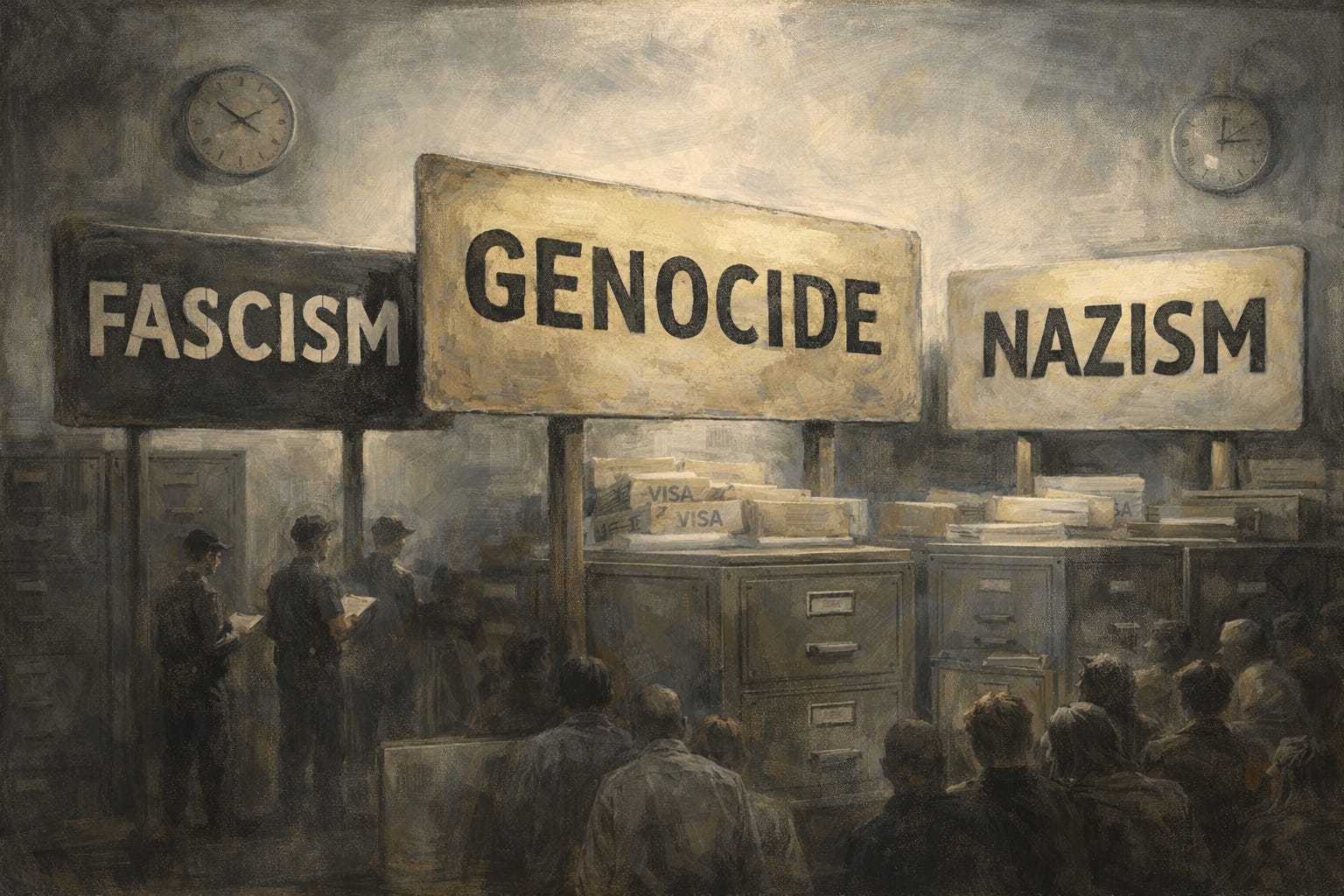
In the endless nattering on Twitter, ICE is now routinely described as fascist, Nazi, and—by some Olympic leap of moral confusion—worse than the Chinese state or Hamas. I recently encountered the claim that removing illegal entrants is morally equivalent to the internment of Japanese Americans during the Second World War. It is hard to know what is more offensive here: the historical illiteracy, or the narcissism that imagines one’s social-media rage to be the moral equal of an actual wartime atrocity.
As a public, we appear incapable of condemning ICE excesses while simultaneously conceding that a fifteen-second clip glimpsed on Twitter might not constitute sufficient evidence for launching the customary anti-Trump jeremiad—the one that inevitably rummages through the rhetorical costume trunk for Nazi, fascist, authoritarian, and, for theatrical effect, the ever-looming civil war.
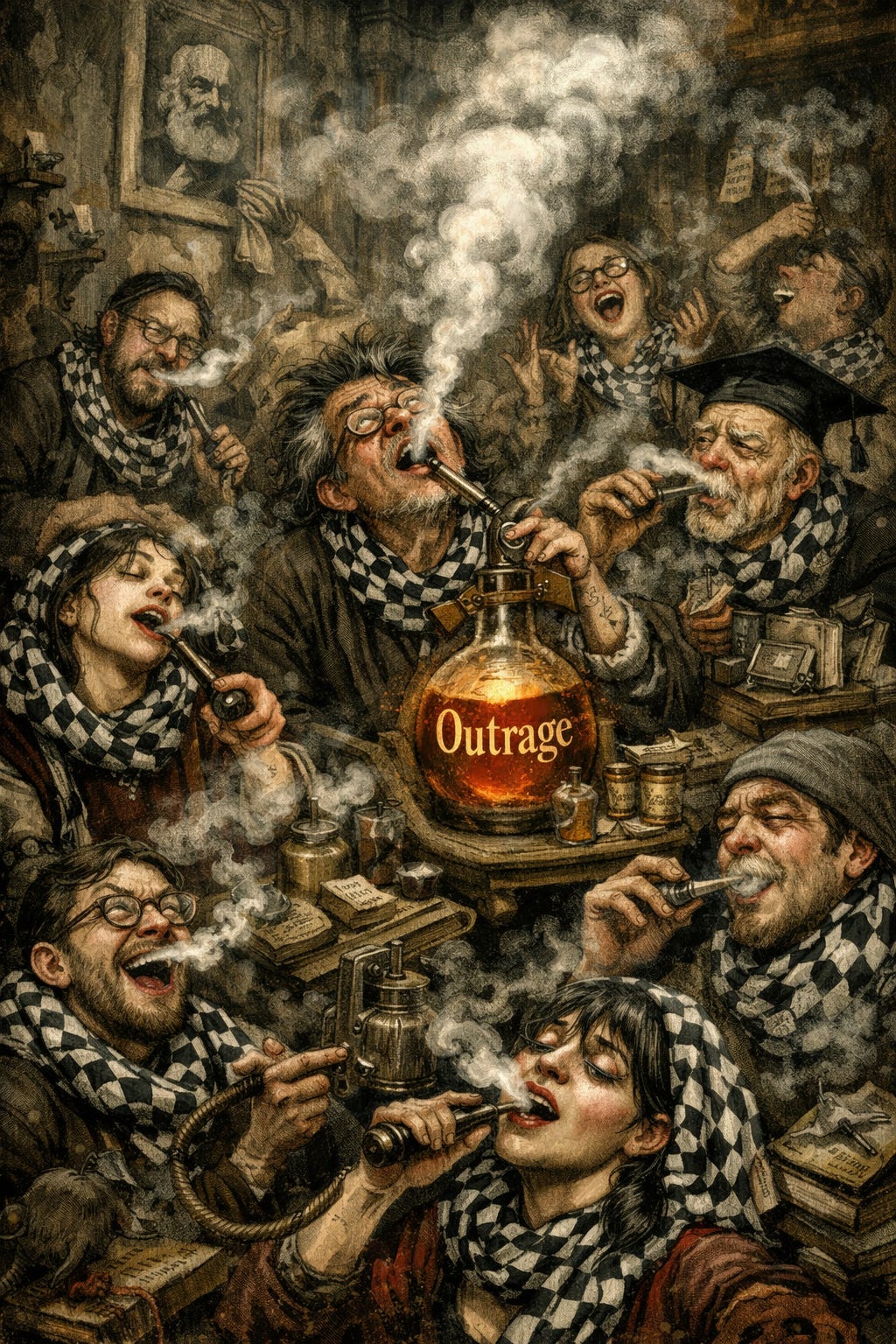
Outrage, having replaced inquiry, now travels at the speed of broadband, requiring neither patience nor proof—only a charged adjective and the comforting warmth of collective indignation.
Yet beneath all the digital hysteria lies a stubbornly unfashionable fact: illegal immigration is, by definition, illegal. That is what the adjective is there for.
A functioning society cannot simply shrug at the violation of its own laws any more than it can remain coherent while selectively enforcing them. The serious question is not whether something ought to be done, but what ought to be done—because “nothing at all” is a policy; it is an abdication.
One need not be a zealot for fortified frontiers to grasp that borders which exist only as cartographic suggestions invite precisely the disorder that critics later profess to find shocking.
And now, since the people shrieking loudest never seem to do this part, let us conduct a thought experiment that requires an adult attention span.
Imagine that tomorrow Canada and the United States announce open borders in the literal sense: no visas, no meaningful entry screening, no routine checks at airports beyond basic safety, and the land border reduced to signage and nostalgia. Border guards go home. Entry becomes a matter of physical arrival, not legal permission.
What happens?
Continue reading this post for free, courtesy of Freedom To Offend.