

If you give even half a damn about free speech, subscribe. It means I can continue doing this without needing to ask a gender-neutral AI for spare change. I’m a suspended university professor (now fired), not a pundit barking from the cheap seats. The link is below, click it before the lawyers take it away
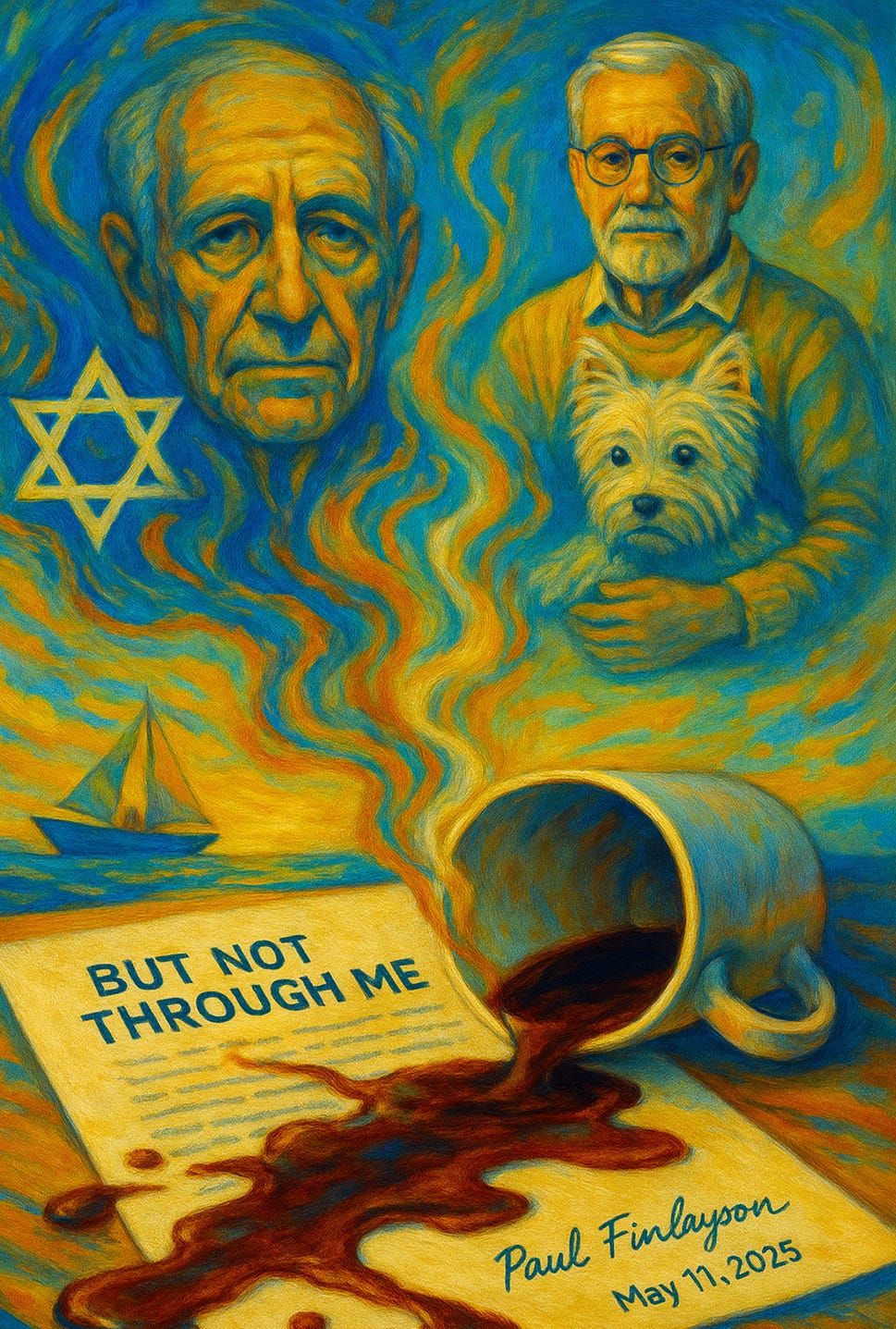
When I was summoned to what would become my suspension meeting, I assumed—naively, absurdly—that it was finally about that letter.
I had recently lost my father, and I had written to suggest something almost embarrassingly modest: that perhaps a university like my University of Guelph-Humber might consider a bereavement program for staff navigating grief. One imagines, in a civilized institution, some combination of compassion, acknowledgement, or at the very least the sterile indifference of bureaucracy.
Instead, the university’s answer to grief was not sympathy.
It was a Human Rights Complaint.
Against me.
I had committed the offence of calling Hamas Nazis while speaking to a stranger in Pakistan who was enthusiastically advocating for the death of Israelis. Apparently, identifying a genocidal movement with obvious genocidal tendencies had become a species of heresy.
As it happened, an Islamist professor, Wael Ramadan, at my university was among my colleagues, and the fellow in Pakistan had somehow connected with him, or perhaps they met at the first international Muslim Brotherhood-sponsored or imitated “Let’s get all pro-Israel academic voices fired” conference. Ah, yes, the wonder of Zoom.
Looking back, I remember Ramadan’s permanently thunderous expression as he hauled himself up the central atrium staircase—a man seemingly engaged in perpetual combat with gravity itself. He never looked up. Never greeted anyone. Never acknowledged another human being with so much as a nod of recognition.
Few people seemed aware of his existence. It later emerged, however, that he enjoyed the friendship of our equally obscure and widely disliked Vice Provost.
And suddenly, these previously unnoticed figures discovered a grand moral mission.
Calling Hamas Nazis—an historically defensible observation if words retain any meaning at all—was transformed, through the fevered alchemy of Professor Wael Ramadan and Vice Provost Ariemma, into an alleged offence against all Muslims.
Not some Muslims.
Not specific Muslims.
All Muslims.
One imagines the announcement delivered with all the solemnity of Moses descending Sinai.
“Finlayson must be fired!”
This cry, I later learned, echoed through staff, faculty, obedient functionaries in Human Resources, and whatever collection of sycophants and institutional toadies happened to be standing nearby.
So that was the university’s response to my mourning.
Not condolences. Not support.
A grievance wrapped in legal language and delivered as punishment.
There is something uniquely bleak about institutions populated by people so spiritually exhausted that they mistake cruelty for policy, vindictiveness for virtue, and persecution for administrative excellence.
I was and remain stunned by their callousness. They wear it like armour and parade it like competence. But this is what they call ‘strength’? In truth, it is their prison sentence.
To be immune to grief is to be cut off from everything that makes endurance noble. Their scaly imperviousness isn’t power—it’s petrification—a kind of emotional leprosy.
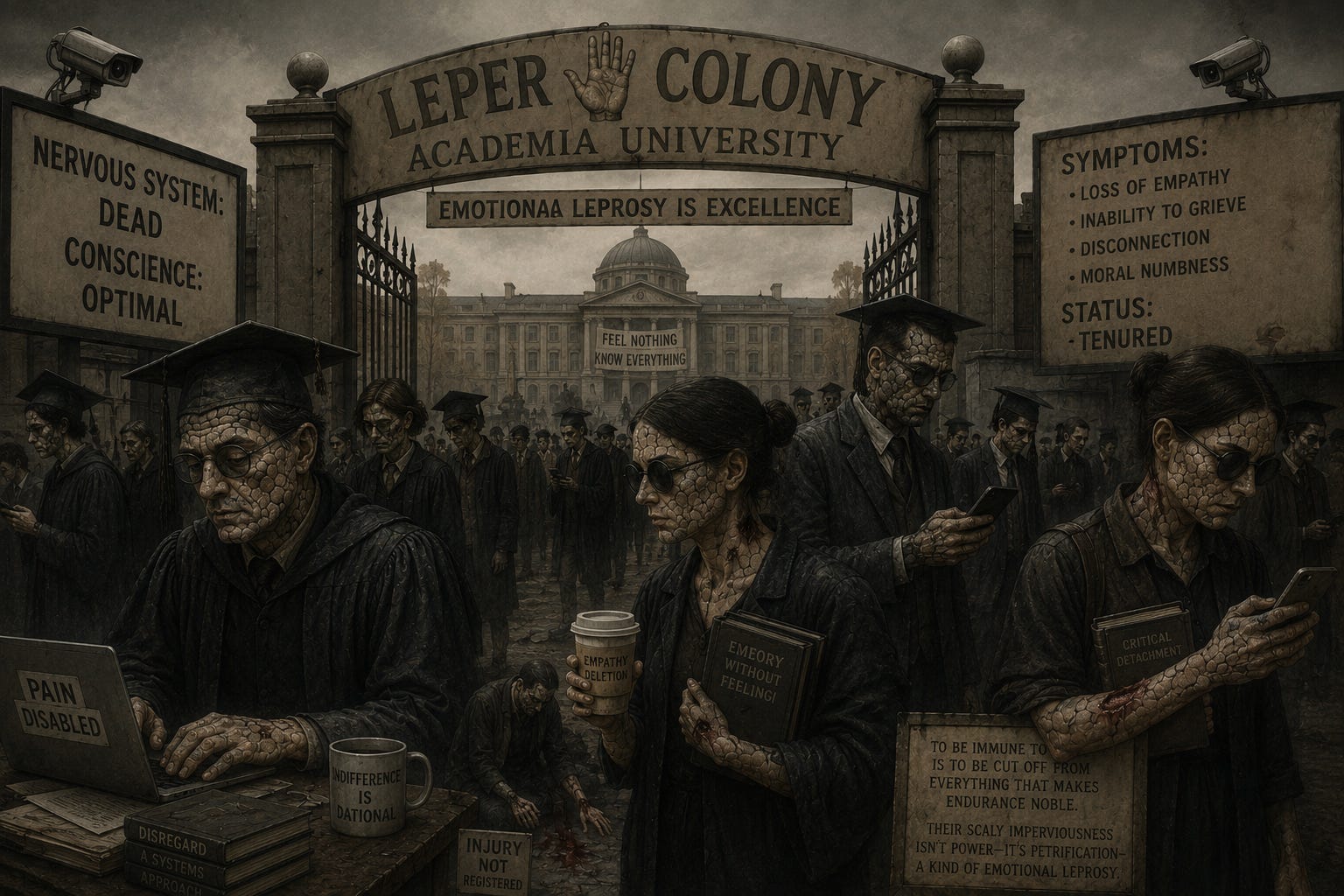
I would rather hurt and be cracked open by love and memory than walk the halls of authority like one of those consciousness-stripped reptiles, immune to everything but self-preservation.
They survive. I live. There’s a difference.
My father, Hank Finlayson, left me with a grief that still ambushes me in the sleepless dark and a truth that burns brighter than ever: stand for what’s right, no matter who stands with you.
He was the only one who would have stood by me as I faced a university’s million-dollar smear campaign, multiple lawyers’ many and mutating threats. Like me, Dad, an old mathematician, would have shaken his head at a bureaucracy that twists justice into a grotesque performance.
This fight—against lies, against antisemitism, against the moral rot of institutions—is for him. Because he lives in every word I write, in every lie I refuse to let pass through me.
The University of Guelph-Humber, armed with taxpayer funds and a vendetta, branded me a safety risk for calling Hamas Nazis and recently again for a lawful post quoting Shakespeare’s “kill all the lawyers” from Henry VI—a line any first-year English student would recognize as satire.
Meanwhile, a professor with over 4,000 social media posts—many brimming with conspiratorial bile and coded antisemitism, all in breach of university policy and the Ontario Human Rights Code—faces no consequence. Just silence. Sanctified silence. While I, for a single post responding to an open call for the eradication of a democratic nation, am branded dangerous.
I will attach only four of Ramadan’s posts, all apparently deemed acceptable by Humber College and by the senior partner in the Guelph–Humber relationship: the University of Guelph and its Human Rights department and the sprawling bureaucratic labyrinth surrounding it—a world populated by an ever-expanding species of grievance-fed administrative titles that seem to reproduce by mitosis.
One encounters them everywhere: Equity Advisor, Inclusion Facilitator, Human Rights Associate, Strategic Wellness Coordinator, Diversity Engagement Specialist, and a thousand other designations seemingly generated by a committee armed with a thesaurus and a government grant application.
Their occupational tragedy is that whenever they introduce themselves, they must immediately explain what they do, because the natural reaction of any sane person is: What exactly is it that you do?
My favourite was the subconscious bias detection specialist.
I know that, as teachers, it is sometimes cruelly said that we can do nothing else. Administrators improve upon the formula: they can do nothing else and cannot teach either. Venture deeper into the bureaucratic jungle and one discovers entire ecosystems of human-rights advocates, equity counsellors, inclusion consultants, strategic facilitators, and coordinators of things so obscure that even they appear uncertain what their own titles signify.
These are figures who drift silently from email chain to email chain, materialize briefly in Zoom windows wearing expressions of immense administrative gravity, contribute phrases such as “holding space,” “creating dialogue,” or “moving forward collaboratively,” and then disappear once more into the institutional fog from which they emerged.
One gradually comes to suspect that the Reply All button may, in fact, be the central engine of one's professional existence—the hidden turbine driving the entire administrative machine. Remove Reply All from Gmail, and one suspects entire departments would collapse overnight into an existential crisis, staring into the abyss and asking the first genuinely productive question of their careers: What exactly is it that we do here?
And of course, they all work from home.
One of the minor miracles of the post-COVID age was watching people who had somehow survived years—sometimes decades—of physically attending the university suddenly discover conditions of such exquisite fragility that crossing the campus threshold had become impossible. There always seemed to be some solemn explanation: an immunocompromised relative, a visiting grandmother, a note from a physician declaring that, under no circumstances, they could safely return to the very workplace they had inhabited for years without incident.
The phenomenon spread with biblical efficiency.
Floors emptied. Hallways fell silent. Offices became archaeological sites—desks abandoned like the ruins of a vanished civilization. And one was left confronting a question that grew more unsettling the longer one considered it:
If entire departments can disappear for years and nobody can quite determine what changed, what exactly had they been doing in the first place?
And this great managerial overgrowth—this bottom-heavy architecture of procedural self-importance—stood watching while material that required no interpretation whatsoever sat in plain view.
There were posts accusing Jews collectively of monstrous crimes, portraying Jews as subhuman, circulating grotesque historical distortions, and advancing rhetoric that openly admired or romanticized the very ideology that sought the extermination of European Jewry.
No decoding apparatus was required. No hermeneutics department needed to be assembled. No panel of experts had to gather beneath fluorescent lights to determine whether words meant what they plainly said. Screenshots have a stubborn habit of preserving reality.
Yet the institutional response was a masterpiece of selective paralysis.
The great irony was almost comic. I had apparently wandered into unforgivable territory by insulting a designated terrorist organization. On that question, the engines of administrative outrage roared to life instantly. Emergency lights flashed. Committees stirred from hibernation. Human Rights officials and managerial custodians of public virtue emerged in solemn procession.
But when confronted with material containing explicit anti-Jewish hatred and historical absurdities so grotesque that they seemed less like political arguments than messages scribbled on asylum walls, an extraordinary calm descended over the institution.
Suddenly, there was no urgency.
No investigation.
No panic.
No demand for immediate action.
The lesson being taught was difficult to miss. Hatred itself was not the problem. Evidently, the decisive question was far simpler:
Who was being hated?
Because insulting Hamas, I discovered, required immediate intervention. That, apparently, was where the moral red line had been drawn.
But strangely, three times in a row, complaints based upon these vile images—and hundreds worse—vanished into the bureaucratic fog of the institution, disappearing with the efficiency of socks entering a washing machine.
The organization itself was permanently wound tight, as if existing in a state of institutional anxiety were its principal mission. There were protocols for protocols, sensitivities concerning sensitivities, and committees devoted to ensuring that other committees were adequately aware of emerging concerns.
Somewhere, at every moment of every day, someone was clutching pearls over a newly discovered emergency of language, etiquette, terminology, or emotional meteorology.
The words most capable of summoning administrators into immediate action were never: “I spent four years here and learned nothing.” That sort of thing might provoke a thoughtful nod and a promise to revisit the issue sometime around 2037.
No, the true administrative air-raid siren was: “I felt emotionally unsafe.”
Those words could part seas, move mountains, empty calendars, convene emergency meetings, summon strategic facilitators from the depths of Gmail, and generate enough reply-all emails to briefly threaten the stability of the university server itself.
One remembers the COVID years, when universities transformed themselves into laboratories of bureaucratic theatre. Students sat examinations under the watchful gaze of remote software, apparently designed by people who regarded ordinary human conduct as suspicious.
Predictably, technological glitches emerged, confusion followed, and immediately the institutional machine burst into life. Meetings were held. Someone triggered an alarm on a virtual exam because they bent down to pet the dog; someone turned off the lights, and if they wore black, were dark-skinned, or used too much Coppertone, they became invisible.
Cue the Human Rights air raid siren.
Consultations were organized. Statements drafted. Strategic discussions convened. A problem once solved by calling a technician now requires a procession of administrators moving with the solemn urgency of cardinals selecting a Pope.
Because bureaucracies adore this sort of thing. A practical problem solved in ten minutes is an administrative famine. But a practical problem elevated into a moral crisis? Ah, now entire ecosystems can feed for months. I remember when it took six human rights managers to figure out how to keep paying me when I changed my banking information. Everything was drama.
Except here. For on this subject, a remarkable relaxation descended.
Jews, I discovered—or those foolish enough to support them—occupied a curious category all their own. It was permanently open season. Not merely hunting season, but the sort of hunting season where one needn’t trouble oneself with permits, licenses, designated zones, or bag limits.
One could apparently take aim anywhere, at any time, and in any quantity.
The game wardens had gone home. The regulations had been suspended. The moral authorities who ordinarily patrolled the campus with the vigilance of airport security suddenly developed the serene indifference of park attendants feeding ducks.
Nothing to see here.
Move along.
Why would a human rights department ignore or be ignorant of the human rights code? The issue is that, without being insensitive, it's not in their job description; it’s in their department title. It’s like a marketing department going, “What’s this market thing?”
The administration’s posture? That in Canada, you can still triumph by weaponizing antisemitism, legal muscle, and the slavish loyalty of institutions to ideologies they dare not question. That this grotesque inversion of morality is now institutional doctrine at not one, but two post-secondary institutions should stun the conscience, but the real scandal is that it doesn’t.
Let us name the depravity. Imagine, if you will, a university president and tenured professor publicly defending slavery. Imagine them praising a Klan-like organization with a body count in the thousands. It would be unthinkable—and rightly so.
Yet swap the victims, substitute the targets, and suddenly we are told to debate. To understand. To be sensitive to context. The Human Rights Department, barefaced in its complicity, shields not the victims of hate but the perpetrators of it.
Are Jews born with a “kick me” sign on them?
And I found out that many law firms, like Sherrard Kuzz and Lerners LLP, in their polished indifference, lend their talents to laundering the reputations of bigots while suing those who speak out. And filthy lucre is all that drives them. Any principle has been destroyed by cynicism.
This isn’t justice. It is the Dreyfus Affair updated for the digital age: the same moral panic, the same reputational contagion, merely fitted with LinkedIn profiles, HR departments, and cleaner typography. The costumes have changed. The machinery has not.
One suspects that history is read in certain quarters only as airline passengers read the safety card: glanced at briefly, ignored completely, and consulted only after the aircraft has already burst into flames.
George Santayana famously warned that those who cannot remember the past are condemned to repeat it. Admirable sentiment. Polite sentiment. Civilized sentiment.
But perhaps he granted mankind too much dignity. We do not merely repeat history. We roll in it. We collapse into it like delighted pigs discovering a fresh trough, snorting with satisfaction while covering ourselves in all the steaming and familiar refuse of our own recurring stupidity.
The old sewage simply arrives under new management.
The University of Guelph and Humber College lack the power of the École Militaire to send me to Devil’s Island, but I don’t think it’s because of their lack of enthusiasm.
They have the same instincts, just less reach. To praise a society simply because it lacks the teeth to complete its vendetta is like applauding a snake for not striking after it coils.
And as in Dreyfus’ France, the guilty will remain protected. The university’s own Esterhazys will keep their desks, titles, and pensions—and the media, like Zola's enemies, will avert their gaze.
How far have we come? A hundred and thirty years later, the whisper campaign, the official slander, the institutional grovelling before prejudice masquerading as principle. The paperwork may be digital, the lawyers may charge more, but the machinery—moral machinery—is unchanged.
This isn’t justice; it’s institutional sadism with a benefits package. The university has spent hundreds of thousands, ultimately well over a million, on legal fees and salary replacements, to invent a cause to fire me. And the lawyer from one of the law firms they’ve brought on now scours my Substack for reasons to sue, claiming my words make me dangerous.
If she wants to read, she can pay the $8.35 subscription like everyone else. Student tuition shouldn’t subsidize her vendetta.
The irony is surgical. At Humber’s Human Rights office—where one might naively expect reason to pop in for tea—justice is flipped with the kind of gymnastic contortion that would make Orwell drop his pen and pour a stiff drink. They hired a “neutral” investigator, which in academic HR-speak means someone who arrives pre-convinced and invoice-ready.
Far from a fact-finder, she functioned more like a court-appointed psychic—channelling the unspoken desires of management and producing conclusions with all the credibility of a horoscope typed on university letterhead. No employee in Canlii’s entire archive has ever been reinstated directly after a so-called “favourable” external investigation. I’m not even convinced those exist. Such investigations are just ceremonial baptisms for management’s desired outcome. Rubber stamps with billable hours.
The goal isn’t justice—it’s to fabricate just enough procedural sludge so that bureaucrats can fling missives in court like spaghetti, hoping something sticks. These aren’t legal arguments—they’re the bureaucratic equivalent of a Labrador’s tail thumping against the kitchen counter as kibble’s poured: loud, aimless, and entirely self-serving.
The number of reinstatements after these “academic investigations”? It makes China’s conviction rate look admirably restrained—there is nothing in the databases.
Maybe, just maybe, some forklift operator at the University of Manitoba got his job back after tipping over a vending machine in a hypoglycaemic fugue. But even he probably had to sign a loyalty oath to HR’s preferred font size.
The rest? They were ceremonially marched off the premises, their reports in hand, while HR personnel lit candles and praised the fairness of the process. It’s not justice—it’s administrative euthanasia with paperwork and a fruit tray.
This process isn’t a path to truth; it’s a theatre of exoneration for power and damnation for dissent. For me, they had the gall to call it a “fulsome opportunity” for justice—spelling “fulsome” wrong, naturally.
I’ll never understand these in-house lawyers or the “how many hours can we bill this university” external counsel trough feeders.
Do they know they’re lying, or have they marinated so long in institutional self-righteousness that they’ve mistaken deceit for virtue? Either way, you can’t reason with them—because reason requires a pulse. I’ve given up debating mannequins in lanyards who call it justice when the right person bleeds.
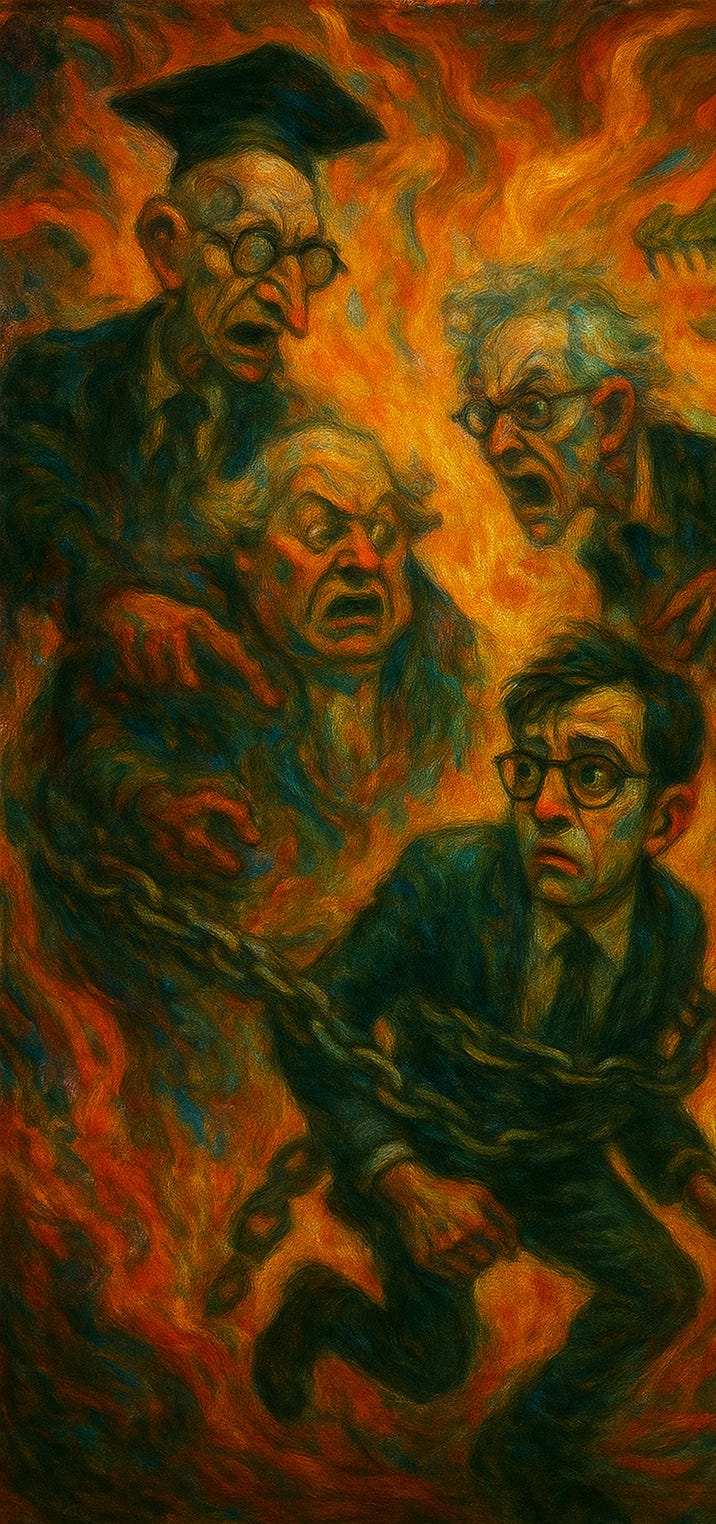
If Dante were updating Inferno today, he’d need an entire mezzanine level between the Eighth Circle (fraud) and Ninth (treachery), exclusively for HR consultants, equity deans, and in-house counsel.
They’d be chained to ergonomic chairs, condemned to give TED Talks on procedural fairness while being waterboarded with their nondisclosure agreements.
This betrayal isn’t just personal; it’s a symptom of a deeper rot. The same sanctimonious hypocrites who wear equity badges scapegoat Jews for the world’s discontents, proclaiming they can hate Israel without touching its people.
What astonishing arrogance—to trample the reputations and rights of a community while congratulating themselves on their virtue. This isn’t political folly; it’s moral decay, dressed in rainbow pins and tenure tracks. They’ve domesticated the lie, taught it tricks, and given it a corner office.
I once hoped for allies. The Centre for Israel and Jewish Affairs (CIJA), a Canadian advocacy group and CAUR, my faculty association, seemed the best, but their doors were only ever open more than a crack.
Kind Jewish gentlemen quoted Liverpool’s anthem, “You’ll Never Walk Alone,” over breakfast, but their solidarity was, I guess, more rhetorical.
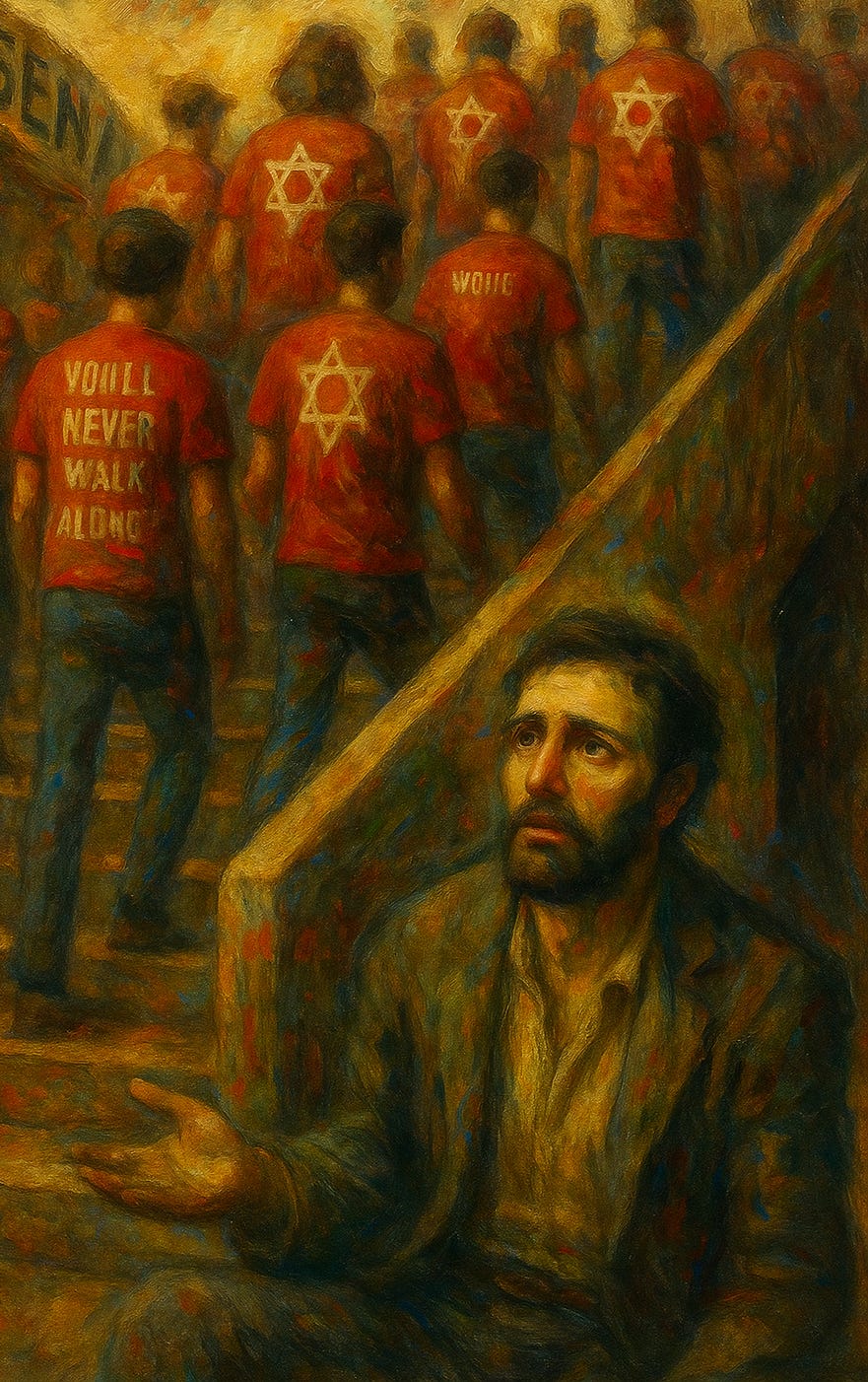
Lawyers promised help, but pro bono is just Latin for pro publicity. If they don’t read a document or learn a fact, they’re not allies—they’re tourists. I’ve learned the hard way: kind words aren’t action.
So I walk alone, not out of cynicism but out of clarity.
I’m not fighting for the Jewish community, though I appreciate the kindness of strangers. I’m fighting because opposing antisemitism is right. After all, truth is worth defending, even when it’s solitary.
I’m fighting for my father, who died three years ago, a loss still raw enough to choke me. Hank Finlayson was my rock; he would have stood by me when no one else did—not family, friends, or institutions.
He taught me that truth isn’t a negotiation; it’s not subject to HR memos or rebranded as “discomfort.”
Lies don’t get a free pass just because they wear suits or titles or invoice their cruelty in six-minute increments. Every step I take through this bureaucratic labyrinth—every word, every refusal—is how he lives on.
Like the Russians say, as long as we carry them in our hearts, they are not dead. He lives in my defiance, in the part of me that will not grovel, will not submit, and would rather burn than bow.
The tears I shed aren’t for my career, shredded by a bureaucracy that mistakes dissent for danger. They’re still just garden-variety grief.
But I think of dad often; he, back on the Russians, lives in my heart, and I will not let him be forgotten.
I am glad that he didn’t have to share all this pain in this journey, because I know I couldn’t have kept it from him, and he would have listened. Just a prairie boy with a strength and dignity that did not stoop with age. He would have seen through the lies and called them out, but he would have moved more quickly to the Christian faith and resignation than I have.
I don’t believe this fight is winnable, not in a system where justice is a morality play staged by HR. But I don’t need to win to honour him. I just need to stand my ground and never be broken.
I’m writing a book, “But Not Through Me,” after Solzhenitsyn’s cry against complicity. It will be on this saga and include relevant essays on Israel and Judaism.
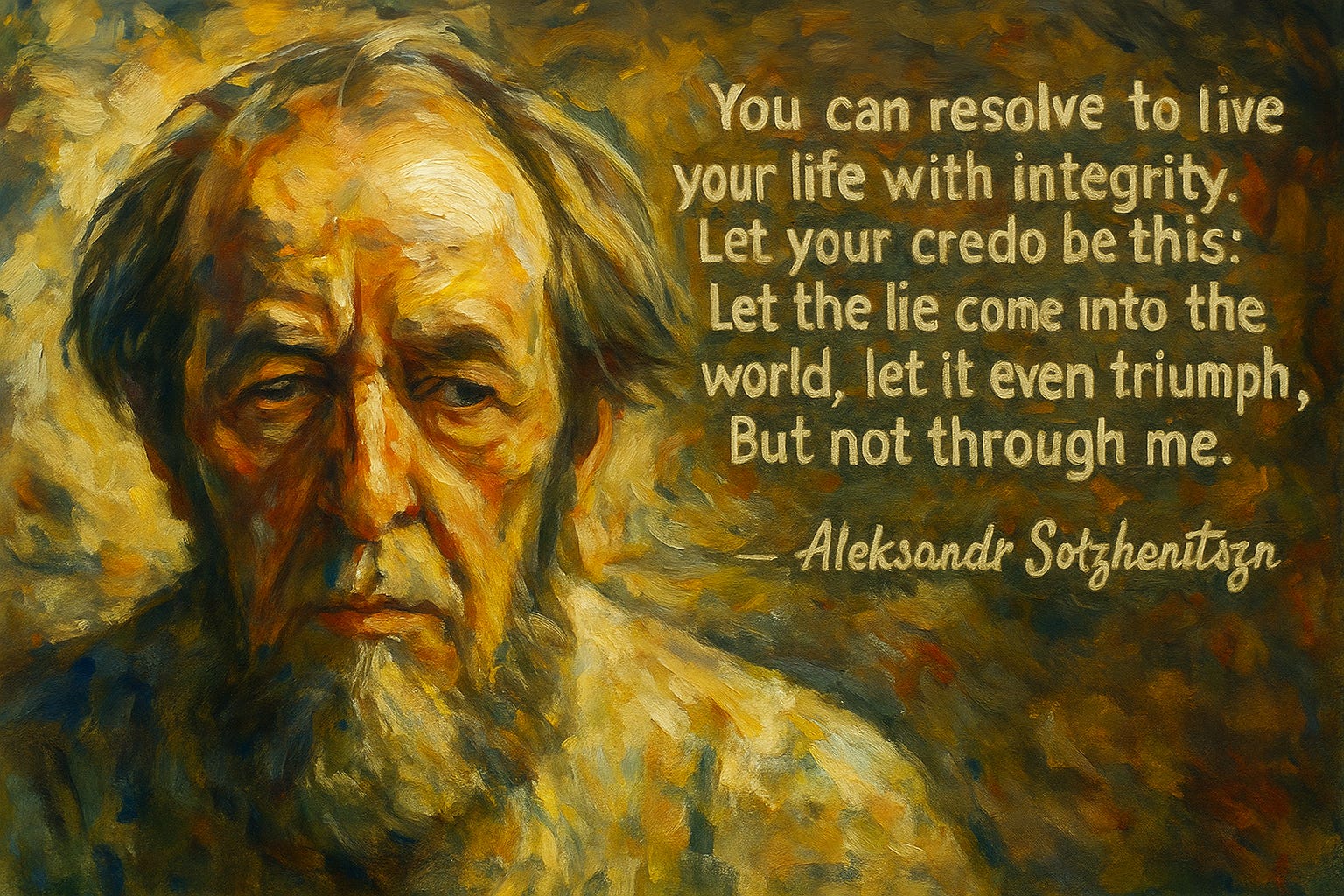
It’s dedicated to my father, a testament to his lessons and his resolve.
The university, the lawyers, the sanctimonious liars can buzz like flies, but they won’t silence me.
Perhaps their legal foot soldiers will read it and fling more sanctimonious feces from behind a paywall—strutting their disdain for free speech and sneering at my Charter rights like robed inquisitors mistaking Substack for sedition.
But I’m not here to win their approval. I’m here to sterilize. To disinfect. To drag their rot into the sunlight and make damn sure their lies don’t pass through me.
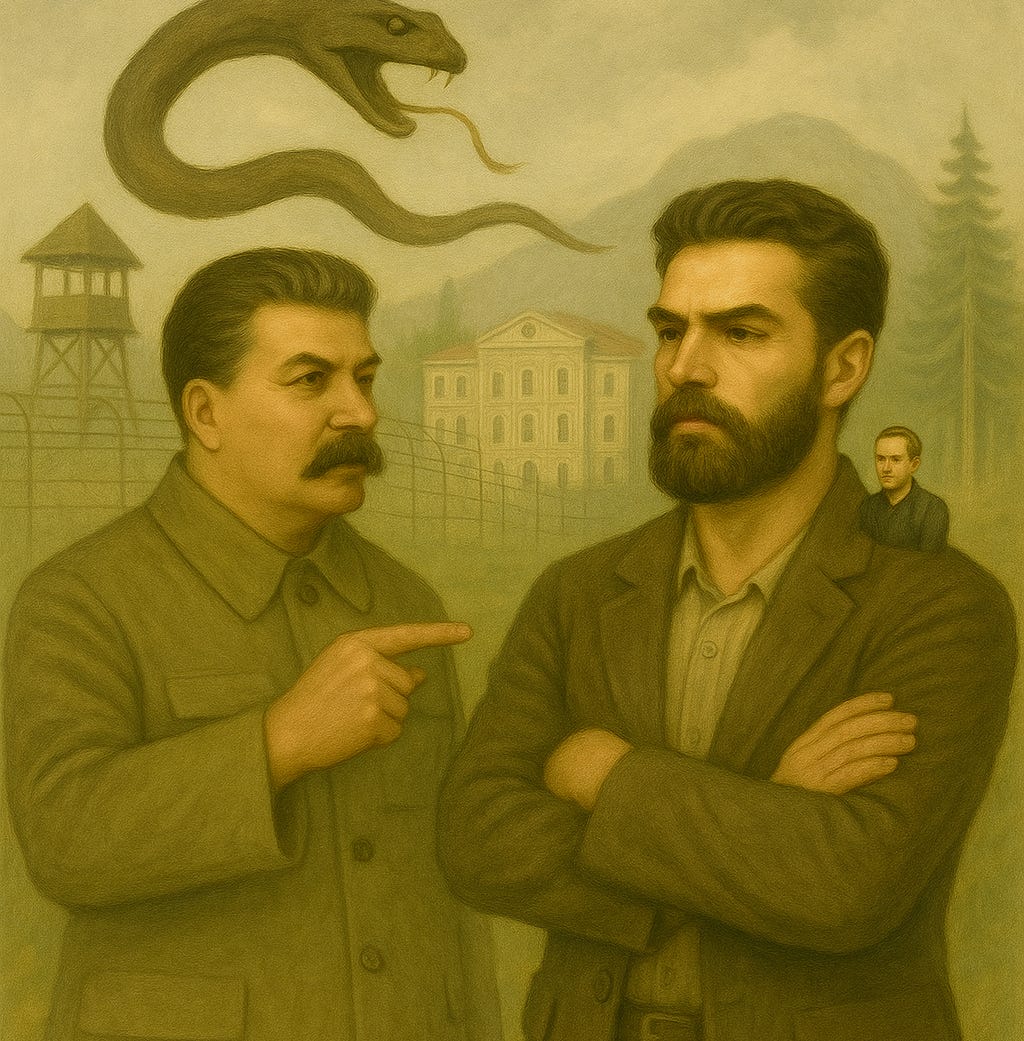
Hank Finlayson lives in every page I write, in every truth I defend. This is his legacy, and it’s mine. When this torturous affair is over, and one day it will end, I will book a flight to Calgary, rent a car, and once again travel to the cemetery in Vulcan, AB and go to his grave.
I walk alone now, but I walk for him.
I like the title. My dad always liked the Russian novelists, too.


“Let the lie come into the world, even let it triumph. But not through me.” — Aleksandr Solzhenitsyn
Paul Finlayson
May 11, 2025
Grandpa with the grandkids. The kids are grown up now.
__________________________________________________________________
The pictures below are four random, but verified posts by Wael Ramadan. All were analyzed to see if they were violations of Humber College's Human Rights policy, the HRTO (Human Rights Tribunal of Ontario - it supercedes any college/university HR standards), IHRA - international standard on anti-semitism, criminal standard, Hate Propaganda, Criminal Code 318-320) Violation.
All posts were deemed in violation of all standards used. But sorry Jews, the University doesn’t care about you.

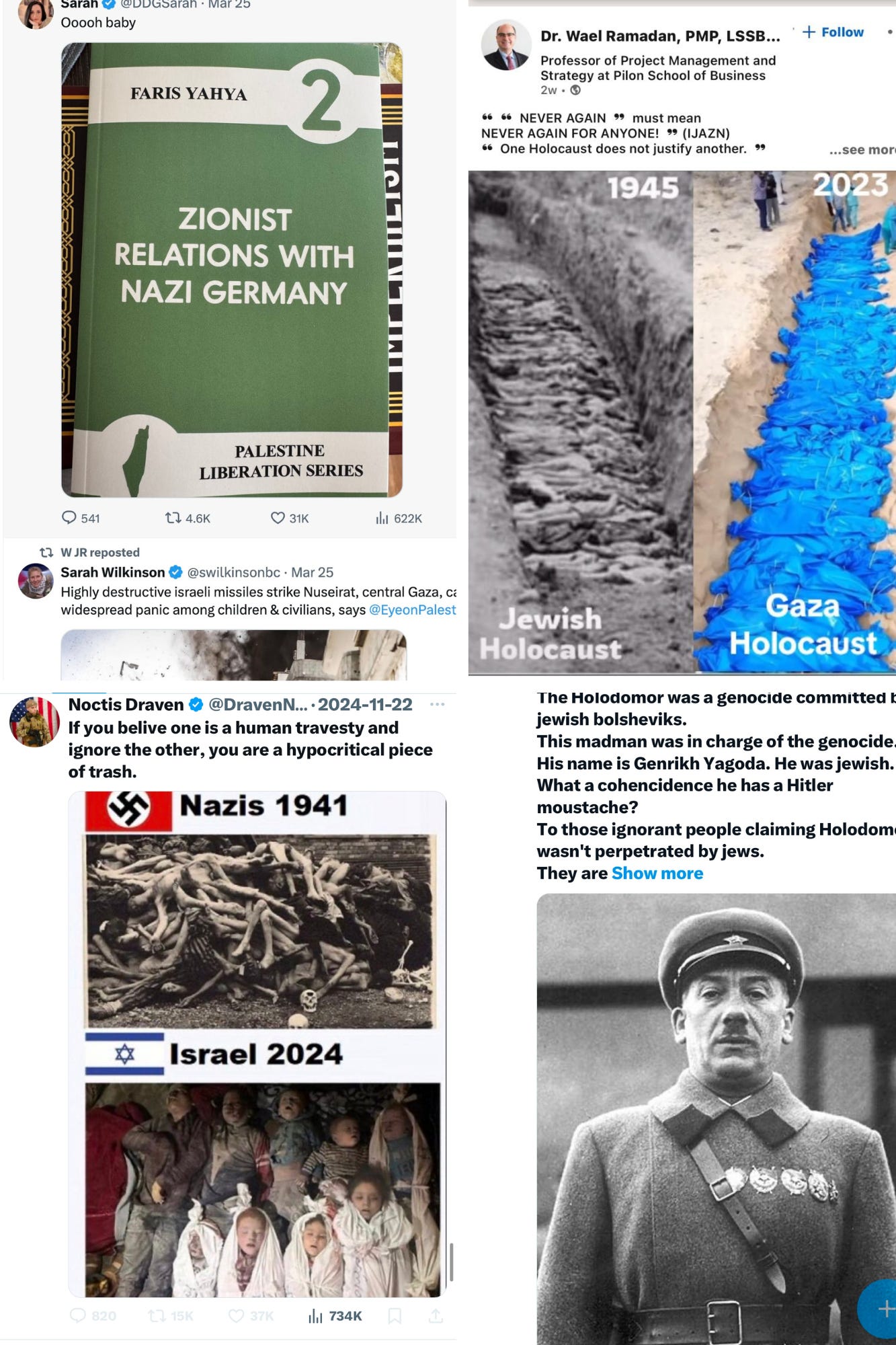
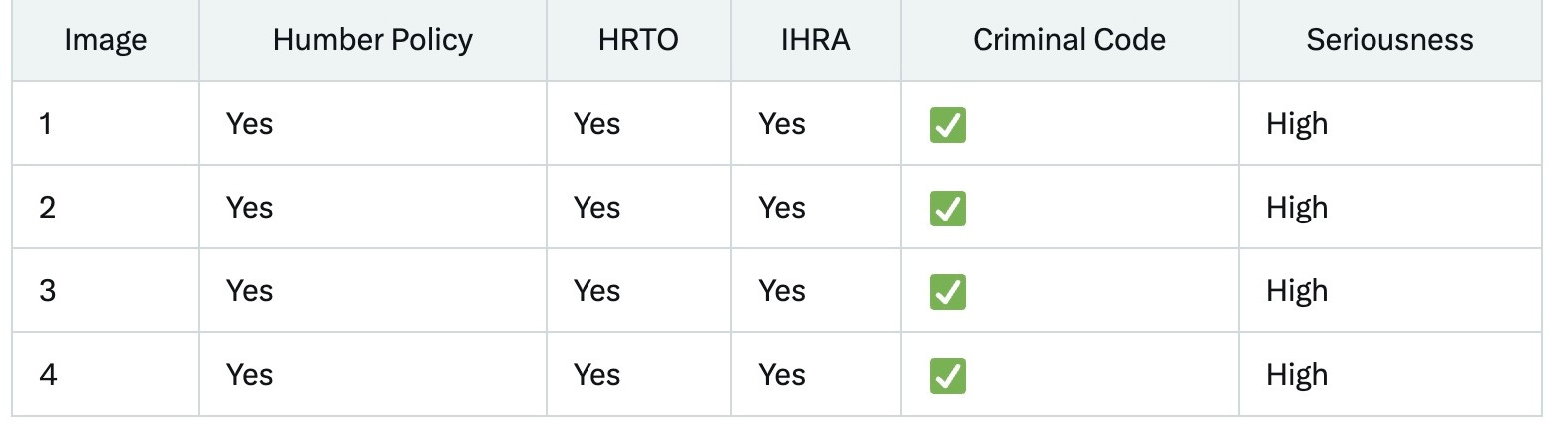
Overall Seriousness
The violations are serious, especially given the pattern of 4,000 posts and dismissed complaints, suggesting systemic issues at Humber College, the University of Guelph, and Sheridan College.
Comparison with Paul Finlayson
Finlayson faced suspension and impending termination for one post supporting Israel, while @waelramadan1948 faces no action despite multiple complaints. With allegations of bias involving Vice Provost Melanie Spence-Ariemma, this disparity raises concerns about fairness and observes a startling dismissiveness to a society that should and must demand procedural fairness.
Please don’t quit. I am a subscriber. How can I contribute? You are not alone.
Larry Birch
Smiths Falls, Ontario
Your father would be so proud of you! What a wonderful man he raised.
Have you considered applying to Hillsdale College, UATX, University of Florida or other institutions of higher learning that have abandoned dogma and encouraged viewpoint diversity?