


Why Christianity Cannot Explain Itself Without Jews—and Has Never Quite Forgiven Them for It
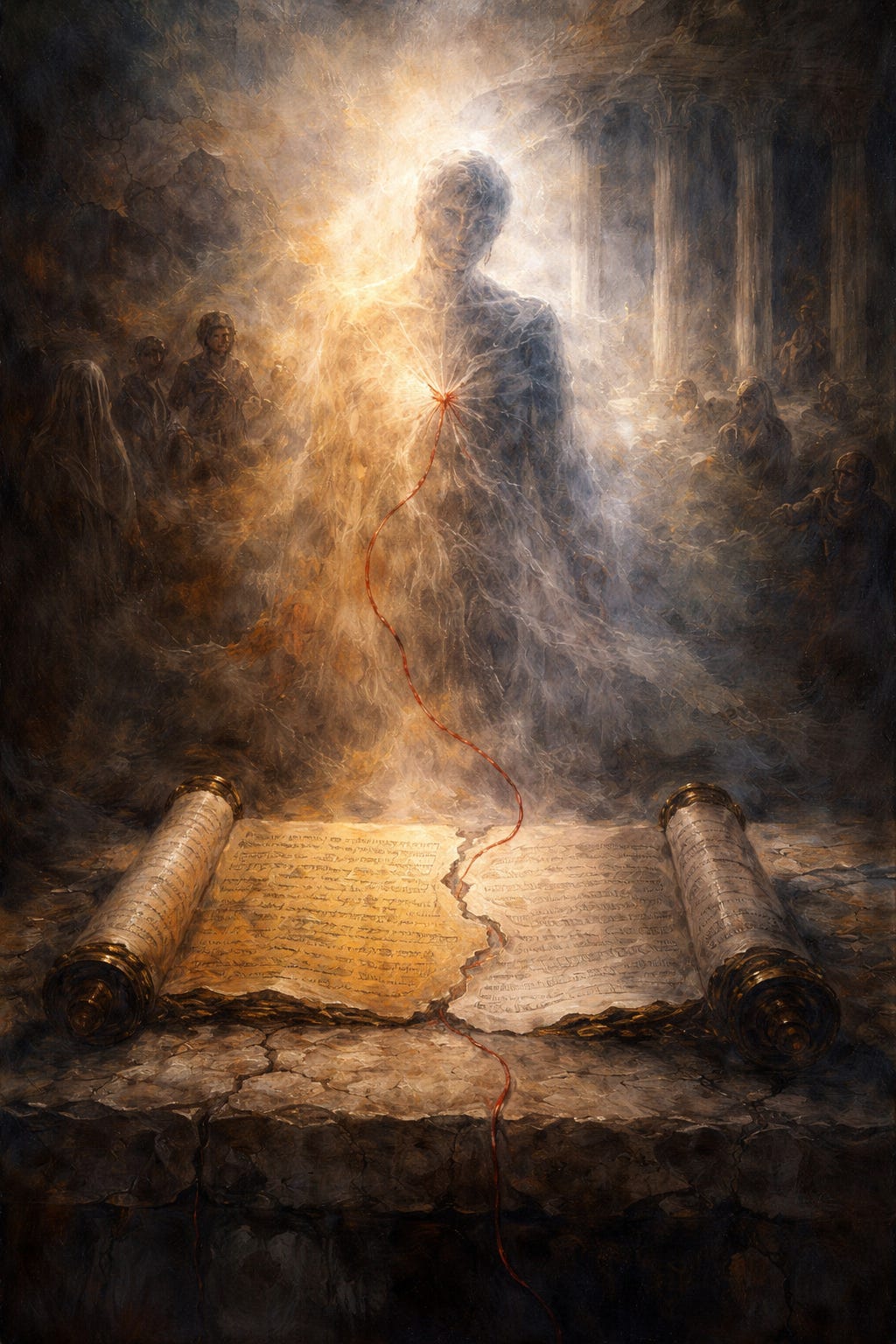
This is not a skirmish over a contemporary controversy or a narrow political grievance. It is an attempt to confront—without euphemism, nostalgia, or moral evasion—a relationship that spans two millennia and has left an immense moral wreckage in its wake: the relationship between Christians and Jews.
That history is fractured, tormented, and saturated with blood. It is also routinely lied about—by Christians eager to distance themselves from it, and by secular observers who flatten it into slogans. I am not interested in either indulgence. Nor am I interested in adjudicating the theological question of whether Jesus was or was not the Messiah. This essay is not a conversion tract, nor is it a refutation.
It is an inquiry directed primarily to Jews, written by a Christian, asking a hard question: is there a special relationship between Christians and Jews—and if so, why have Christians so catastrophically failed it?
Judaism is not merely a religion. It is a people, a civilization, a lineage transmitted—offensively, inconveniently, and delightfully to modern ideological sensibilities—through the maternal line. One is Jewish because one’s mother is Jewish. Full stop. No baptismal certificate, no self-identification ritual, no ideological declaration required. If Jews had invented this rule last week, it would be denounced as essentialist, exclusionary, biologically deterministic, and catastrophically unwoke. The irony, of course, is that this very rule is one of the reasons Jews still exist at all.
Christianity, by contrast, is not an ethnicity. It is a confession. A set of metaphysical claims about history, salvation, and truth. You are not a Christian because your parents were, because water touched your forehead as an infant, or because a census form offered the option. You are a Christian—if the term is to retain any meaning at all—because you assent to the teachings of Jesus and attempt, however imperfectly, to live by them. This distinction matters. Much of the catastrophe between Christians and Jews begins with Christians refusing to understand it.
Jesus was a Jew. His disciples were Jews. The Gospel writers were Jews. They lived as Jews, worshipped as Jews, and died as Jews. Some continued to observe Jewish law; others debated its necessity. Christianity did not begin as a Gentile civilization rejecting Judaism. It emerged from within Jewish argument, Jewish scripture, Jewish moral grammar. To put it plainly: without Jews, there is no Christianity.
And yet Christianity’s historical treatment of Jews stands as one of the most grotesque moral failures in recorded history.
Before addressing the violence, one must deal with the lie that justified it.
The accusation that Jews are “Christ-killers” is one of the most durable falsehoods in Western history. It is also one of the most theologically illiterate.
On Christian terms alone, it collapses immediately. Christianity teaches that the crucifixion was not an accident, not a political mishap, and not a judicial error that thwarted God’s plan. It was the plan. Without the crucifixion, there is no atonement, no resurrection theology, no salvation narrative, no Christianity.
The New Testament is explicit on this point. Jesus predicts his death repeatedly. He submits to it willingly. The Gospel of John records him saying, “No one takes my life from me; I lay it down of my own accord.” Paul, the Pharisee of Pharisees, frames the crucifixion as a cosmic necessity, not a crime scene.
If Jews had accepted Jesus unanimously, if there had been no trial, no Roman execution, Christianity would have ended as a small Jewish sect arguing over messianic interpretation. The cross is not an embarrassment in Christian theology. It is the centrepiece.
So why did the “Christ-killer” charge survive?
Because it was never really about theology.
It was about power.
The earliest Christian disputes were intra-Jewish arguments. Harsh rhetoric in the Gospels reflects sectarian conflict, not racial hatred. But once Christianity became a Gentile religion and then an imperial one—after Constantine—the argument mutated. What had been a family dispute became civilizational scapegoating.
Christianity needed Jews to be wrong, but not gone.
Under Emperor Constantine—and systematised most clearly by Augustine—Christianity did something both politically convenient and theologically grotesque. It decided that Jews must be preserved, but diminished: alive as evidence of Christian supersession, yet denied dignity, success, or full civic participation. Christianity needed Jews to be wrong, but not gone. A vanished Judaism would have undermined Christianity’s claim to fulfilment; a flourishing one would have threatened it. So the hand was placed on the scale. Legal disabilities, economic restrictions, enforced marginality—all justified as divine pedagogy.
The Church, having allied itself with imperial power, quietly adopted a metric that would have baffled Jesus: that worldly success signalled theological truth.
This was not merely cruel; it was profoundly un-Christian. The Gospels do not teach that wealth, dominance, or political victory confer spiritual legitimacy—quite the opposite. And yet Christianity, once enthroned, measured itself against Judaism not by faithfulness to scripture, but by comparative triumph. Jews were not crushed because that would have violated conscience; they were held down because their survival, visibly diminished, served doctrine. It was a solution as cynical as it was unscriptural—and it metastasised for centuries.
This produced what later theologians called the “witness doctrine”: Jews were to be preserved in a degraded condition as living proof that Christianity had superseded Judaism. Augustine articulated this explicitly. Jews were not to be exterminated—but neither were they to flourish. Their humiliation became theological evidence.
This framework justified centuries of legal disabilities, ghettos, occupational restrictions, forced conversions, and ritualised contempt—all without requiring Christians to believe themselves immoral.
Some of Christianity’s greatest theologians built the architecture of this hatred.
John Chrysostom preached sermons in the fourth century that read like instruction manuals for pogroms. He called synagogues “brothels,” accused Jews of ritual depravity, and urged Christians to hate them actively. These were not fringe pamphlets. They were sermons preached from pulpits.
Augustine was more restrained, but his logic became policy.
Medieval Christianity inherited these assumptions without serious challenge.
Then came Martin Luther.
Luther was right about many things. He accurately diagnosed the corruption in the Catholic Church and sparked the Reformation. But when it came to Jews, he would have fit comfortably into the Ku Klux Klan. His later writings—On the Jews and Their Lies—advocated synagogue burning, confiscation of Jewish texts, expulsion, and stripping Jews of legal protection. His priestly cassock was already doing a bit of “white sheeting” of its own.
This matters. Because antisemitism was not a fringe deviation within Christianity. It was taught by its giants.

Christians often evade this by saying, “Those weren’t real Christians.” The argument is familiar—and weak. It resembles nothing so much as the Marxist insistence that Venezuela or North Korea weren’t “real socialism.”
I remember at the University of Minnesota as a 22-year-old grad student speaking with the lunatic socialist who forever paced through the campus; socialism, Marxism, communism, all never implemented properly.
At some point, when hatred is preached, institutionalised, and defended over centuries by official authorities, one must admit the problem is not a few bad apples. There was rot in the barrel.
Part II runs tomorrow, you’ll never guess the ending. Actually, you will.
If you value this work, consider leaving a tip. It’s cheaper than therapy, less pious than public broadcasting, and the only censorship here is my bad taste. On second thought, it’s bad therapy.
Freedom to Offend is a reader-supported publication. To receive new posts and support my work, consider becoming a free or paid subscriber.
Excellent post. We were discussing this just yesterday. You illuminate it even more clearly.
This is utterly fascinating: "Luther was right about many things. He accurately diagnosed the corruption in the Catholic Church and sparked the Reformation. But when it came to Jews, he would have fit comfortably into the Ku Klux Klan. His later writings—On the Jews and Their Lies—advocated synagogue burning, confiscation of Jewish texts, expulsion, and stripping Jews of legal protection. His priestly cassock was already doing a bit of 'white sheeting' of its own."
The cherished icons or figures of any old religion does not translate well to our more enlightened age.