One of the more unsettling features of modern civilisation is not that we disagree — disagreement is the native condition of any free society — but that we increasingly disagree in ways suggesting the argument itself is no longer the point. Something else has taken its place. Call it posture. Call it performance. Call it moral theatre.
The more precise word is bad faith.
Not the everyday hypocrisy that has trailed humanity since the first quarrel, but something colder and more organised: a cultural condition in which conclusions are reached before inquiries begin, reputations are weighed before evidence is heard, and language is deployed less to illuminate reality than to control it.
We inhabit the most information-saturated era in human history, yet public discourse now resembles a courtroom in which the verdict is delivered before the witnesses are sworn.
Lewis Carroll saw this instinct long before the algorithm. In Alice’s Adventures in Wonderland, the Queen of Hearts demands, “Sentence first — verdict afterwards.” It was meant as satire, a child’s absurd nightmare of justice inverted. Yet one suspects that if Carroll were alive today, he might find the line less whimsical than documentary.
This is not intellectual decline. It is intellectual surrender.
The comforting myth holds that the internet has made us stupid. The evidence suggests something more unsettling. Never have so many possessed access to so much knowledge. People encounter opposing views more often than nostalgia would have us believe; the sealed ideological bunker is rarer than advertised. But exposure is not understanding.
When disagreement unfolds inside systems engineered for outrage, citizens do not deliberate — they recoil. Emotional intensity travels faster than thought; provocation outruns persuasion. Thus emerges the paradox of the digital age: we see one another constantly and understand one another less generously.
What has changed is not merely what we know, but how quickly we condemn.
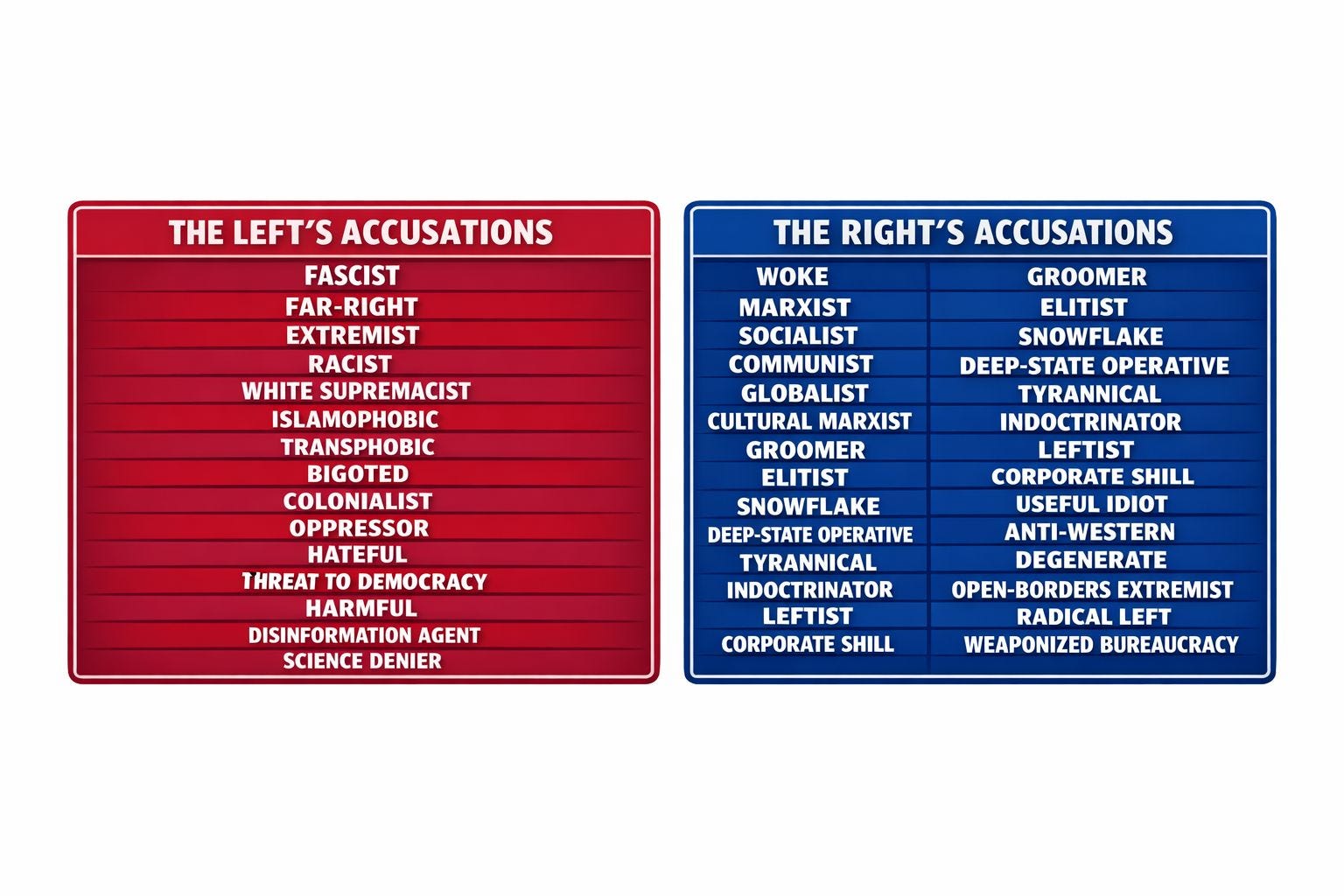
Language has adapted with ruthless efficiency. Across the political spectrum, there has arisen a vocabulary whose function is not persuasion but disqualification — words that transform disagreement into evidence of moral defect and relieve the speaker of the tedious burden of argument. Call a person mistaken, and you invite debate; call him dangerous, and you invite removal. Once such language enters the bloodstream of a conversation, curiosity slips quietly out the back door.
Consider the contemporary lexicon of accusation.
Common guilt-by-accusation terms often heard from progressive or left-leaning as well as right-leaning rhetoric include: